 BURST
BURST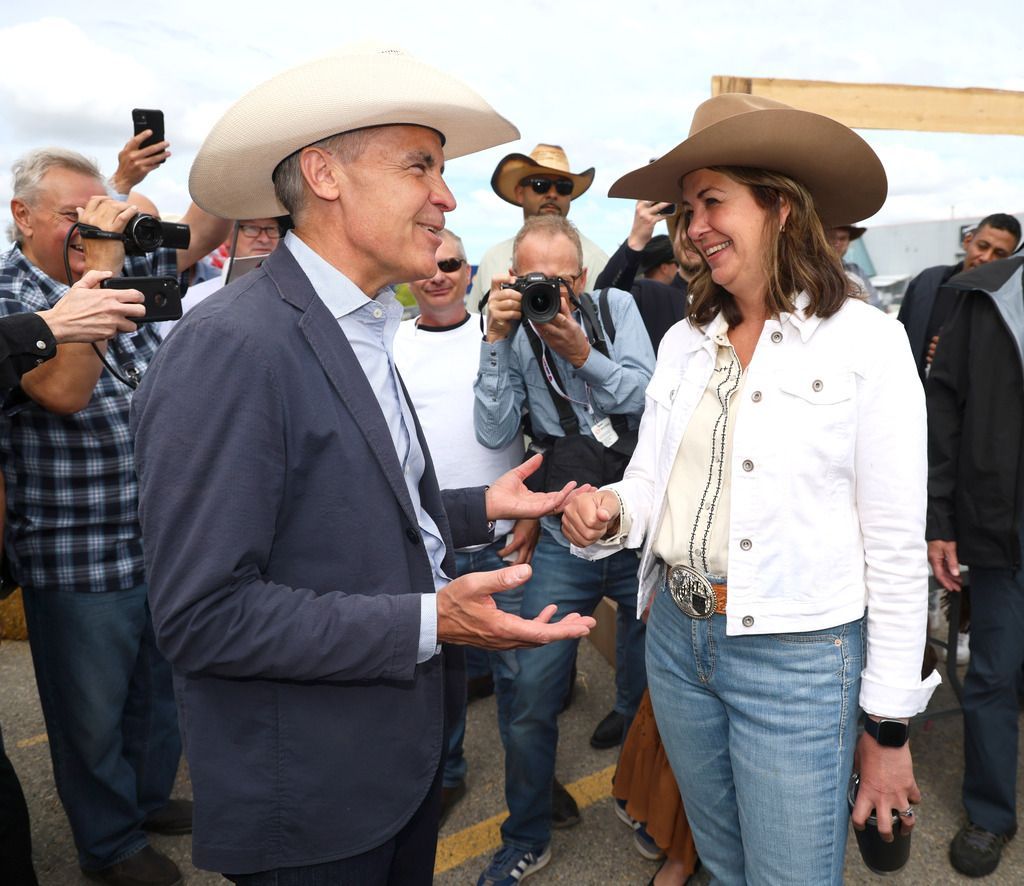
B.C.’s governing party and coastal First Nations have come out firing against the new agreement between Ottawa and Alberta that paves the way for one or more bitumen pipelines from the oilsands to B.C.’s north coast.
Premier David Eby has spent the past weeks and months arguing that such a pipeline project is dead in the water since there is no private sector proponent. Eby also noted that the last time Alberta tried to get one built through B.C., the federal government had to buy it and spend billions of taxpayer dollars to get it completed, as the cost estimate soared to $34 billion from $7.4 billion.
He has also argued that such a pipeline would put projects such as the North Coast hydro transmission line and Ksi Lisims LNG at risk by threatening the support of First Nations.
Eby’s NDP party put out a fundraising email Thursday morning slamming Ottawa and Alberta for undertaking negotiations on a new pipeline project without involving B.C. and saying the province will fight to make sure it isn’t built.
“Folks out east are trying to push forward a bitumen pipeline from Alberta that has no First Nations consent, and makes no financial or economic sense. It has no private proponent, no route, no private funding, and would cost taxpayers billions,” reads the email.
“We’re not going to jeopardize our coast for Danielle Smith’s pipe dream. Real B.C. jobs and prosperity will be put at risk.”
In their own release, the Coastal First Nations said that they will “use every tool in their tool box to keep oil tankers and the risk of a catastrophic oil spill out of B.C.’s Northern coastal waters.”
The agreement, signed in Calgary Thursday by Prime Minister Mark Carney and Alberta Premier Danielle Smith, indicates that any pipeline project would be constructed and financed by a private sector proponent and that it must be ready to submit to the federal Major Projects Office by July 1, 2026.
To help the pipeline get underway, Ottawa says it will not implement its oil and gas emissions cap, will suspend clean energy regulations in Alberta and will potentially restructure the tanker ban to allow bitumen to be shipped through B.C. waters.
In exchange, Alberta has agreed to support the Pathways project to decarbonize the oilsands through carbon capture technology, and work with the federal government on data centre development, on a nuclear strategy and on increasing the flow of electricity among western provinces.
“We have been working for some time on addressing the nine bad laws, as I like to call them, that have been impacting our investment climate here, and I’m pleased that we reached an agreement to substantially work on removing and revising those laws,” said Smith prior to the signing.
“I think what it’s going to do, especially with the removal of the emissions cap on Alberta, as well as the removal of the net zero power regulations, I know it’s going to unleash an incredible amount of investment and allow us to work together on important nation building projects.”
For his part, Carney said the agreement sets the stage for an “energy transition” and that “it’s a priority to have a pipeline to Asia that’s going to make Canada stronger, more independent, more resilient, more sustainable.”
While the agreement requires Alberta to collaborate with B.C. on financial and economic benefits, it does not give B.C. Premier David Eby or his government a veto over the new pipeline.
The wording of the deal commits Smith to “meaningfully consult with Indigenous peoples” and that any project needs to have Indigenous co-ownership and provide for economic benefits for nations along the route.
Alberta’s premier said she spoke with Eby on Wednesday night and that she hopes the two governments can work together on the project.
If B.C. decides to go the lawsuit route, however, Smith warned that Eby will lose in the courts just as his government did on the Trans Mountain pipeline.
“B.C. has tried to use every tool in the tool box, I guess was the term that they used before, and failed,” said Smith.
“This is not B.C.’s decision to make.”