 BURST
BURST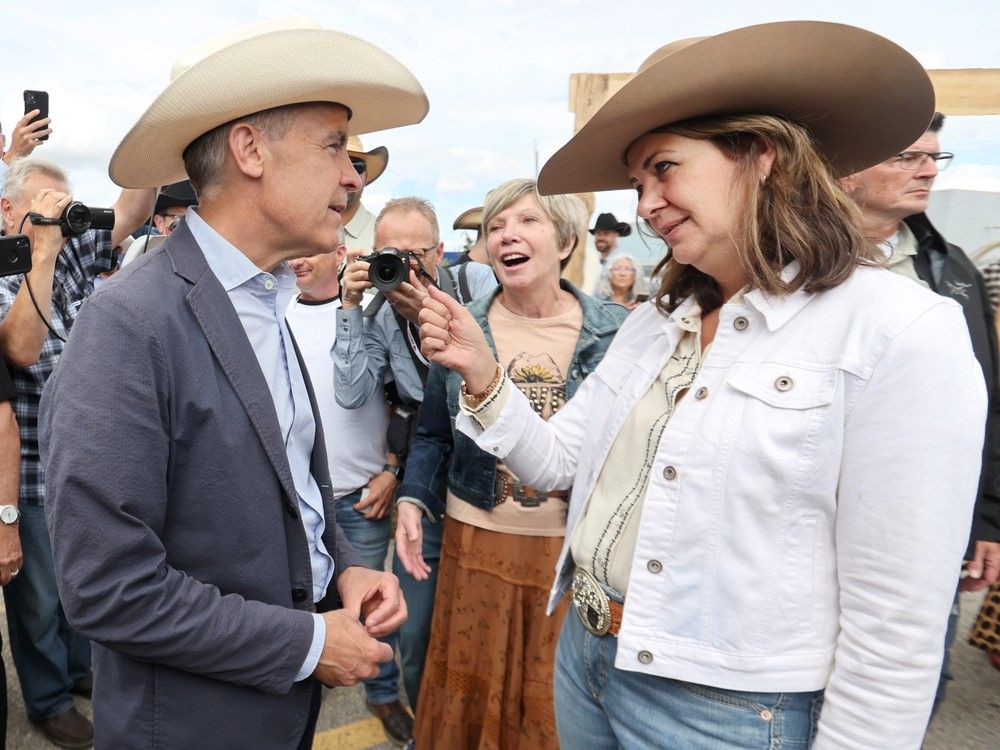
Premier David Eby and his government still have yet to receive the details of Ottawa and Alberta’s memorandum of understanding on a new pipeline to B.C.’s North Coast, even as Prime Minister Mark Carney gets set to jet off to Calgary on Thursday for the unveiling ceremony.
B.C. Attorney General Niki Sharma told reporters Tuesday that she has yet to see the exact details of the MOU and that the government is holding off on formulating a response until they receive a copy of the agreement.
“We want to figure out how to work together, and I think that’s been the stance of the premier as a Team Canada approach,” she said. “But we also need to be respected as a province in our viewpoints.”
A senior government source told Postmedia News that Ottawa has promised B.C. will be sent a copy of the deal before Thursday’s official announcement and that the province is preparing to push back pretty hard against the MOU.
Sharma didn’t rule out that the government could launch a lawsuit against a proposed pipeline project, saying: “I am staying tuned to see.”
She also indicated that suits from First Nations are a very realistic possibility, especially if they don’t feel they were properly consulted on the project.
“We have constitutional obligations, as everybody knows, related to First Nations in this country that we have to abide by,” said Sharma. “And we also have the court system that can be used by First Nations to bring their concerns when decisions are made by any level of government in terms of judicial reviews or challenges to those decisions, and that can be something that can really raise concerns on projects and cause delays and cause a lot of uncertainty related to that.”
Meanwhile in Ottawa, Carney, federal Natural Resources Minister Tim Hodgson and federal government House Leader Steven MacKinnon faced repeated questions from Pierre Poilievre, leader of the federal Conservatives and official Opposition, about the pending deal during Parliament Hill’s question period.
Poilievre called it a “meaningless memorandum” and “public relations ploy” and pressed the federal government to provide a date for when construction on the new pipeline will get underway.
Carney responded that B.C. and local First Nations have to agree with any potential project and indicated that the MOU doesn’t, by itself, mean that Alberta Premier Danielle Smith will get her long-dreamed-of energy project.
“The memorandum of understanding that we’re negotiating with Alberta creates necessary conditions, but not sufficient conditions, because we believe in co-operative federalism,” said the PM. “We believe the government of British Columbia has to agree. We believe that First Nations right-holders in this country have to agree.”
Liberal MP Gurbux Saini of Fleetwood-Port Kells told reporters in Ottawa that he agreed B.C. needed to sign off on any potential project that comes forward.
Despite Poilievre’s dismissal of Thursday’s announcement as a stunt, Conservative MPs David Bexte of Bow River in Alberta and Kevin Waugh of Saskatoon-Grasswood voiced their optimism that a pipeline could actually get built.
“We want to be a part of this pipeline,” said Waugh. “So, Thursday’s announcement will be interesting. Hope for the best.”
News broke Monday that the MOU had been signed mere hours after Carney told Eby that nothing had been finalized.
CBC reported that the agreement includes language supportive of a new pipeline in exchange for Alberta strengthening its carbon pricing system and getting oilsands producers to invest in Pathways Alliance’s planned carbon capture project.
The agreement is also expected to make carve-outs for Alberta on greenhouse-gas regulations and could see a watering down of the tanker ban off B.C.’s North Coast.
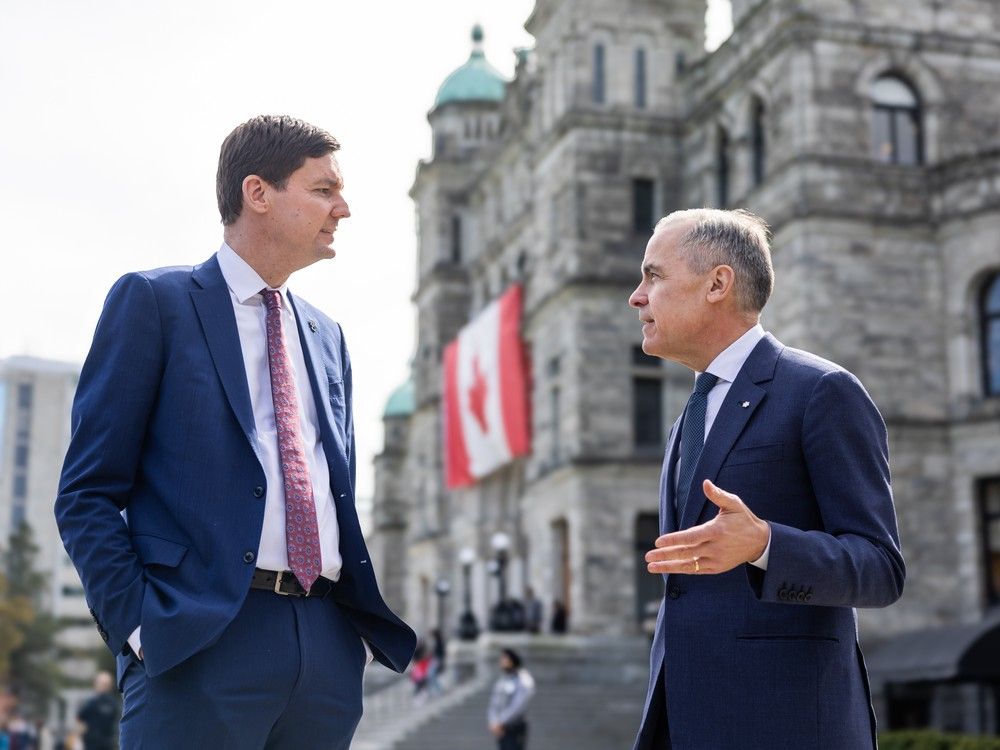
Eby told reporters that he had outlined to the PM that it’s “unacceptable” that Saskatchewan has been included in the talks while B.C. hasn’t.
A source familiar with the call between Eby and Carney said it lasted between 20 to 25 minutes and that Carney didn’t provide an explanation for why B.C. wasn’t included in the negotiations, although the source also said that litigating that wasn’t the purpose of the call.
“I underlined for the prime minister how unacceptable it was to me to have Saskatchewan and Alberta speaking about matters in British Columbia without British Columbia at the table,” said the premier. “This is not something that would happen to Quebec. This is not something that would happen to other provinces in the federation.”
With files from The National Post