 BURST
BURST
Here’s the latest news concerning climate change and biodiversity loss in B.C. and around the world, from the steps leaders are taking to address the problems, to all the up-to-date science.
Check back every Saturday for more climate and environmental news or sign up for our Sunrise newsletter HERE.
In climate news this week:
• B.C. isn’t close to meeting climate goals and LNG development makes path tougher
• Record low steelhead return raises ‘unprecedented’ conservation concerns: B.C. Wildlife Federation
• David Eby rules out lawsuit over pipeline deal but warns proposal puts other projects at risk
• Guilbeault resigns from cabinet in protest over Carney’s pipeline deal with Alberta
Human activities like burning fossil fuels and farming livestock are the main drivers of climate change, according to the UN’s intergovernmental panel on climate change. This causes heat-trapping greenhouse gas levels in Earth’s atmosphere, increasing the planet’s surface temperature.
The panel, which is made up of scientists from around the world, including researchers from B.C., has warned for decades that wildfires and severe weather, such as the province’s deadly heat dome and catastrophic flooding in 2021, would become more frequent and intense because of the climate emergency. It has issued a code red for humanity and warns the window to limit warming to 1.5 C above pre-industrial times is closing.
According to NASA climate scientists, human activities have raised the atmosphere’s carbon dioxide content by 50 per cent in less than 200 years, and “there is unequivocal evidence that Earth is warming at an unprecedented rate.”
As of Nov. 13, carbon dioxide in the atmosphere was 424.87 parts per million, down slightly from 425.48 ppm last month, according to the latest available data from the NOAA measured at the Mauna Loa Observatory, a global atmosphere monitoring lab in Hawaii. The NOAA notes there has been a steady rise in CO2 from under 320 ppm in 1960.

Climate change quick facts:
• The Earth is now about 1.3 C warmer than it was in the 1800s.
• 2024 was hottest year on record globally, beating the record in 2023.
• The global average temperature in 2023 reached 1.48 C higher than the pre-industrial average, according to the EU’s Copernicus Climate Change Service. In 2024, it breached the 1.5 C threshold at 1.55 C.
• The past 10 years (2015-2024) are the 10 warmest on record.
• Human activities have raised atmospheric concentrations of CO2 by nearly 49 per cent above pre-industrial levels starting in 1850.
• The world is not on track to meet the Paris Agreement target to keep global temperature from exceeding 1.5 C above pre-industrial levels, the upper limit to avoid the worst fallout from climate change including sea level rise, and more intense drought, heat waves and wildfires.
• On the current path of carbon dioxide emissions, the temperature could increase by as much 3.6 C this century, according to the IPCC.
• In June 2025, global concentrations of carbon dioxide exceeded 430 parts per million, a record high.
• Emissions must drop 7.6 per cent per year from 2020 to 2030 to keep temperatures from exceeding 1.5 C and 2.7 per cent per year to stay below 2 C.
• There is global scientific consensus that the climate is warming and that humans are the cause.
(Sources for quick facts: United Nations IPCC , World Meteorological Organization , UNEP , NASA , climatedata.ca )
Latest News
CleanBC review: B.C. isn’t close to meeting climate goals and LNG development makes path tougher
B.C. needs to “recalibrate” its approach to climate action and have a serious conversation about how expanding liquefied natural gas fits into the province’s goals of reducing emissions, according to an independent review of the government’s CleanBC plan.
Introduced in 2018, CleanBC sets out a strategy for reducing greenhouse-gas emissions by 40 per cent below 2007 levels by 2030 through various initiatives targeting transportation, buildings and industry.
Merran Smith, founder and chief innovation officer of Clean Energy Canada, and Dan Woynillowicz, a principal at Polaris Strategy, spent six months reviewing the plan. In their report released Wednesday, the pair said B.C. is only halfway to meeting its 2030 target.
The authors argued the ambitious nature of the target was counterproductive as it has produced a negative reaction among some British Columbians due to the cost of the policies, including the carbon tax and the mandate that all new light-duty vehicle sales be zero-emission by 2035.
Instead, they said the government should focus on setting realistic targets and communicating better with the public, both in combating the misinformation swirling around technologies such as electric vehicles and the positives that have come from climate action, such as reduced heating and fuelling costs.
—Alec Lazenby
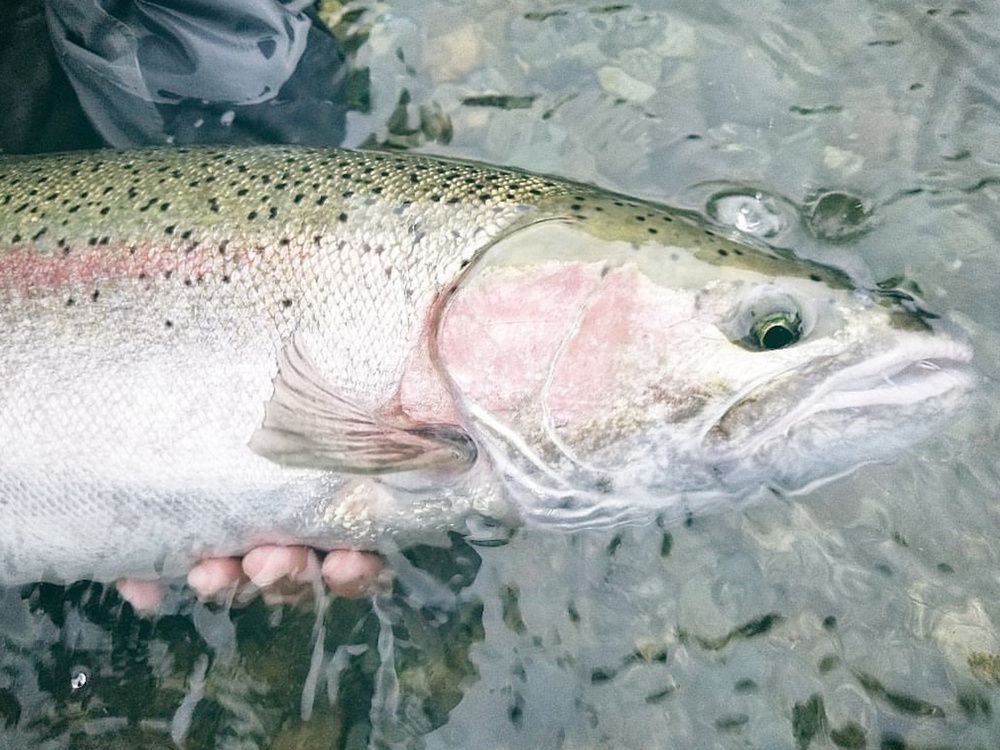
Record low steelhead return raises ‘unprecedented’ conservation concerns: B.C. Wildlife Federation
A record-low Interior Fraser steelhead return is a conservation crisis that must be addressed before the species of trout is wiped out, the B.C. Wildlife Federation said Thursday.
“Steelhead are heading to extinction faster than all the other fish, and so if we can’t take care of them, we’re not going to be able to take care of other threatened or endangered populations,” said Jesse Zeman, the organization’s executive director.
Zero steelhead have been captured this year in test fisheries that produce the data used to forecast the abundance of spawners in the spring, according to a status update from the B.C. Water, Land and Resource Stewardship Ministry.
The update also said the spawning population forecast for the Thompson watershed is less than 19 steelhead, likely putting the species at an extreme conservation concern. The forecast for the Chilcotin watershed is less than nine steelhead.
That’s in stark comparison with more than 3,000 steelhead that were regularly counted in both rivers four decades ago.
The federation called the findings “unprecedented, though not completely unexpected.” The conservation group has been ringing alarm bells on critically low returns of Interior steelhead for a decade, blaming a federal government decision not to list them as endangered as part of the problem.
—Tiffany Crawford
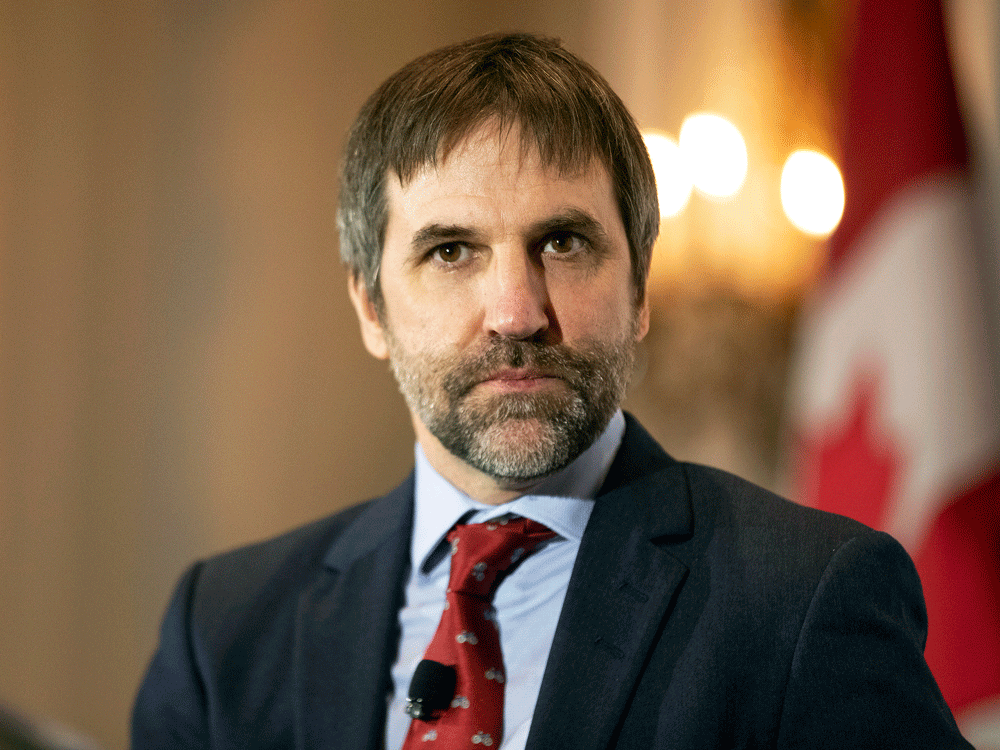
Guilbeault resigns from cabinet in protest over Carney’s pipeline deal with Alberta
Former environment minister Steven Guilbeault is stepping down from cabinet, but staying on as a Liberal MP, in protest of his government’s memorandum of understanding with Alberta to build a new oil pipeline to the West Coast.
“This afternoon, it is with great sadness that I submitted my resignation to the Prime Minister as Minister of Canadian Identity and Culture and Minister responsible for Official Languages, Minister of Nature and Parks Canada, as well as his Lieutenant in Quebec,” he wrote.
Guilbeault said he understands that Canada’s relationship with the U.S. has shifted, leading to profound changes in the global order and the economy.
“Despite this difficult economic context, I remain one of those for whom environmental issues must remain front and centre,” he wrote. “That is why I strongly oppose the Memorandum of understanding between the federal government and the government of Alberta.”
Guilbeault criticized the fact that there was “no consultation” with coastal First Nations in B.C., nor with the provincial government, which opposes this prospective pipeline to the West Coast. He also said it would have “major environmental impacts” and move Canada further away from its greenhouse gas emission targets.
—Catherine Lévesque
Can modular housing reduce landfill waste? This Indigenous and female-led North Vancouver company says yes
Modular housing could be a piece of the puzzle as Metro Vancouver aims to reduce the significant amount of construction waste that still clogs the region’s landfills.
Rory Richards, who heads an Indigenous and female-led construction team called NUQO Modular in North Vancouver, says that because modular housing isn’t built on-site, it reduces construction waste by up to 90 per cent.
“With modular construction a project can be done in half the amount of time. So it’s a much more efficient way to build. It’s the same construction methods, it’s the same (building) code, it’s the same material, except it’s done in a factory and not outside on site,” said Richards ahead of speaking at Metro’s Zero Waste Conference on Thursday.
“In a factory environment, if you have additional materials and supplies, you just put it back on the shelf and you use it for another project. When you’re out on a construction site, there’s nowhere to put anything back, so often it just gets thrown away.”
A Coast Salish woman of the Sechelt First Nation, Richards’ goal was to build a company that made sustainable and climate-resilient housing and highlight the work of the Indigenous, and women, who make up more than 50 per cent of her team.
—Tiffany Crawford
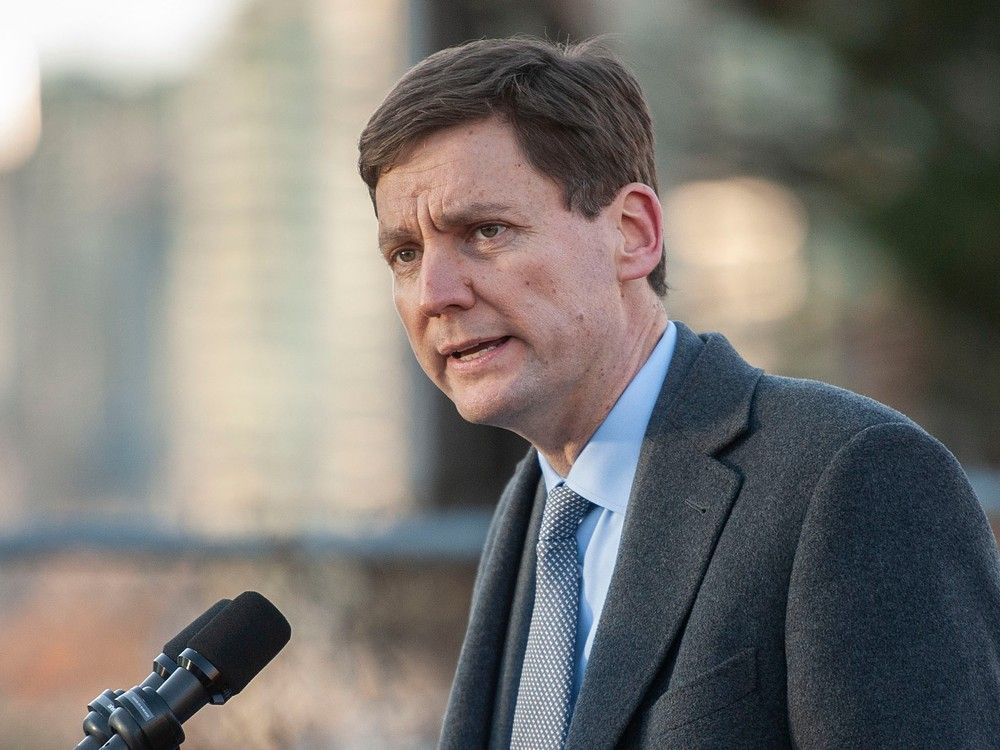
David Eby rules out lawsuit over pipeline deal but warns proposal puts other projects at risk
B.C.’s governing party and coastal First Nations have come out firing against the new agreement between Ottawa and Alberta that paves the way for one or more bitumen pipelines from the oilsands to B.C.’s north coast.
Premier David Eby has spent the past weeks and months arguing that such a pipeline project is dead in the water since there is no private sector proponent. Eby also noted that the last time Alberta tried to get one built through B.C., the federal government had to buy it and spend billions of taxpayer dollars.
Eby stuck to his guns on Thursday, arguing there is no route, private sector proponent or support from First Nations that would allow Alberta to realize its dream of a pipeline from the oilsands of Fort McMurray to B.C.’s north coast, even after his neighbour signed an agreement with Ottawa.
The agreement, signed in Calgary on Thursday by Prime Minister Mark Carney and Alberta Premier Danielle Smith, says any pipeline project would have to be constructed and financed by the private sector and be ready to submit to the federal Major Projects Office by July 1, 2026.
To help the pipeline get underway, Ottawa says it will not implement its oil and gas emissions cap, will suspend clean energy regulations in Alberta and will potentially restructure the tanker ban to allow bitumen to be shipped through B.C. waters.
—Alec Lazenby
Port Coquitlam recycling company fined $454,000 for water contamination of river
A Port Coquitlam company that recycles industrial waste has been fined more than $450,000 for contamination of the Pitt River.
Ground X Site Services Ltd., which provides dump truck, disposal and recycling services, intermittently discharged waste effluent into the environment nine times between March and April 2024, according to B.C.’s Environment Ministry.
The company collects, handles and stores waste soil, solids and liquids, including hydrovac slurry waste, concrete, asphalt and organic material, according to the ministry. Hydrovac is a process that uses pressurized water and an industrial strength vacuum to excavate and evacuate waste material.
As the pressurized water breaks up the waste material it creates a slurry that is removed by a powerful vacuum into a debris tank. The slurry from the process is put in an unlined pond so the water may be reused once the solids settle, according to the ministry.
During an inspection, ministry officers found the waste pond was at capacity and had visibly eroded.
—Tiffany Crawford
Australia risks 2035 climate goal without bigger emissions cuts
Australia warned it’s in danger of missing its 2035 climate targets without deeper pollution cuts, which in turn threatens the nation’s ambitions to reach net zero by mid-century.
Emissions are set to fall 48 per cent by 2035 from 2005 levels based on current projections, the government said in a report on Thursday. That’s short of an official pledge to cut greenhouse gases between 62 per cent and 70 per cent. The forecast doesn’t take into account new action planned under the nation’s Net Zero Plan.
Still, the targets remain achievable and officials plan to take additional measures to meet them, Minister for Climate Change and Energy Chris Bowen said in a speech to Parliament.
“While the 2035 target is ambitious and achievable, it is not yet being achieved,” Bowen said, according to a transcript of his speech. “The emissions projections also show additional work is needed.”
Australia’s efforts to slash its emissions have been hampered by a slow rollout of new transmission infrastructure that can accommodate solar and wind generation, which has stalled renewable energy projects. The bottlenecks have also dampened investment and threaten the nation’s ambitions to become a major green energy export hub.
—Bloomberg