 BURST
BURST
Here’s the latest news concerning climate change and biodiversity loss in B.C. and around the world, from the steps leaders are taking to address the problems, to all the up-to-date science.
Check back every Saturday for more climate and environmental news or sign up for our Sunrise newsletter HERE.
In climate news this week:
• Farmers, farms and farmland decreasing in Metro Vancouver
• Contaminated drinking water can last months or even years after wildfires: UBC-led study
• Global instability fuelling climate risks
• Vancouver teen selected as ambassador for international conservation project
Human activities like burning fossil fuels and farming livestock are the main drivers of climate change, according to the UN’s intergovernmental panel on climate change. This causes heat-trapping greenhouse gas levels in Earth’s atmosphere, increasing the planet’s surface temperature.
The panel, which is made up of scientists from around the world, including researchers from B.C., has warned for decades that wildfires and severe weather, such as the province’s deadly heat dome and catastrophic flooding in 2021, would become more frequent and intense because of the climate emergency. It has issued a code red for humanity and warns the window to limit warming to 1.5 C above pre-industrial times is closing.
According to NASA climate scientists, human activities have raised the atmosphere’s carbon dioxide content by 50 per cent in less than 200 years, and “there is unequivocal evidence that Earth is warming at an unprecedented rate.”
As of March 5, 2026, carbon dioxide in the atmosphere was 429.35 parts per million, up from 428.62 ppm the previous month, according to the latest available data from the NOAA measured at the Mauna Loa Observatory, a global atmosphere monitoring lab in Hawaii. The NOAA notes there has been a steady rise in CO2 from under 320 ppm in 1960.

Quick facts:
• The global average temperature in 2023 reached 1.48 C higher than the pre-industrial average, according to the EU’s Copernicus Climate Change Service. In 2024, it breached the 1.5 C threshold at 1.55 C.
• 2025 was the third warmest on record after 2024 and 2023, capping the 11th consecutive warmest years.
• Human activities have raised atmospheric concentrations of CO2 by nearly 49 per cent above pre-industrial levels starting in 1850.
• The world is not on track to meet the Paris Agreement target to keep global temperature from exceeding 1.5 C above pre-industrial levels, the upper limit to avoid the worst fallout from climate change including sea level rise, and more intense drought, heat waves and wildfires.
• UNEP’s 2025 Emissions Gap Report, released in early December, shows that even if countries meet emissions targets, global temperatures could still rise by 2.3 C to 2.5 C this century.
• In June 2025, global concentrations of carbon dioxide exceeded 430 parts per million, a record high.
• There is global scientific consensus that the climate is warming and that humans are the cause.
(Sources: United Nations IPCC , World Meteorological Organization , UNEP’s 2025 emissions gap report , NASA , Copernicus Climate Change Service , climatedata.ca )

Latest News
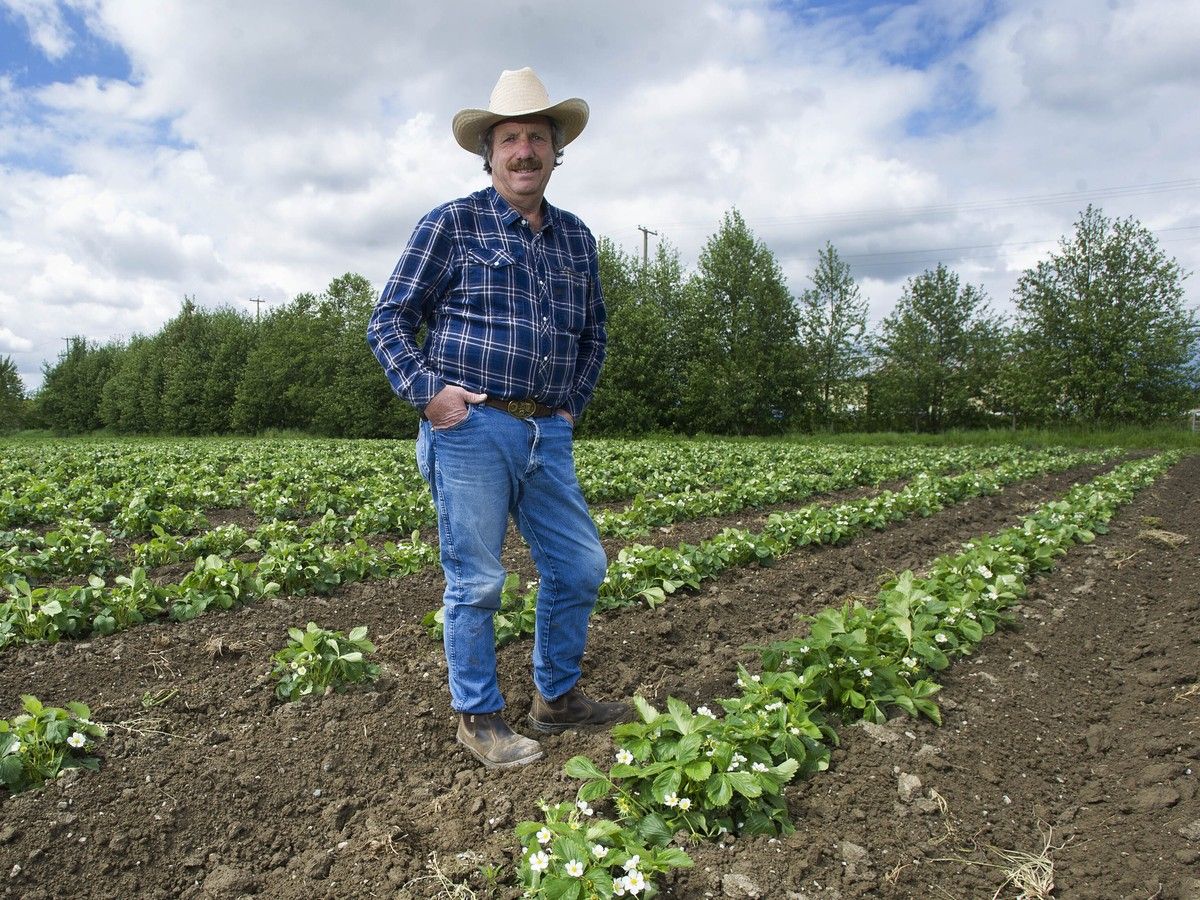
Farmers, farms and farmland decreasing in Metro Vancouver
A new Metro Vancouver report shows that farmers, farms and farmland have all declined across the region during the past 25 years — a revelation that comes as little surprise to farmers who have seen costs grow as profits wither.
“When I got into agriculture in the mid-’70s, starting out on my dad’s little farm, I felt like I had the wind at my back,” said Bill Zylmans, a retired strawberry and vegetable farmer who continues to head the B.C. Potato and Vegetable Growers Association.
The return on his harvest was enough to allow him to buy more land, increase crops, and turn a profit. At one time, he was farming 243 hectares (600 acres) in Richmond. But those days are gone, he says. Today’s farmers have “the wind in their faces.”
Issues facing agriculture in Metro Vancouver, and B.C. as a whole, include extreme weather — such as flood, fire and drought — the rising cost of inputs like seed, fertilizer and feed, the high cost of land, and uncertain returns linked to trade disruption and global market forces.
—Glenda Luymes
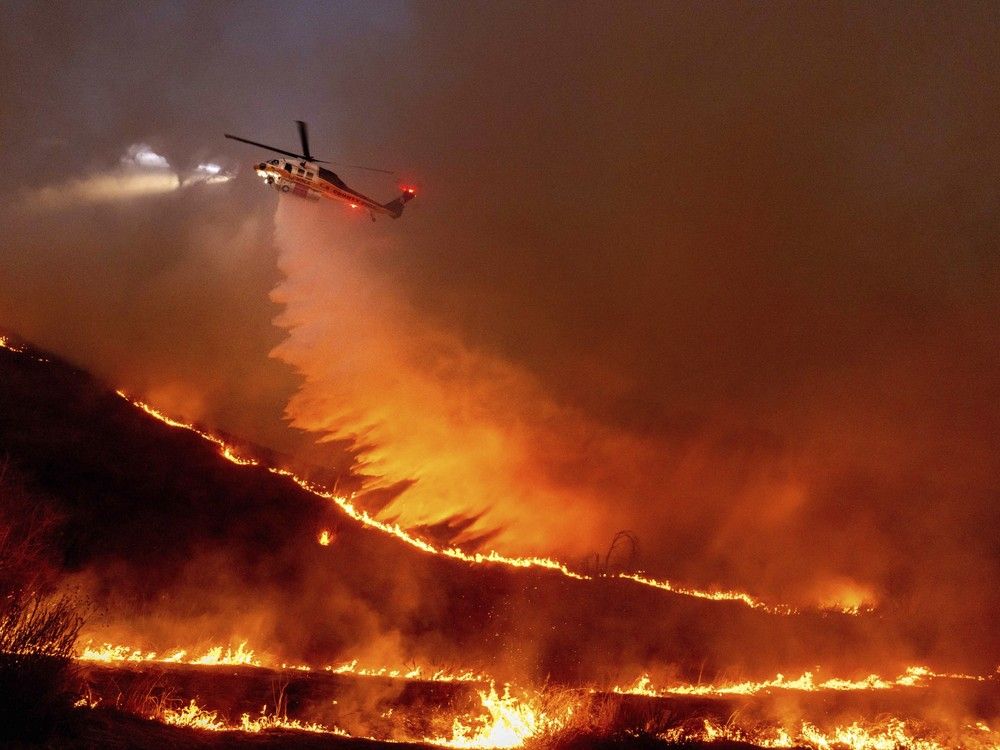
Contaminated drinking water can last months or even years after wildfires: UBC-led study
B.C. residents have long been warned about the health risks from wildfires from the heavy smoke and poor air quality.
Now, University of B.C. researchers are raising another health concern: During a global study, scientists discovered that drinking water can remain contaminated for months or even years after the blaze has been extinguished.
The study, published in the journal Science of the Total Environment, warns that sediment, nutrients, heavy metals and wildfire-fighting chemicals remain in the environment, especially when storms or snowmelt flush stored ash and debris into rivers.
Qingshi Tu, an assistant professor at UBC and corresponding author of the study, says they were surprised by huge spikes in contaminants in the water from several different wildfires around the world six months or more after the blaze was out.
He said climate change is causing more drought, which increases the frequency and intensity of wildfires in B.C. and around the world. And with more intense fires comes an increased risk of water contamination.
—Tiffany Crawford
Global instability is fuelling climate risks, Singapore warns
Singapore’s government and businesses must prepare to handle accelerating risks posed by climate change, according to the country’s environment minister.
Challenges to economic and geopolitical stability, including the crisis in the Middle East, are clouding the world’s focus on climate protections and mean there’s a more urgent need to bolster resilience, Singapore’s Minister for Sustainability and the Environment Grace Fu said during a budget debate in parliament.
“Major emitters may backslide on their climate obligations as they grapple with the global tensions on security, energy, trade and investments,” Fu said. “In such uncertain times, the environment becomes an inevitable casualty, and our planet will face the impacts of climate change more severely — and sooner.”
To avoid larger losses and reassure investors, companies need to do more to assess risks, protect workers and infrastructure, diversify suppliers and insure against climate hazards, she said.
—Bloomberg News

Vancouver teen selected as ambassador for international conservation project
As a child, Acadia Li would take her time wandering through Vancouver’s Pacific Spirit Park on her walk to and from elementary school.
It was in the deep woods, under a canopy of Douglas fir and cedar trees, Li, now 18, developed a passion for nature conservation.
“In Vancouver, you have the forests, the ocean and the mountains all condensed into one. And I think just seeing all of this nature around me really fostered my love for it,” she said.
Now a senior at Lord Byng Secondary School, the teen was recently selected, along with 13 other young people from across North America, to join an international ocean restoration project as an ambassador with EarthEcho International to restore B.C.’s degrading kelp forests.
The non-profit group was founded in 2005 by siblings Philippe and Alexandra Cousteau in honour of their father Philippe Cousteau Sr., son of the legendary ocean explorer Jacques-Yves Cousteau.
EarthEcho’s Blue Carbon Ambassador Program provides youth with hands-on experience designed to introduce participants to the role of blue carbon ecosystems such as kelp, seagrass, mangroves, and salt marshes to help fight the climate crisis.
—Tiffany Crawford
$30 million plan to reconnect Stanley Park’s Lost Lagoon to tidewater
The Vancouver park board is considering reconnecting Stanley Park’s deteriorating Lost Lagoon to tidal waters.
Lost Lagoon is a 17-hectare pond at the Coal Harbour entrance to Stanley Park with a water feature in the middle. It was originally a coastal salt marsh and tidal mudflat used by local First Nations, that during high tide made Stanley Park an island. In 1916, a causeway was built that turned it into a non-draining pond separated from tidewater.
Park board staff will ask that the board “endorse the Lost Lagoon tidal reconnection concept and direct staff to engage with potential funding partners and regulatory agencies to enable its delivery through a multi-party funding arrangement reflective of its multiparty benefit.”
The staff report states “the environmental conditions at Lost Lagoon have been declining for some time, with poor water quality generating impacts to habitat, wildlife and visitor experience. The challenges at this site can be addressed by restoring a tidal connection to the ocean while maximizing water quality, habitat, biodiversity, and recreational values and working toward reconciliation.”
—David Carrigg

‘No laughing matter:’ Single-use nitrous oxide cylinders are exploding at Metro Vancouver’s waste-to-energy plant
Metro Vancouver is considering asking the federal government to ban single-use nitrous oxide cylinders after they have cause several explosions at the region’s waste-to-energy plant in Burnaby.
Inappropriate disposal of large volume, single-use nitrous oxide cylinders — also called whippets or laughing gas — cause safety concerns, soaring costs and an increase in greenhouse gas emissions, which contribute to human-caused climate change.
The small single-use canisters are typically used as whipped cream chargers but are also used illicitly to get high with potentially serious illness such as neurotoxic effects, psychosis or severe frostbite.
According to a staff report to Metro Vancouver’s zero waste committee, at least 100 vape and smoke shops in the region are selling single-use, valved nitrous-oxide cylinders.
—Tiffany Crawford
China vows to hit carbon peak even with wary new climate plan
China, the world’s top polluter, set a cautious new five-year climate target, frustrating hopes for tighter policy that would drive the nation to peak carbon emissions well before President Xi Jinping’s 2030 deadline.
A new goal pledges to cut carbon emissions per unit of gross domestic product by 17 per cent by the end of the decade, and compares to a previous objective to deliver an 18 per cent reduction in the five years through 2025 — which annual reports said was narrowly missed.
“We will actively yet prudently work toward peaking carbon emissions and achieving carbon neutrality,” Premier Li Qiang said Thursday at the National People’s Congress, the once-a-year gathering of policymakers which set a modest new growth target and acknowledged rising geopolitical risks. China will balance “economic and social development, the green and low-carbon transition, and national energy security,” Li said.
Officials held back from a strict limit for the nation’s emissions and dashed expectations that target years would be set to top out consumption of coal and oil. The cautious strategy reflects China’s recent tone on climate action that is prioritizing the development of green industries, rather than aggressive emissions curbs.
Xi’s goal to reach a carbon peak before 2030 will be “accomplished as planned,” and a system of controlling the total volume of emissions — in addition to intensity targets — will also be implemented, according to Li’s annual work report.
—Bloomberg News
I’m a breaking news reporter but I’m also interested in writing stories about health, the environment, climate change and sustainable living, including zero-waste goals. If you have a story idea related to any of these topics please send an email to ticrawford@postmedia.com