 BURST
BURST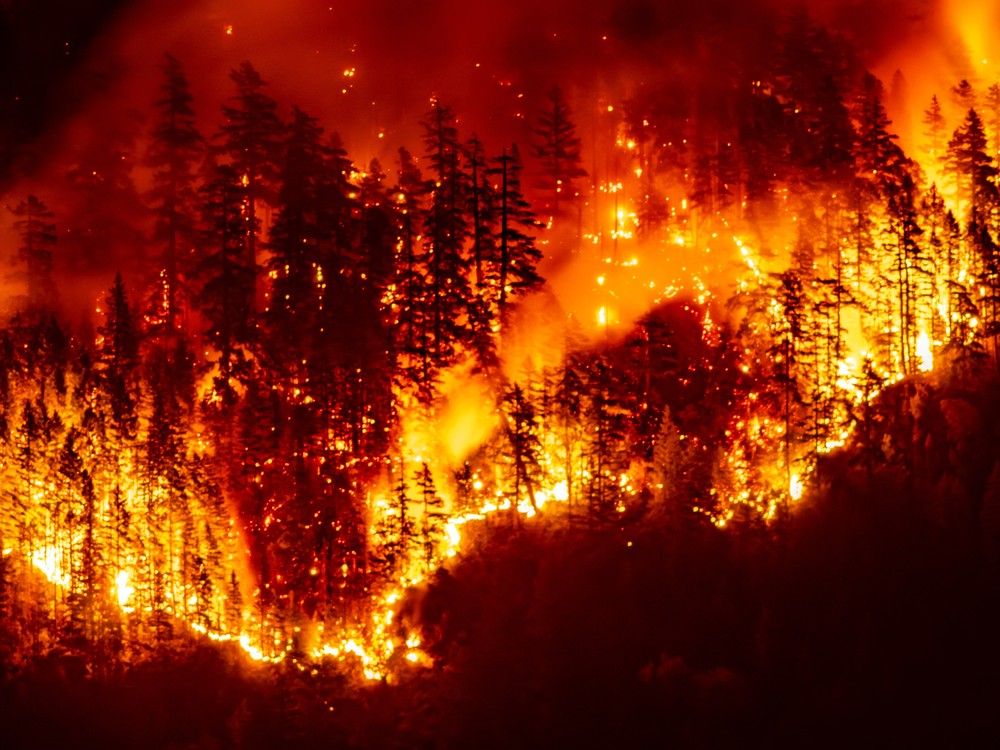
B.C. residents have long been warned about the health risks from wildfires from the heavy smoke and poor air quality.
Now University of B.C. researchers are raising another health concern: During a global study, scientists discovered that contaminated drinking water can last months or even years after the blaze has been extinguished.
The study , published in the journal Science of the Total Environment, warns that sediment, nutrients, heavy metals and wildfire-fighting chemicals remain in the environment, especially when storms or snowmelt flush stored ash and debris into rivers.
Qingshi Tu, an assistant professor at UBC and corresponding author of the study, says they were surprised by huge spikes in contaminants in the water of several different wildfires around the world six months or more after the blaze was out.
He said climate change is causing more drought, which increases the frequency and intensity of wildfires in B.C. and around the world. And with more intense fires comes an increased risk of water contamination.
He cautioned that while contaminated water can cause a range of health issues, there’s no need for panic because most communities have technology to remove pollutants at water treatment plants.
“After the snow melts, contaminants are released in the water. Then the drinking water treatment plant will all of a sudden see a spike in the concentration of pollutants. So we are not saying that they cannot handle this. They do have technology to handle this, but this instability adds burden to the downstream drinking water treatment,” he said.
“So that’s why we think it’s very important and because we are seeing more and more frequent wildfires.”
He added that it’s important understand how much of these contaminants end up in the water and how long they stick around so governments can identify areas of concern and set aside funding for water treatment after fires.
For example, after the 2016 Fort McMurray wildfires in Alberta, rivers showed elevated sediment, nitrogen, phosphorus and lead. This resulted in the regional district increasing annual treatment chemical spending by roughly $500,000 to manage wildfire-related changes in raw water.
“The motivation is that when we think about wildfires, we see smoke plumes and orange sky. So this is very obvious. But then, if you think a little bit further, the smoke contains particles with chemicals,” he said, adding that burning biomass can release carcinogenic material that will not stay in the air forever.
For the study, researchers analyzed 23 water quality reports across 28 watersheds worldwide. They compared levels of sediment, nutrients, metals, organic carbon, ions and wildfire-fighting chemicals before and after the fires.
Drinking water systems that depend on a single surface source could be more of a concern if there is unexpected deterioration in water quality, said Tu.
Water contamination can also harm habitat. For instance, an increase in certain nutrients can contribute to eutrophication, resulting in algal blooms that can deplete oxygen levels, while trace metals increase raw drinking water toxicity, the study says.
The research team is developing a model linking wildfire behaviour, smoke and river systems to help Canadian utilities anticipate multi-year risks.
While this study did not include any wildfires in B.C., Tu said the next phase of the project will be looking at B.C. wildfires because they want to build a tool to help regional districts or drinking water plants with long-term planning.
Some of the most affected regions in this study were in California, where five watersheds reported more than 4,000 ng/L of total PAHs — polycyclic aromatic hydrocarbons which are created from burning wood, garbage, oil etc.— in stormwater run-off. The study says that’s more than twice the levels typically observed in urban stormwater run-off.
High levels of PAHs are linked to cancer, so while drinking-water treatment plants can deal with this, communities affected by wildfires need to be cautious and aware of this kind of increase, he said.