 BURST
BURST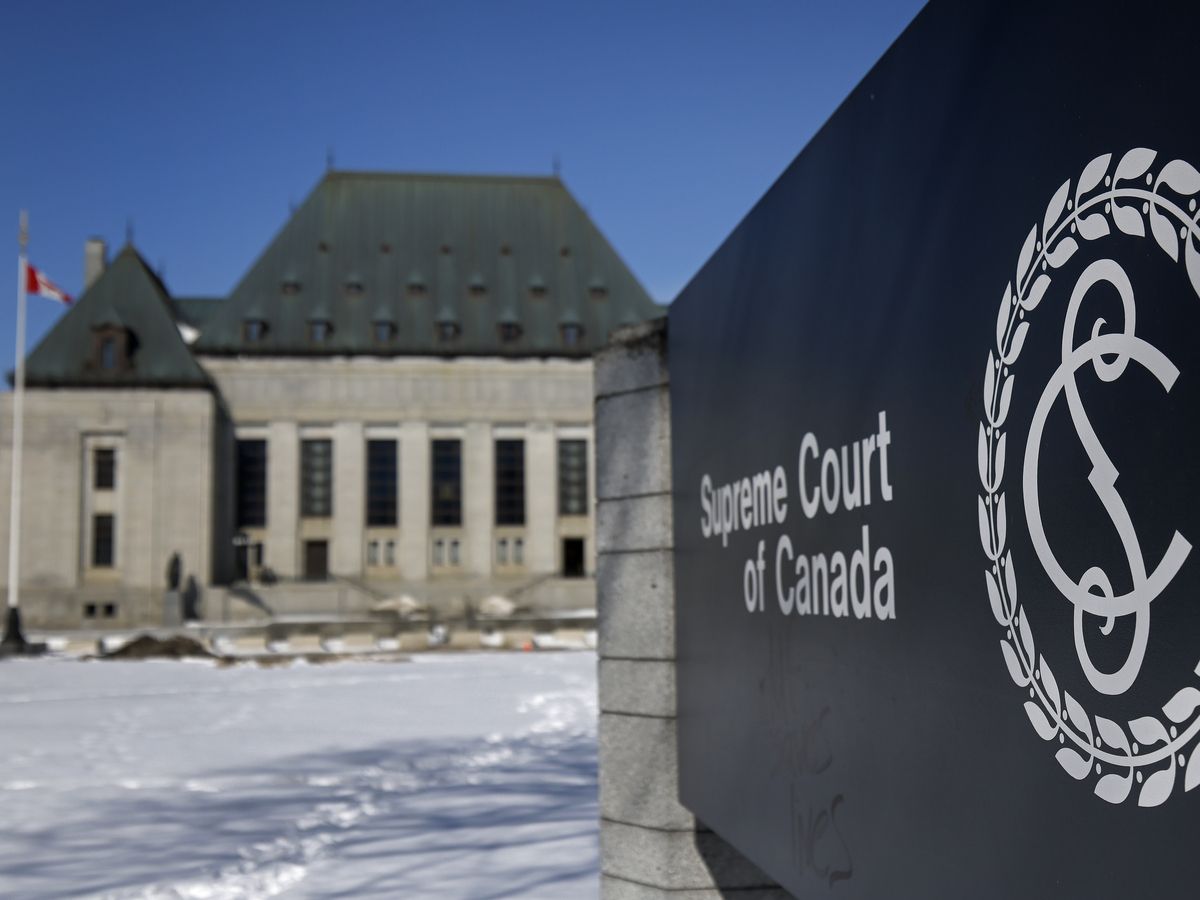
The Supreme Court of Canada has ruled that asylum seekers in Quebec with young children are eligible for the province’s subsidized daycare programs. The ruling was released Friday morning with eight of the nine Supreme Court judges in favour of the decision.
The case dates back to October 2018 when the case’s respondent, Bijou Cibuabua Kanyinda, entered Quebec via the Roxham Road crossing from the United States.
“Originally from the Democratic Republic of Congo, Ms. Cibuabua Kanyinda made a claim for refugee protection under the Immigration and Refugee Protection Act … when she arrived,” the court wrote in a summary of its decision. “She has three children, who accompanied her and were very young at the time the application was filed.”
While waiting for her claim for refugee status to be processed, Cibuabua Kanyinda obtained a work permit and approached three childcare facilities to find subsidized spaces for the children. “However, she was denied access to subsidized childcare because such childcare is reserved for those whose refugee status is formally recognized by the federal authorities, which excludes those waiting for a decision,” the court said.
On May 31, 2019, Cibuabua Kanyinda filed an application for judicial review, arguing that the regulation violated constitutional equality rights under Section 15 of the Charter of Rights and Freedoms.
The case, which was heard over two days last May, comes at a time when jurisdictions across the country are discussing the provision of government services to people seeking asylum.
Last month, Alberta Premier Danielle Smith announced that the province would hold a referendum this fall on several questions, including whether the province should limit access to health, education and other services for people who aren’t permanent residents, Canadian citizens, or people with approved immigration status. For those who are not eligible, another question proposes charging a fee to non-residents who use social support programs.
The court’s ruling ordered that the provincial regulation about who is eligible for Quebec’s subsidized child care include parents residing in the province who are refugee claimants, with or without a work permit.
“Assuming, for the purposes of the analysis, that Quebec’s stated objective of limiting daycare subsidies to those with a sufficient link to Quebec is pressing and substantial, there is no rational connection between the exclusion of refugee claimants and the stated objective of the law,” wrote Justice Andromache Karakatsanis in the decision.
“Section 3 of the RCR (Quebec’s Reduced Contribution Regulation) makes several categories of people eligible for the reduced contribution who are residing in Quebec without permanent status. If these categories of people are considered sufficiently connected with the province, it is difficult to see how refugee claimants, who wish to establish themselves more permanently in Canada, are not.”
Karakatsanis added: “Women continue to carry a greater share of childcare responsibilities and the availability of affordable daycare is directly linked to their ability to work — something well established in our jurisprudence.”
Quebec could however still choose to use section 33 of the Charter, the notwithstanding clause, to pass a law denying benefits.
In her dissenting opinion, Justice Suzanne Côté wrote: “There is no doubt that discrimination based on sex unfortunately continues to exist in our society and can affect both women who are citizens and women who are immigrants. In the circumstances, the RCR does not create a distinction based on this ground, but rather on the ground of refugee claimant status.”
She added: “However, the distinction is a lawful one because refugee claimant status is not and cannot be recognized as a new analogous ground. For these reasons, I would … dismiss the respondent’s application for judicial review.”
Government of Canada data shows that Quebec received more than 2,000 asylum claimants per month last year, although that represented a steep decline from the previous year.
It is not known exactly how many new arrivals to Canada are children; however, one website estimates that it is 20 per cent, a figure which would closely match the percentage of children within Canada’s overall population.
Our website is the place for the latest breaking news, exclusive scoops, longreads and provocative commentary. Please bookmark nationalpost.com and sign up for our daily newsletter, Posted, here.