 BURST
B.C. Conservative premier-designate Lorne Doerkson should tread carefully on his promised Fraser River tunnel reversal, according to experts.
His party, which won a landslide election win over the NDP last month, promising a tighter fiscal touch on the province’s finances, have pledged to switch from a new, eight-lane tunnel that is already under construction to a 10-lane bridge, which the Tories say will save as much as $2.5 billion.
The latest escalating estimate for the Massey Tunnel replacement project is $8.5 billion, with a finish date in 2031, double the original $4.15-billion price tag.
Experts say the idea that a switch to a bridge could be completed by 2031 and for less money than the new tunnel is wishful thinking.
“It would be a good idea for the (B.C. Conservatives) to think before acting. This could be another hugely expensive, politically motivated white elephant for the province,” Anthony Perl, a professor of urban studies and political science at Simon Fraser University, said of the switch to a bridge.
Perl noted there have been plenty of these types of projects where costs have escalated significantly in B.C.
Among B.C.’s cost-overrun projects are the Site C hydroelectric dam that nearly doubled to $16 billion from $8.8 billion , under both the NDP and right-of-centre B.C. Liberals.
Also on that list is the fast ferries fiasco under the NDP in the 1990s. The cost more than doubled for three ferries to $463 million, and the fast ferries were eventually auctioned off for just $20 million. In the 2000s, under the B.C. Liberals, the cost of the Vancouver Trade and Convention Centre nearly doubled to $883 million.
And Perl noted that earlier studies outlined there was little need for a 10-lane bridge where an eight-lane bridge would be adequate.
Werner Antweiler, a professor at the Sauder School of Business at the University of B.C., is also an advocate of a sober second look at the switch to a bridge and says there should be a technical review and cost-benefit analysis first.

Asked this week at a news conference why work is continuing on the tunnel project, Doerkson said the incoming government wasn’t in a position at this point to make any decision on the workforce that is there.
But he said they will be making a decision very quickly after Nov. 20, when his new government is sworn in.
B.C. Transportation Ministry officials declined to answer questions on how much has been spent so far on the tunnel project, and how much of the work could be used for the bridge, saying they aren’t allowed to comment during the government transition.
The latest monthly status report from the B.C. government’s Transportation Investment Corp., which is overseeing the tunnel replacement project, shows that $580 million had been spent as of the end of June.
This year’s reports show about $30 million a month had been spent until June. At that pace, spending would have topped $700 million by November.
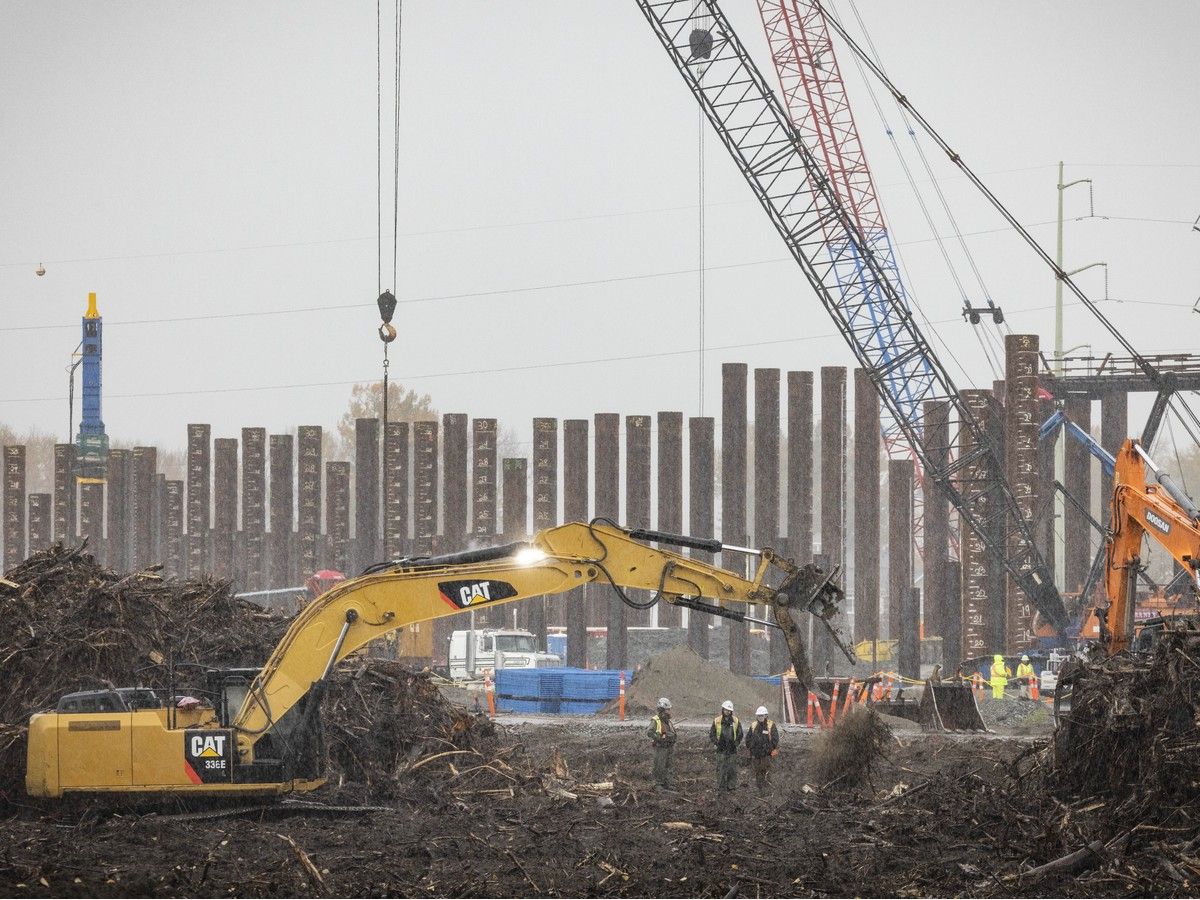
According to those who work on the project, they’ve had no notice to halt work or to slow down. About 200 workers continue to be on the job.
Antweiler said he also came up with an estimate of $700 million spent so far. He said while costs for items such as corridor planning might be salvaged for a bridge, some of the money already spent will be lost.
“There’s no question that we’d be throwing away money,” added Perl.
Work to date has included clearing, construction of temporary access roads, moving utilities, building site boundary fencing and preliminary work for the construction of the tunnel tube segments, as well as setting piling for the tunnel work.
Antweiler noted that because the province didn’t sign a contract with a consortium that did the initial work, and has put the project out to bid again, there will be no penalty for terminating a contract.
However, he said the costliest element is the delay because it will reset everything. That includes having to restart an environmental assessment process and consulting with First Nations.
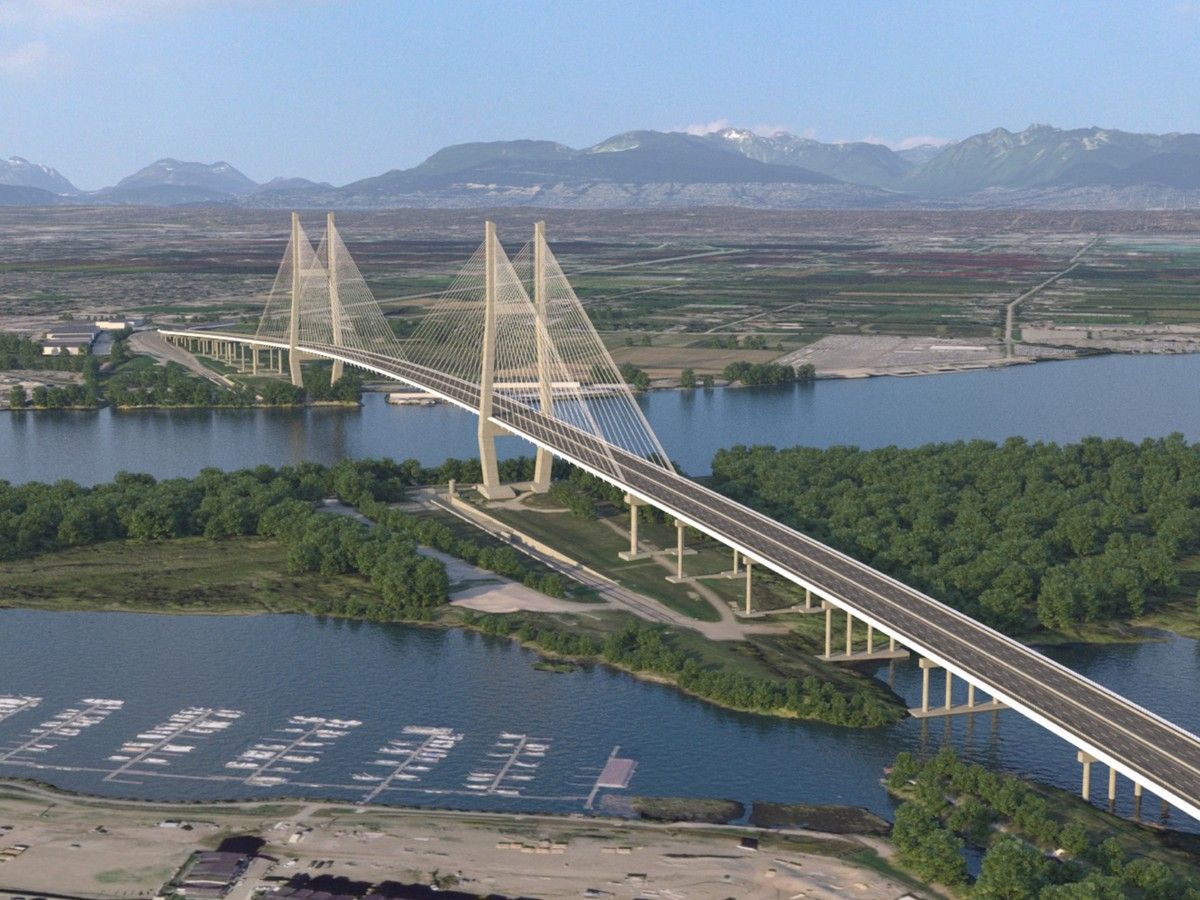
In 2013, the B.C. Liberals said they would replace the aging four-lane tunnel with a bridge and obtained environmental approval by 2017. Shortly thereafter, the NDP took power, cancelled the bridge project and started examining a tunnel replacement.
Antweiler said switching back to a bridge will add two to four years to the project — delaying completion until 2033 to 2035.
“Any delay is going to be significant because of inflation of construction costs,” said Antweiler.
He added that delays also could jeopardize the federal government’s promised contribution of $3 billion. The feds had promised that money for the tunnel replacement, but said recently it could be applied to a bridge.
Antweiler believes there is an argument for staying the course and not switching.
“It just feels like one side wants to be right and prove the other wrong, as opposed to, ‘Let’s just do proper benefit-cost analysis and decide what’s best on those numbers,’ ” he said.
The International Union of Operating Engineers Local 115 has a few dozen workers on the tunnel replacement. The workers run cranes and heavy equipment.
Bryan Railton, business manager for the union, said there’s been no direction to halt work, and in fact the workforce is expected to increase soon by another 30 workers.
He noted that while some of the work might help a bridge project, there is other work — such as piles that have been driven for the tunnel — that would most likely have to be removed.
Railton said he’s reached out to Doerkson and hopes there can be a discussion soon, as there is a lot of uncertainty and angst among the project workers right now.
He noted that if the tunnel project is shut down, workers will go elsewhere, and with other major infrastructure projects coming on stream, it might be difficult to get them back.
“There’s an opportunity to pull back on this. Let’s sit down. Let’s discuss the concerns. Let’s make a reasonable decision rather than running off the political rhetoric,” said Railton.