 BURST
BURST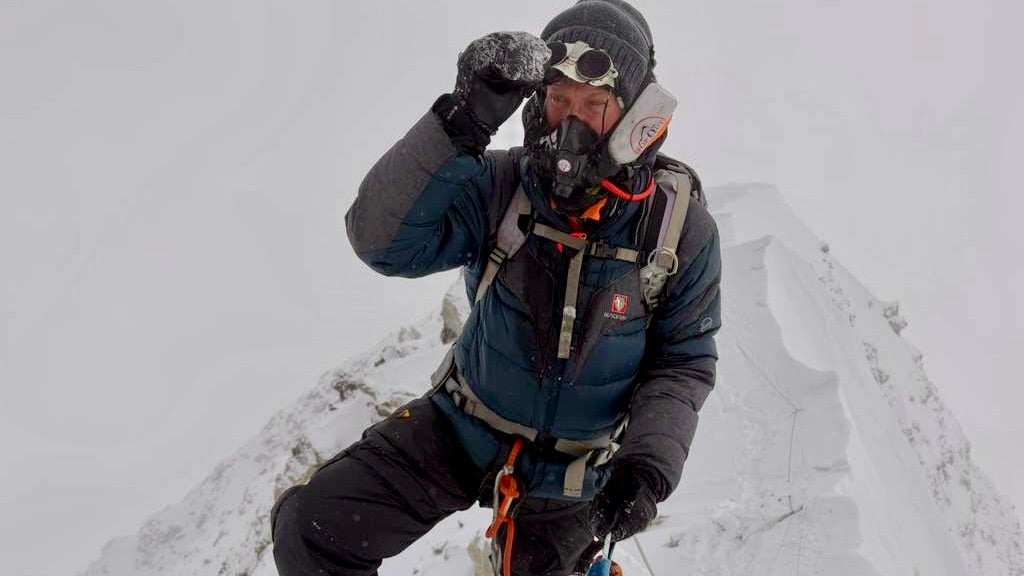
On the morning of May 9, Russian climber Konstantin Smirnov and his Nepali guide, Bhajuram Gurung, climbed the last few steps onto the summit of Nepal’s Makalu (8,485m), the world’s fifth-highest mountain. It was Smirnov’s first time on the summit of an 8,000-meter peak. He didn’t know that it was Gurung’s first time, too.
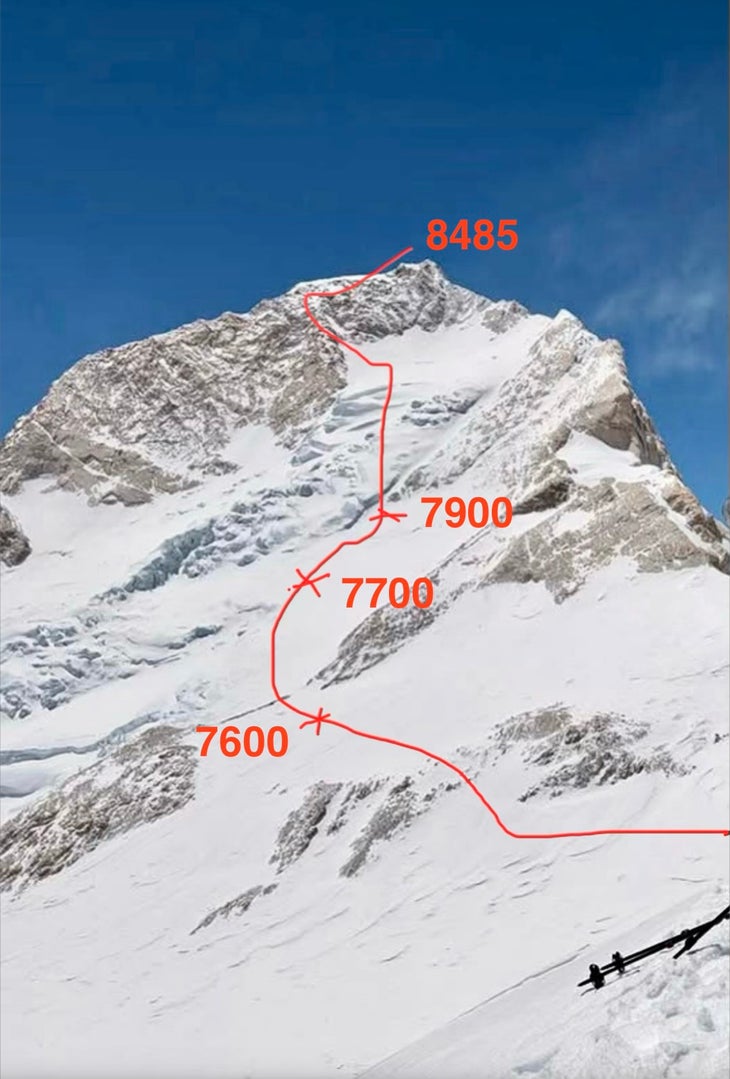
That evening at around 9 p.m., Gurung was back to their summit camp, Camp III, at 7,500 meters, but his 53-year-old client was still far above, moving through the snow alone. At around 9:30 p.m, exhausted and out of oxygen, Smirnov lay down on the snow at 7,720 meters, and fell into what might have been the last sleep of his life.
Smirnov survived, but narrowly. Three days later, he was flown off the mountain, after descending with the help of another Sherpa, Lakpa Rinji. After spending nearly 48 hours exposed to the elements, he lost all five fingers on his left hand to frostbite, and most of his ring finger on his right. “I can no longer wear my wedding ring,” he told me.
Smirnov is now suing his outfitter, Makalu Adventure, for about $75,000 USD. He has also filed a police report accusing Gurung of attempted murder. If Gurung is prosecuted, it would be the first time in Nepal that a commercial guide is charged with intentionally causing the death of a client.
If convicted of attempted murder, Gurung could face up to 10 years in prison.
So what happened on Makalu?
Smirnov is an experienced climber. He has summited Russia’s tallest peak, Elbrus (5,642m/18,510ft), fifteen times, including in winter, and has climbed eight 7,000-meter peaks, some with guides, some independently. He also attempted Gasherbrum II (8,035m) last year without oxygen and without a guide, but turned back under bad conditions.
On Makalu, he and Gurung began their summit push at 7:15 p.m. on May 8. They never discussed an intended summit time, Smirnov claimed, but they seemed to be making good progress. The input valves on his oxygen mask froze during the ascent, and Gurung was unable to help him fix them, so he was losing oxygen faster than normal, but besides this, he felt okay.
The first climber to top Makalu on May 9, a Russian client named Daria Borisova, reached the summit with her two Sherpas just after 5:00 a.m. Smirnov and Gurung, the last party to summit, were moving much more slowly.
They reached the summit at around 10:45 a.m., climbing close behind ill-fated American climbers Shelley Johannesen and Dave Ashley, who were accompanied by two Sherpas, Phurba Sonam and Tawa. (While descending the following day, the foursome was struck by a freak avalanche below Camp III, which killed Johannesen.) “We were moving in line just behind the American group, so I presumed everything was on track,” Smirnov said.
By this point, the clear skies they’d climbed under in the morning had given way to thick cloud cover and steady snowfall. Smirnov and Gurung stayed on the summit for around 45 minutes to an hour before heading down. The snow was burying the fixed lines, making the descent painstakingly slow. For a while, the American party was visible ahead of them on the summit ridge, but soon, the fog became so thick that Smirnov could no longer see them. “Still, I thought everything was fine,” he said.
It was around this time that Gurung began complaining that he was running low on oxygen, and yelling to the American party ahead that he needed to use some of their spare canisters.
When the duo reached the top of the French Couloir, at around 8,400 meters, Smirnov discovered that the Americans and their Sherpas had heard Gurung’s yells and left them a full bottle of oxygen. Smirnov said he was worried about his own oxygen, due to his frozen intake valves, but gave the bottle to Gurung. “I don’t know why he was low on oxygen,” Smirnov said. “I did not check how many bottles he took with us. I was careless.”
The pair then made their way down the steep couloir and then passed a large wall of seracs at 7,950 meters. Getting just to this point had taken them the entire afternoon, and Smirnov was moving increasingly slowly. It was now 6:00 p.m. they were still hundreds of vertical meters from their camp. That’s when his memory gets hazy.
“The last thing I remember was my guide shouting at me, saying, ‘It’s going to get dark! You’re walking too slow!” Smirnov said. He doesn’t remember how much further he stumbled, but eventually he lost consciousness. “I was in a dream,” he said.
He wasn’t afraid, and he felt no pain, just an overwhelming sense of bliss and comfort. “I was traveling, maybe on a train,” he said. “There was this noise around me, now I realize it was probably wind, but I was very comfortable. I saw a colorful, beautiful picture in front of me, sort of a turning wheel.”
As he watched this mandala-esque image, Smirnov noticed that his left hand felt strangely stiff, so he began massaging it. He would later realize that, amid his hallucinations, he’d taken his mitten off, and all of his fingers had frozen solid.
When Smirnov regained consciousness, it was nearly 5:00 a.m., some eight hours after his COROS watch indicates that he stopped moving. He’d spent the night alone, totally exposed to the elements. His guide was long gone, but he hadn’t just left—he’d never come back. “I saw the sunrise and was like, ‘Oh shit! I’m in the mountains,’” he told me. But his dream had been so peaceful that when he woke up, his first thought was just that he should fall back asleep.
“I wanted to go back into this dream and die,” the father of four admitted. “I was not thinking about my children, my wife of 27 years, Elena. I was so deep into what was probably oxygen deprivation, that I just felt at peace.”
But he was also confronted with a second thought: “I knew that if I died, nobody would find out that [Gurung] left me here. He will just say, ‘The client died, and I left after he died.’ I thought, ‘No way. I’m gonna go down and get you.’” This anger, Smirnov said, motivated him to get up. “Never in my wildest dreams did I imagine that a guide could just leave me up there, like a chicken, and never return,” he said.
After sending out an SOS with his Garmin at 4:49 a.m., Smirnov spent the remainder of the day moving down the mountain, his hand frozen solid, hoping he’d run into a rescuer. Although he was in touch via Garmin with his outfitter, Makalu Adventure, and although his wife was badgering them to send aid, no one showed up to help guide him down the route. It was another 12 hours before Smirnov staggered into the summit camp, arriving at around 5:40 p.m. He’d been exposed to the elements for nearly 48 hours.
When Smirnov approached their tent, he said Gurung dropped to his knees and hugged him, but treated him “like a ghost,” and made little attempt to help him.
“I asked him, ‘Did you bring me water?’ because I was without water for 30 hours,” Smirnov said. “But he didn’t even have water for me.”
Smirnov then asked Gurung to get him the ampules of dexamethasone—a corticosteroid used to treat altitude sickness—that he’d stashed in his tent at the camp, but he says the guide couldn’t find them, and made only half-hearted efforts to help him. “He was just giving me some garbage,” Smirnov said. “He couldn’t find any medicine. He did not untie my boots, help me into my sleeping bag, nothing. I was just laying on the floor of the tent, alone.”
Gurung, Smirnov said, had also never informed Makalu Adventure of his plight. Instead, they’d learned about the emergency only through Smirnov’s Garmin SOS call, which he sent the morning after his open bivouac. The two men spent the rest of the day in their tent at 7,500 meters.
That evening, aid finally arrived in the form of another Makalu Adventure guide, a Sherpa named Lakpa Rinji, or “Rinjin.” He’d spent 13 hours blitzing up from Makalu’s base camp at 5,800 meters, through the debris left behind by the slide that had struck Johannesen’s party that morning.
Smirnov says Lakpa Rinji woke him up sometime after midnight on May 10. “He immediately found my dexamethasone and helped me take it, gave me oxygen, helped me take off my boots, put me in a sleeping bag,” Smirnov said. “He also helped massage my foot to get the blood flowing. It’s thanks to him that I don’t have a frozen foot.”
The following morning, Smirnov asked if Lakpa Rinji could find his backpack, which he’d lost somewhere during his descent. The pack contained $1,900 in cash, intended as a summit bonus for his guide, along with a GoPro, prescription glasses, and other personal items. After around half an hour of searching, the Sherpa was unsuccessful, so he helped Smirnov descend the steep fixed lines from Camp III to Camp II at 6,600 meters, while Gurung descended with their oxygen bottles.
The next day, May 12, Makalu Adventures organized a helicopter to fly Smirnov off the mountain and to a hospital in Kathmandu. “There is no question that Rinjin Sherpa saved my life,” he said.
Is what happened on Makalu really attempted murder, or just negligence?
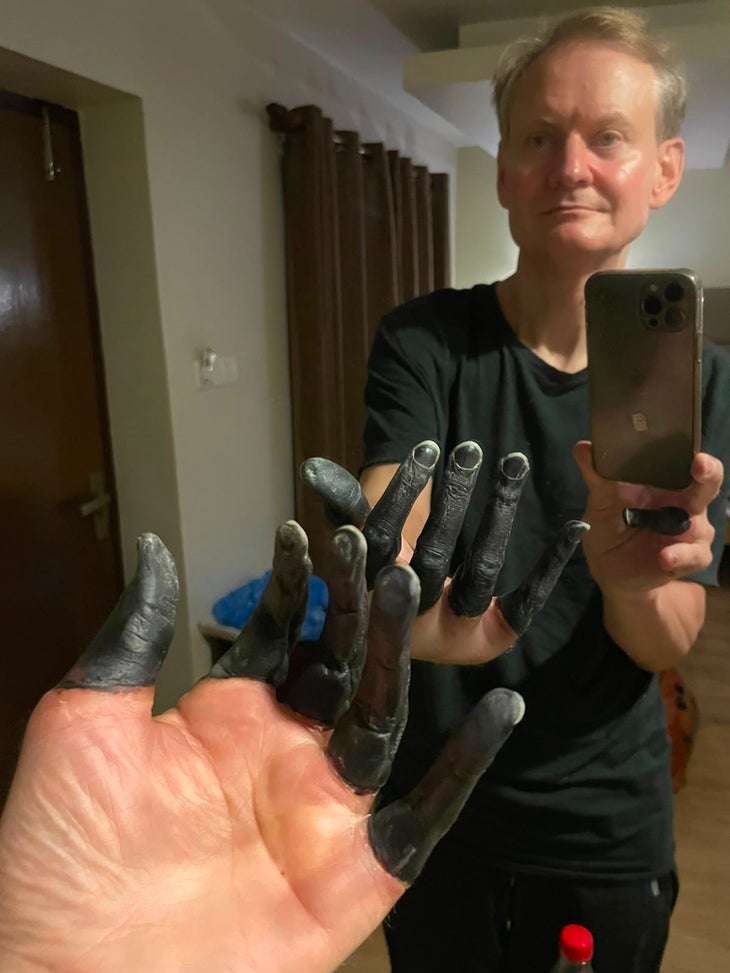
Kanchan Adhikari is a senior associate with Imperial Law Associates and the lead attorney on Smirnov’s case. She explained why her legal team is pursuing charges of attempted murder, not of mere negligence, like those faced by the alpinist who abandoned his girlfriend on Austria’s highest peak last year.
“Leaving Konstantin there is negligence,” Adhikari explained. “The issue is not just that [Gurung] left him there, but that after leaving him there, he did not make any efforts to go back to rescue him, nor did he inform anyone from his company. This guide believed that if he left Konstantin to die on the mountain, his negligence would be covered up. That is why we are accusing him of attempted murder.”
Smirnov said that this is also the reason why he’s angry with Gurung. “This was the trigger for my lawsuit,” Smirnov explained. “Even if he got scared and ran away on the summit day, he had plenty of oxygen in the tents [at Camp III], and after a night of rest he could have gone up to help me the next morning. That is not a problem with his experience or skills. It is more about his attitude. I think such ‘guides’ must be banned from the industry.”
In addition to Smirnov and his lawyers, I contacted Gurung and Lakpa Rinji. The former initially appeared interested in answering questions about the incident—though he noted that he would “share only what I personally witnessed and experienced”—but did not respond to any questions.
Lakpa Rinji was responsive, but was reluctant to place blame against his coworker or employer. “I think the guide, Gurung, had to save his own life also,” he said. “The client stayed at the summit without any reason for a very long time, around one hour. They were supposed to reach Camp III at 2:00 p.m. or 3:00 p.m., but were still two hours above Camp III at 6:00 p.m.”
He added that Gurung’s low oxygen meant that he needed to get down immediately. “His oxygen was very low, almost empty, but the client had enough oxygen. So he had to come down, but they both say the client was at a safe place, flat ground, when the guide had to give up and go down.”
Makalu Adventure’s owner, Mohan Lamsal, was more aggressive in his defense of his guide. He says Smirnov’s charges are baseless and represent a distinct switch-up from the Russian’s grateful disposition when the helicopter first plucked him off the mountain.
“This is fake blaming,” Lamsal said. “My company has been in operation since 1998. We never do our clients like this. Our duty is to help our clients as soon as possible.”
Lamsal said that he was “up all night” and “didn’t sleep” on May 10 because of the ordeal on Makalu. “I was talking with the helicopter company, dealing with his insurance company. I was very pressured. I worked very hard, dealing with weather, government rules, and we never delayed rescue. The delay was only because of him, sending Lakpa Rinji to find his bag.”
Lamsal claimed that rescuers were attempting to reach Smirnov as soon as he notified Makalu Adventure of the emergency at 4:49 a.m., but that these efforts were stymied by high winds and the avalanche that killed Johanessen. He does not have a clear explanation as to why Gurung did not notify Makalu Adventure of his client’s plight sooner, save for that Gurung himself, short on oxygen, was in dire straits and upon reaching Camp III. “He was very tired, and also he got sick, and it was windy and there was lots of snow. That’s why he couldn’t go that night,” Lamsal said.
Smirnov, Lamsal said, was initially very grateful to Makalu Adventure, and while he was in the hospital, paid $10,000 to Lakpa Rinji for saving him. The Russian also asked the company’s general manager, Brij Rajbhandari, to give another $1,500 from his backpack to Gurung for leading him to the summit.
But Smirnov told me that he kept mum about his frustrations while on the mountain and in the hospital for a few reasons: First, because he wanted to make off of Makalu alive, and later, because he was in shock at the loss of his fingers, and initially focused on his surgeries and recovery.
While he’s openly grateful to Lakpa Rinji, and was adamant that the man should receive a reward for saving his life, the summit bonus he’d said could be given to Gurung, Smirnov claimed, was no indication of his satisfaction with the guide’s performance.
He didn’t really care about the money, he said, and wanted to get the backpack back mostly because of the sentimental value of the pack itself and the personal items inside, like the GoPro and the prescription glasses. Smirnov shared WhatsApp screenshots of an exchange with Rajbhandari which seem to corroborate this account. “[To] whoever finds the backpack,” he writes, “I reserve $1,500 to be paid as a summit bonus to my guide, since he did deliver me [to] the summit, whatever happened next…”
Lamsal said he believes that, as the dust settled, Smirnov was just convinced he could get money out of the ordeal. “I don’t know who he met at the hotel after the hospital, the lawyers he met, but at that point, he started blaming,” he said. “He blames us. He blames Bhajuram Gurung. He’s just fake blaming.”
“I have a reputation to uphold,” Lamsal continued. “There is no reason for me to delay rescue, no reason for us to leave him behind. His story is completely fake. Someone is playing the game, behind the curtain, with this Russian.”
It’s worth noting that this is the second time I’ve corresponded with Lamsal about a botched Makalu expedition this year. On January 15, Lakpa Rinji and two of Lamsal’s other veteran Sherpas, the brothers Phurba Ongel and Sanu, made a winter ascent of the mountain, guiding an Iranian client named Abolfazl Gozali. It was only the second winter ascent of the peak, and the first winter ascent that was commercially guided. On the descent, Phurba Ongel slipped and fell to his death. While Lakpa Rinji and Sanu descended to try to locate their fallen comrade, Gozali allegedly insisted on hiking down alone. He was never seen again.
To buttress his defense of Gurung, Lamsal shared a bevy of local certifications held by his guide, including “Introductory Rock Climbing Course,” “General Mountain Safety Course,” and “Basic Mountain Rescue Training.” Gurung is registered by the Nepal Mountaineering Association (NMA), but as a Support Climber, not as a Sardar (a lead guide). As of press time, Makalu Adventure’s list of “Mountaineering Guides” also does not include Gurung.
Any certifications or lack thereof aside, a kicker detail is that Gurung had never summited an 8,000-meter peak before he guided Smirnov up Makalu.
Lamsal explained that Gurung has climbed the trekking peaks Ama Dablam (6,814m) and Lobuche East (6,090m). He had also attempted Annapurna IV (7,525m) and Manaslu (8,163m), but summited neither, both times due to poor weather.
What happens next?
Smirnov is suing Makalu Adventure for monetary damages to the tune of roughly $75,000 USD in Nepal’s brand-new consumer court, which was inaugurated in 2025. These damages include the cost of his medical treatments and legal fees, cost of living in Nepal during his recovery, and compensation for the physical and mental suffering he experienced on the mountain, including the loss of his fingers. He is also hoping to get any future medical expenses covered.
Smirnov’s is the second instance of a climber being left behind on an 8,000-meter peak this year, though it marks the first time a guide has been publicly accused of attempted murder as a result. It’s unclear if or when the criminal arm of the case will go to trial. Smirnov made a formal police complaint, requesting legal action, but formal charges are pending the result of a police investigation. Adhikari, his lawyer, said this investigation could take months.
The Russian climber told me that while he always intended to pursue a civil case against Makalu Adventure, the idea to charge Gurung with attempted murder was brought to him by his attorneys, who encouraged him to take action to set a legal precedent. His efforts aren’t intended to be punitive, he said, but to raise awareness.
“My story could be particularly relevant for Western climbers going on a budget expedition to their first 8,000-meter peak, if they do not yet have a long term relationship with a specific local guide or operator,” he said. “I want to talk, because I think a lot of people in these situations, they don’t survive. And then the company says, ‘Oh, the client died, and then the guide walked away.’ In my story, this is clearly not the case. I was alive.”
The post After Losing Six Fingers on Makalu, Russian Climber Accuses His Guide of Attempted Murder appeared first on Climbing.