 BURST
BURST
Near the end of sixth grade, Bronia DePedrina’s daughter became anxious and stressed about going to school.
Her daughter had always been a good student and enthusiastic learner, said the Vancouver mother, and there were no signs in her report cards or in other communication from her elementary school that she might be struggling academically.
DePedrina later learned her daughter was having a hard time in math. She had gone to the teacher for extra help, she said, but didn’t receive any.
DePedrina then talked to the teacher herself. “It was clear he wouldn’t or couldn’t explain it,” she said. “His solution was to give her more worksheets.”
She and her husband, both decent at math, tried their best to help, but were not familiar with the new math strategies required at the school.
“These are fundamentals you’re going to build on forever. We can’t let it go,” she told her daughter. “We have to do something.”
Her call to action is echoed, on a much larger scale, by math and education experts alarmed over Canadian students’ declining math performance on global tests. A recent report from the C.D. Howe Institute called it an “urgent national concern” that requires immediate action by provincial governments.
The report highlighted Canada’s performance over the past decade on two international assessments.
Results from the 2023 Trends In International Mathematics and Science Study showed Canadian Grade 4 students scored well below their peers from the U.S., England and Germany in most benchmark levels.
Canada had a better showing on the Programme for International Student Assessment, which assesses, in part, the math skills of 15-year-olds in 81 countries. In 2022, Canada ranked ninth.
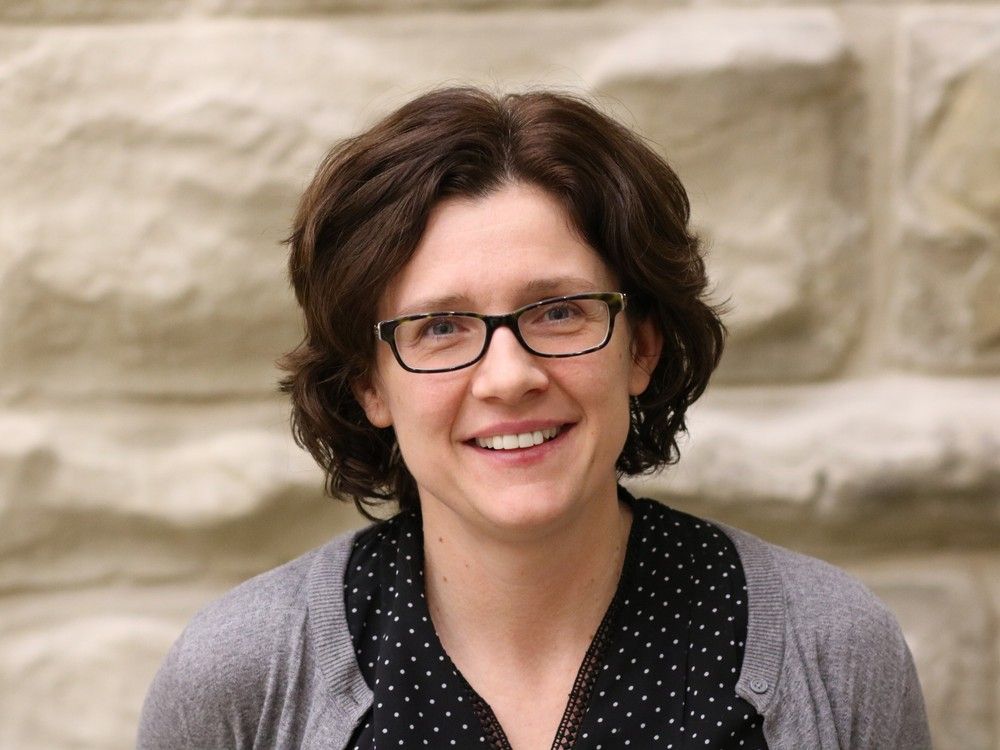
But “ranking near the top of a falling curve does not imply all is well,” said report author Anna Stokke, a mathematics professor at the University of Winnipeg.
Average math scores in Canada have dropped from 532 in 2003 to 497 in 2022, she pointed out. B.C. fared slightly worse, going from 538 to 496 over the same period, a drop of 42 points, which the Organization for Economic Co-operation and Development (OECD) equates to a loss of two years of learning.
Even more concerning is that the proportion of B.C. students who were considered functionally innumerate nearly tripled from 8.4 per cent in 2003 to 21.3 per cent in 2022.
At the same time, the proportion of “high-flyers” — those who are likely to go into science, technology, engineering, and mathematics courses, often called STEM — was cut nearly in half from 21.6 per cent to 12.1 per cent.
“What it says is you have a lot more students struggling in math, almost a quarter, and you have a lot fewer students excelling in math,” said Stokke. “Those are both really bad things. Something isn’t right. Something obviously has to change.”
‘If you fall behind early, it can snowball’
Math is foundational to critical thinking, problem-solving, and many day-to-day skills, including managing personal finances and evaluating statistics and data.
Studies have shown that early math achievement corresponds with higher academic achievement and career earnings. Children with strong early foundational math skills are more likely to take advanced math classes in high school and attend post-secondary education. They are also less likely to have math anxiety.
Math is also crucial in many fields, including economics, sciences, finance, technology, and medicine. Let’s Talk Science, a Canadian advocacy group for STEM education, estimates that 70 per cent of top jobs, including skilled trades, require a STEM education, even as less than 50 per cent of Canadian students graduate with Grade 12 math and science courses.
That has ripple effects, as opting-out of STEM courses in high school affects students’ choice of post-secondary programs and future careers.
“Students come to university, they don’t have the proper math prerequisites in high school because they fell behind somewhere along the way, and they can’t get into the program of their choice,” said Stokke.
While it is difficult to pinpoint the factors causing the decline in math scores, Stokke said there are evidence-backed solutions that can make a difference.
She called for an end to discovery-based instruction, saying students do better when instruction is teacher-led and explicit, a mandatory multiplication table check by the en d of Grade 4, and universal math screenings, which are quick tests for K-8 students two or three times a year that would identify kids who are at risk of falling behind.
“The problem with math is it’s so cumulative that if you fall behind early, it can snowball,” she said. “Things can get worse and it won’t get better if nobody intervenes.”
She also supports more standardized tests, which have been scaled back or eliminated in B.C. in recent years amid criticism they narrowed the curriculum and placed undue stress on students. Supporters, however, argue that robust, system-wide testing provides accountability and transparency.
“You can’t fix what you can’t see,” Stokke said.
She said B.C.’s math curriculum is vague, with a lot of euphemisms, and lacks effective benchmarks. The curriculum, which was last updated for K-9 in 2016 and Grades 10 to 12 in 2019, has “a lot of key concepts that have been delayed and omitted,” she said.
Fraction arithmetic, for example, is introduced several years later in Canada than in other countries. And by Grade 5, B.C.’s curriculum explicitly says that “memorization of math facts is not intended.”
Stokke, who believes kids should know their times tables by the end of Grade 4, is appalled. “In the U.S., multiplication fact fluency is targeted by the end of Grade 3,” she said. “In B.C., we’re saying students don’t need to memorize math facts. It’s going to cripple those kids.”
In a statement, the B.C. Education Ministry said the math curriculum is aligned with best practices in national and international numeracy education and uses a “concept-based approach” and combining content, competencies to connect learning to the real world.
The curriculum is designed to develop deep mathematical understanding and fluency, logical reasoning, analytical thought and creative thinking, it said. Because every student learns differently, the curriculum allows teachers flexibility in teaching and provides a “diverse range of learning opportunities.”
It defended the province’s education performance, citing another global test, the 2023 Pan-Canadian Assessments, as an example where B.C. showed improvements in math scores.
Deeper learning depends on mastering the basics
Sean Chorney, an associate professor at Simon Fraser University’s faculty of education, said he isn’t concerned about Canada’s ranking in the Trends In International Mathematics and Science Study and the Programme for International Student Assessment.
Canada still did well overall on the International Student Assessment, he pointed out. The international tests are also given “context-free,” he said, which is different from how math is taught in B.C.
Canada is a diverse country with lots of immigrants and a 2014 Truth and Reconciliation report that mandates an awareness and understanding of Indigenous mathematics, said Chorney.
Not scoring high on an international test that does not have that diversity and context is not necessarily a bad thing, he said. “The fact that our scores might be declining at some levels could even be a positive thing because we are diversifying our mathematics awareness and understanding.”
Knowing the multiplication table by the end of Grade 4 “would be nice, all things being equal,” he said, but he prefers an approach that makes math more inclusive, diverse and engaging.
Using the example of 5×7, Chorney said instead of simply memorizing the answer, “We might ask students what that question is in relation to your life, how is it related to 5×8, how might it be more meaningful.”
It might sound “fluffy,” he said, but argued it is important to contextualize math questions and make the subject relevant to the student, especially in a digital age where technology is ubiquitous and has shifted mathematics education from memorization and manual calculation to one that can be focused on conceptual understanding and problem-solving.
“That contextualization is a very important part of the education of mathematics. We don’t want to teach students to be calculators. Our mathematics need to be different.”
Math teacher Mike Hengeveld oversees a STEM program at Templeton Secondary in Vancouver that has grown from a dozen kids about a decade ago to 148 students. The students, ranging from Grades 8 to 12, do a variety of projects together, such as building rockets, a cardboard canoe that will race across Templeton pool, and pickling.
All of it is inquiry-based, said Hengeveld, as a way to make the math and science more meaningful and “sticky.”
“The math we are learning has a context to it,” he said, explaining his students learn how to solve an equation, but also know what it is for. “That’s the sweet spot.”
Over his two decades of teaching, he has seen incoming high school students less focused on memorization, less of what he calls the “drill and kill” method, which uses repetition to achieve automaticity.
How well do students know their times table? “Fluency varies,” he said.
A believer of inquiry-led learning, Hengeveld believes direct instruction also has a place. The fight, he said, is in finding the balance.
Inquiry, or discovery-based, learning is a lot of fun. “Kids enjoy it. It opens the door to deeper learning. But you just can’t do it when the kids don’t know the basics,” he said, comparing it needing to learn how to spell and write sentences before you can write essays. “There’s a need to be nuanced and have a blend of both.”
Hengeveld, who received a Prime Minister’s Award for teaching excellence last year, came from the math field, with a double major in math and physics. Those qualifications are not common among K-8 teachers, most of whom are generalists and do not come from STEM fields.
Demands on teachers growing
Marina Milner-Bolotin, a STEM education expert at UBC’s faculty of education, has been working with future math and science teachers for 15 years and believes their education isn’t adequate to prepare them to teach math.
At UBC, a master’s degree program in education has been cut back from two years to one, she said. That includes one course, or less than 36 hours, on how to teach math.
“That’s a minimal amount of time to become a good math teacher,” said Milner-Bolotin, who also cited a lack of mentorship, support and professional development as challenges.
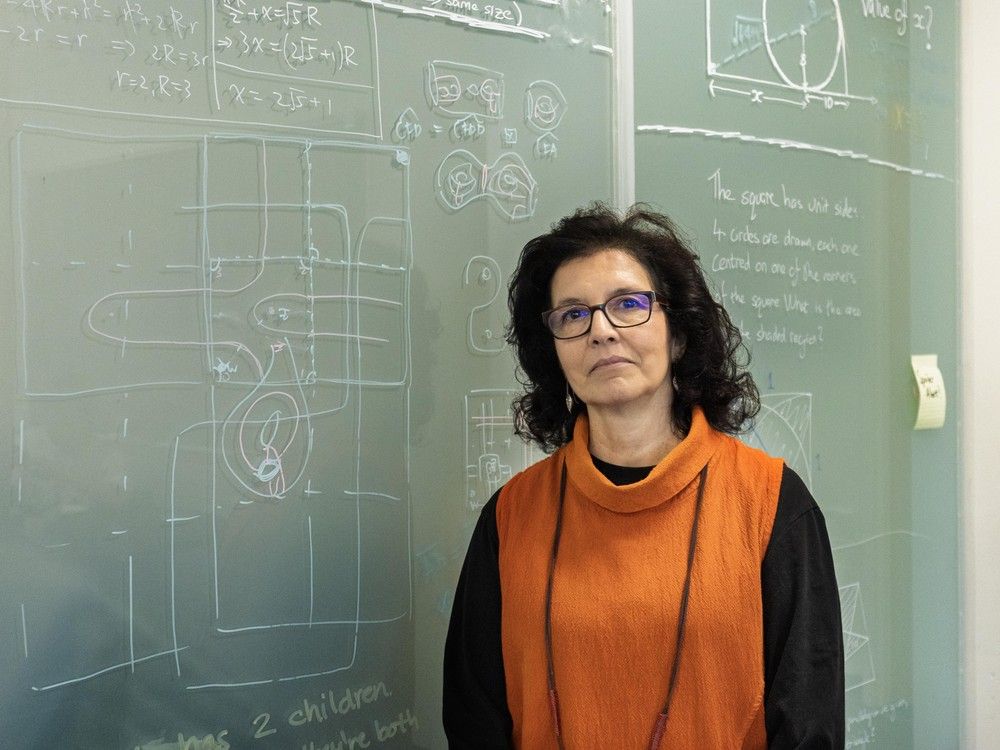
Melania Alvarez, an education co-ordinator at the Pacific Institute for the Mathematical Sciences at UBC, has been running summer camps for elementary school teachers for the last nine years.
“I get a lot of applications from teachers who tell me they don’t feel comfortable teaching math,” she said.
It’s not a knock against teachers, she says, who face increasing demands and are let down by a system that does not give them adequate support and training to teach math.
For example, there are no longer mandatory textbooks, so teachers now have to choose their own textbooks or go online for resources to produce handouts for their students.
Over the past decades, “math wars” erupted as the way math is taught shifted from an emphasis on foundations and teacher-led learning toward discovery-based learning that emphasized concepts and real-life problem solving.
Both Milner-Bolotin and Alvarez said it is not an issue of which approach is better, but whether teachers are able to teach it.
“It’s not new math or old math, but it’s do we have highly educated, knowledgeable mathematics teachers who can teach mathematics?” said Milner-Bolotin.
If anything, the new math curriculum demands more of teachers, said Alvarez.
Rote learning and memorization are easier to teach. Explaining concepts and having a broad curriculum that prioritizes “big ideas” and “core competencies” requires more expertise. “The teacher really needs to know a lot more math.”
What parents can do
In the home, parents can help their kids develop a positive relationship with math by not expressing their own discomfort or dread of the subject and helping them have fun with it, said Alvarez.
“Start playing games. I started doing mathematics because of puzzles,” she said. “What we need is to instil curiosity in children about mathematical problems.”
There are websites such as MathPickle and puzzles and games by former B.C. educator Susan Milner available online that parents can use.
For kids who are struggling with math in elementary school, it may be because they don’t have the foundations in place.
She recommended that parents first reaffirm that their child is good at math — “nobody has to be a genius to be decently good at math,” she said — then practise with them, but do it in a fun way.
“Look, if you have a fourth grader, they’re not going to start playing basketball from day one. We believe in sports that if you don’t practice, you’re not going to get good.
“So what is it about math? It’s the same thing. If you don’t practise, you’re not going to be good at math.”
After her daughter’s struggles in Grade 6 math came to light, discussions with the teacher hit a dead end, and attempts to tutor her at home ended with tears and frustration, DePedrina enrolled her at Mathnasium, one of many after-school learning centres that have grown over the past decade across Canada and the U.S.
An assessment at the learning centre found her daughter only knew about 40 per cent of what she was supposed to know at Grade 6. Since then, she has been going once a week, and is expected to have caught up for Grade 10 this summer. It took three years, but her daughter’s math skills — and self-esteem — have improved.
“She doesn’t always want to go. She may say she’s tired and feeling under the weather. But every time she gets back in the car, she’s always in a better mood. Sometimes she’d say, ‘I killed it. I got the answers right.’
“That’s huge.”