 BURST
BURST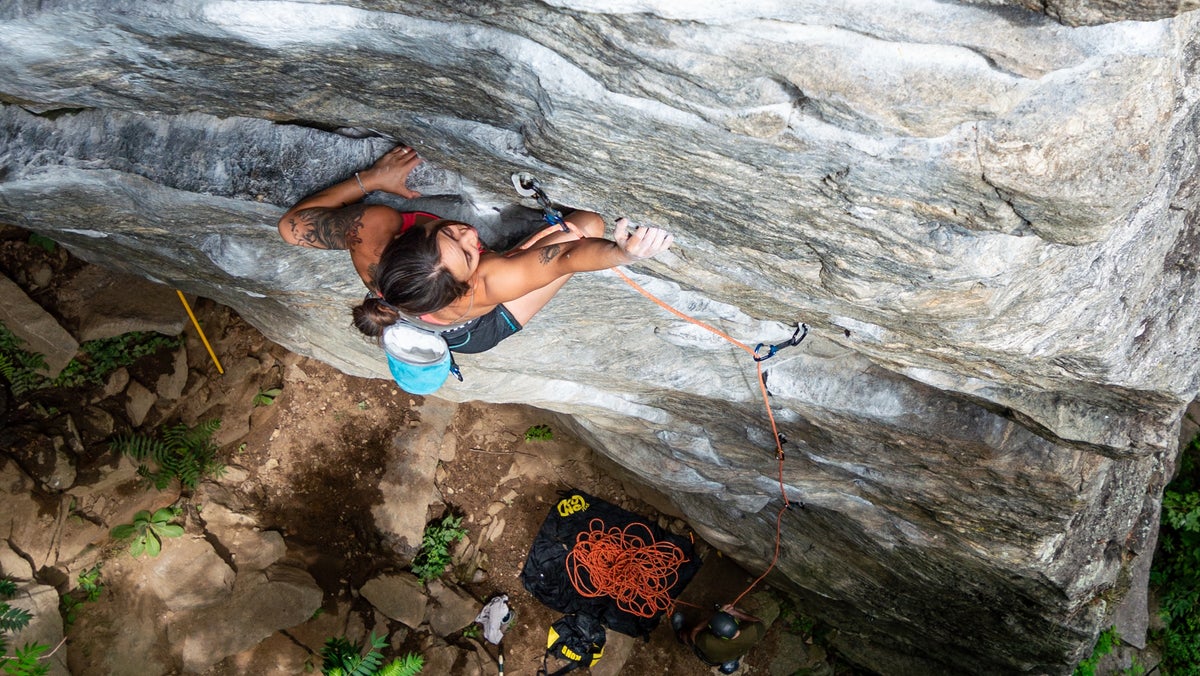
On Tuesday, a local climbing coalition announced the immediate and total closure of Farley Ledges, a significant Northeast climbing area with hundreds of routes and boulder problems, from steep sport lines to hard highballs. According to the Western Massachusetts Climbers’ Coalition (WMCC), the closure officially went into effect on April 3.
Why Farley Ledges closed
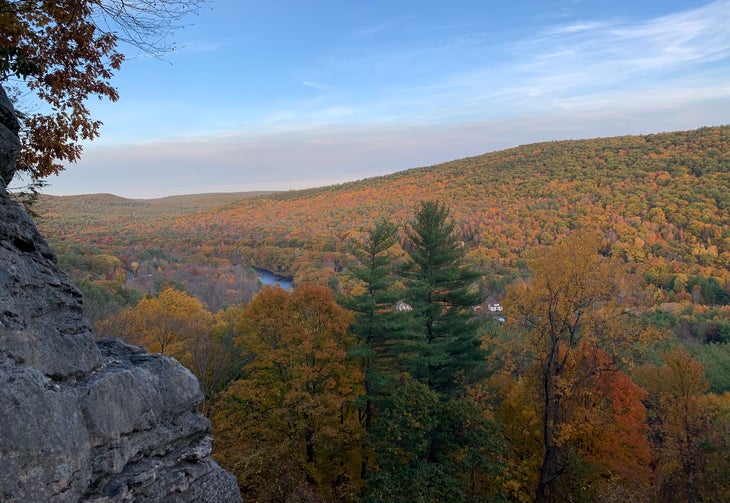
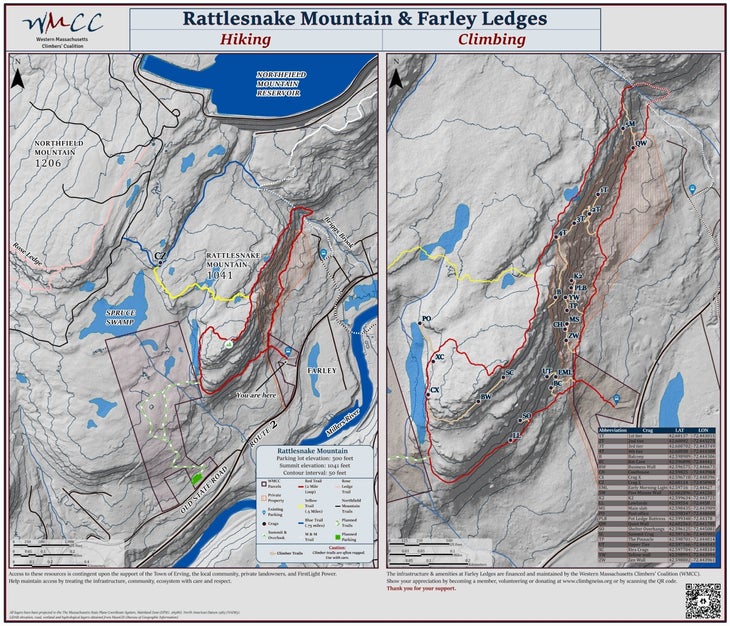
Although the WMCC and Access Fund purchased land around Farley Ledges just four months ago, much of the land surrounding the climbing—including a section of the cliff—remains privately held. On April 3, a private landowner sent a cease and desist letter to WMCC demanding climbers stop crossing their property to reach the rock. A day later, “no trespassing” signs appeared on the private property.
Unlike the closure of The Zoo in Red River Gorge last year, WMCC emphasizes that climbers are not to blame for this unexpected closure.
Regina Madden, who has climbed at Farley for around five years and serves on the WMCC board, told Climbing that the approach trails to the crag and boulders traverse several parcels of private property. “We have great relationships with the other landowners,” Madden says.
But one landowner, who has been in talks with WMCC about selling them their property, abruptly decided to remove access. Currently, the single landowner that rescinded access is “not open to negotiation,” Madden explains. “They simply aren’t budging.”
The best hope Massachusetts climbers have for climbing at Farley Ledges is a new parking lot and alternative access trail. The only problem? After the recent purchase of the 70 acres adjacent to the cliffs of Farley Ledges, WMCC can’t afford to build a parking lot or trail right now. But if they can raise the funds to pay the mortgage for the land, while simultaneously funding the lot and trail, access can be restored sooner rather than later.
“By building that parking lot, it will open up access to the Red Trail,” Madden explains, “which doesn’t involve crossing over the property of that landowner.”
The significance of Farley Ledges to climbers
For America’s Northeastern climbers—and particularly Bostonians—the temporary loss of Farley Ledges comes as a major blow. Climbers have been coming to Farley to climb for decades. Located about a 1.5-hour drive from the city, the cliffs and boulders sit just south of the borders with New Hampshire and Vermont.
The high-quality climbing on gneiss rock attract an estimated 10,000 climbers every year. That number rises annually, as the sport grows and more people discover the rock here. The area is home to an estimated 400 sport, trad, and mixed routes, ranging from 5.4 to 5.13, as well as 400 boulder problems graded V0 to V13.
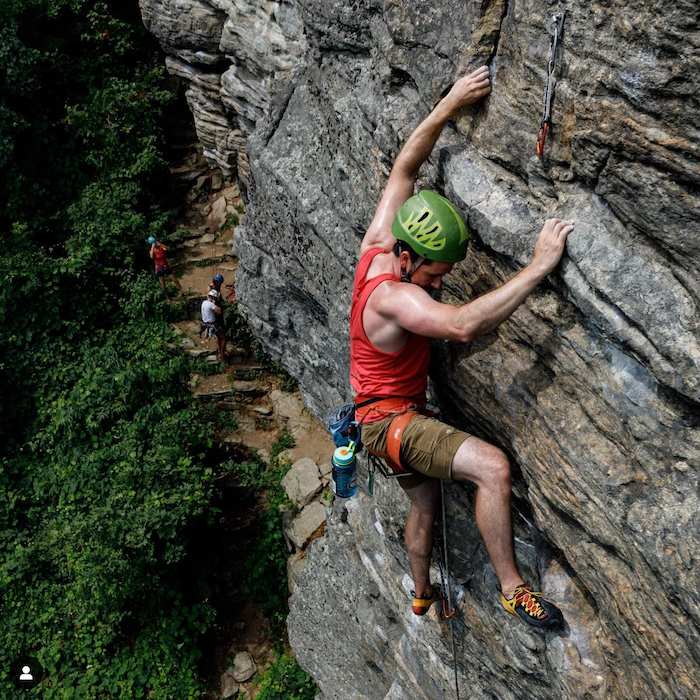
But no guidebooks to the area exist, and precious little route beta can be found online. That’s in part due to the access sensitivity with bordering and overlapping private property. Farley Ledges has often been considered a climbing area “on the downlow,” according to climber Will Chang, who formerly called Boston home.
“This led to everyone I met being extra respectful of the land, and happy to share beta since there’s no written info,” Chang explains. “It’s a special place for me where I grew my love for climbing and found my people. Massachusetts doesn’t have that many crags with quality rock and access, so hearing about this closure is a huge loss.”
“Farley is a special place,” says Zoe Gates, who has fond memories of climbing in the area in college. “There aren’t many other places in southern New England where you can find such a high concentration of quality routes.”
What climbers can do to reopen the rock
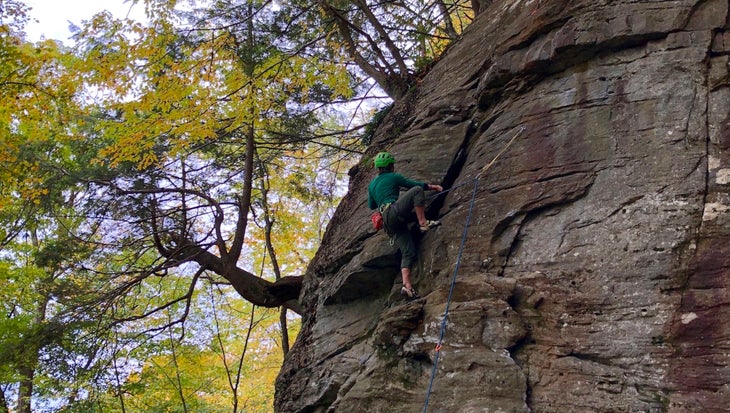
While the rock of Farley Ledges technically remains accessible, the WMCC is asking climbers to stay completely out of the area, no matter how creative they intend to get with their approach.
“Despite what you may have heard, no one should access Farley from any direction right now,” WMCC wrote on its website. WMCC added on Instagram that climbers disregarding the closure could “jeopardize future access.”
Madden echoes that sentiment. She also explains that the landowner who rescinded access isn’t exactly joking around. “It’s not like a finger wagging,” she says. “They have said that if they see anybody on the land, they will call the cops.”
As WMCC works with Access Fund to restore access, the volunteer-based coalition asks climbers to visit other nearby Western MA areas like Rose Ledge, Catamount, or The Sanctuary instead. But, as smaller crags with less infrastructure, Madden urges climbers visiting these areas to make an extra effort to reduce their impact.
The news of Farley Ledges comes in the wake of a couple other climbing closures announced around the world this month. Following the deaths of two climbers on April 11, Montserrat near Barcelona closed five routes this week due to rockfall concerns. And on April 10, the Mayor of Kalymnos announced the temporary closure of 10 climbing areas requiring safety inspections, after the tragic fatality caused by a fixed anchor failure on March 27.
No timeline currently exists for the reopening of Farley Ledges. Climbers interested in supporting WMCC’s and Access Fund’s efforts to reopen the area can donate to the ongoing Farley Ledges Conservation Initiative.
The post Hundreds of Routes Unexpectedly Close at Beloved Massachusetts Crag appeared first on Climbing.