 BURST
BURST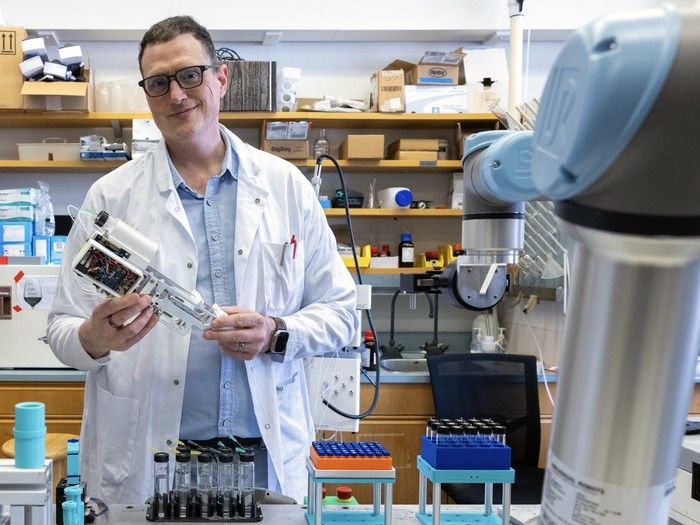
A pilot project will use cutting-edge chemical analysis and artificial intelligence to trace the origin of illegal drugs and provide up-to-date information on the changing supply on B.C. streets.
The “track and trace” pilot will last two years, with a cost of $600,000, and is a partnership of Aidos Innovations, UBC researchers and police departments in B.C.
Victoria Police Chief Fiona Wilson said it could allow police to better target organized crime by leading them to production facilities where illicit substances are being produced. She likened it to how DNA changed the game for policing.
“Track and trace does not just identify what a substance is,” said Public Safety Minister Nina Krieger. “It helps us understand how it is made and where it is likely to move next by combining chemical analysis with a growing data platform to reconstruct production methods and anticipate how harmful supply is evolving across communities.”
Krieger added that the focus will be on targeting organized crime, not tracking or criminalizing individuals who are using drugs themselves.
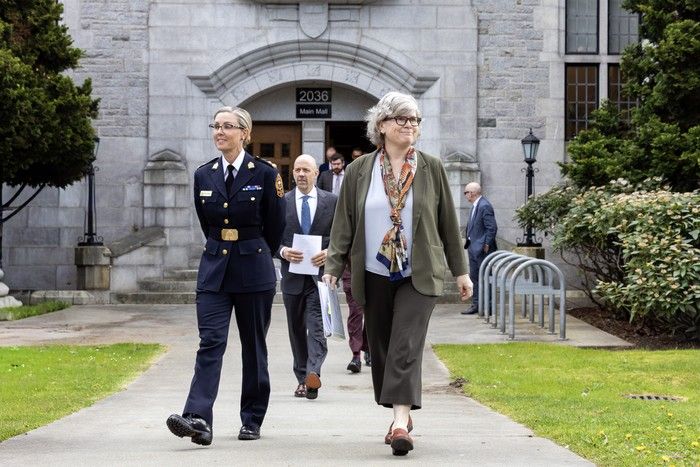
“We can’t reliably determine whether drugs found in different communities come from the same source, and we often cannot link overdose trends to changes in supply quickly enough,” Wilson said. “This initiative begins to change that by analyzing the unique chemical fingerprints of illicit drugs. We will be able to compare samples across time and across jurisdictions.”
Matthew Roberts, managing director of Aidos Innovations, told The Canadian Press that the system doesn’t just identify drugs but uses a robot to detect a broad spectrum of chemicals, which allows AI to calculate the “recipe” that makes up particular batches of drugs.
“We can actually back calculate the method of production,” he said. “So, this goes well beyond typical drug-checking sort of technology.”
Health Minister Josie Osborne said that having better knowledge of the drug supply will also help first responders by providing greater clarity about what toxic additives could be in somebody’s system and potentially allowing them to save more lives.
While toxic drug deaths decreased in 2025, the government is seeing an uptick in toxic additives such as benzodiazepines so far in 2026, which can make life-saving measures such as naloxone less effective.
In the 10 years since the toxic drug crisis was declared a public health emergency , over 18,000 British Columbians have died from either an overdose or toxic drug poisoning.
Critics of the government say the move to better track the flow of drugs is a good step, but one that is long overdue.

Independent MLA Elenore Sturko of Surrey-Cloverdale, a former RCMP officer, said it has taken 10 years for the province to begin rolling out something that should have been an obvious priority from the beginning.
She said that police have long lacked the ability to trace where drugs are coming from, which became a problem when drugs started being diverted from the province’s safer supply program.
“When we had, what the government itself classified as significant diversion of safe supply, they really didn’t have any way of tracking what was going on, and they did not work with police in a way that allowed them to have really good surveillance of the programs that they had in place,” said Sturko.
Conservative public safety critic Macklin McCall, also a former RCMP officer, pointed to a recent drug bust in Chilliwack and said that it seems like every few months police are dismantling another production facility.

He said the new program won’t help police officers target organized crime effectively and what is needed are more officers.
“You can provide all the tools for police to do their job, but if there are no police to use those tools, then those tools become useless,” said McCall, who said there needs to be co-ordination between all levels of government to combat the drug trade.
“We know that international drug trafficking is happening right from British Columbia to places like Australia, New Zealand. I think that there needs to be a co-ordinated effort with respect to that, because once you go outside of British Columbia, it becomes another jurisdiction.”
Drug advocate Garth Mullins said that the program is positive in the sense that it provides more data but criticized it over its partnership with police.
He said drug checking has been around for years but needs more funding. He also said that at the end of the day, what the province needs to do is scale up its prescribed alternatives program to give people an alternative to illicit street drugs.
“This data will only be generated after police have seized the drugs, and so this is something that seems to be assisting police in interdiction. Every time you have a strategy of police trying to get dope off the street, you’re basically creating more risk of more contamination,” said Mullins.
“For the last almost century, the more police chase drugs, the more drug dealers and the supply chain has to innovate and find novel components to substitute.”
Former chief coroner Lisa Lapointe agreed, saying that if the toxic drug crisis were simply an issue of giving police more money and resources, it would have been solved already.
She said she’d like to see the province to develop a long-term plan to work with health professionals on getting people off the street supply.
“This is a health issue. Everybody agrees it’s a health issue, and yet, continually, the health professionals who have evidence of what is effective to address the harms that their patients experience and people with drugs experience, are left out of the conversation,” said Lapointe.