 BURST
BURST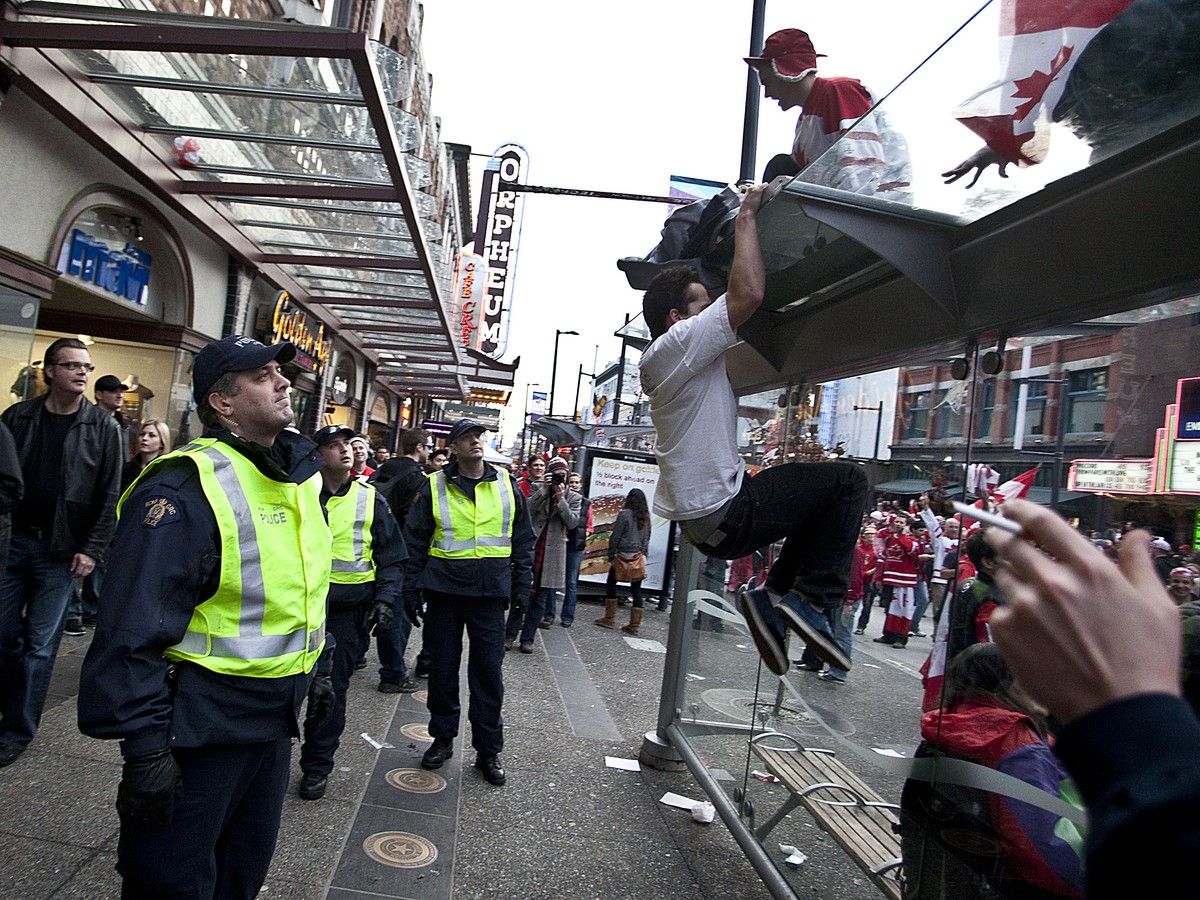
When the World Cup comes to Vancouver in June and July, there will be thousands of fans sporting soccer jerseys and their national pride. There will also be an unprecedented number of people wearing badges.
“On a match day, there will be the largest deployment of police resources for a single event that has ever occurred in Vancouver,” Dave Jones, head of security for the local FIFA games, said in a recent interview with Postmedia.
That means there will be more officers than were assigned to any single Vancouver event during the 2010 Winter Olympics, such as the gold-medal hockey game. Or for one of Taylor Swift’s 2024 Eras Tour concerts, which were an international sensation.
Jones, a four-decade law-enforcement veteran who was chief of both the New Westminster Police Department and Transit Police, would not reveal the exact number of officers assigned to the seven games in Vancouver. He said specific deployments are still being finalized.
The contingent will come from Vancouver police, the lead agency for this event, as well as from the RCMP and municipal forces in Calgary and Edmonton, where some officers have trained alongside the VPD for public safety and crowd control.
Officers will not just be stationed near B.C. Place Stadium, where the games will be played, but at the practice facilities at the University of B.C. and Killarney Park, the Fan Festival at the PNE, the airport, hotels where VIPs will stay, traffic control, and potentially with players if they want to explore the city. There will also have to be enough officers in other areas of the city for 911 calls unrelated to the World Cup.
There are several factors behind this historic security plan, including escalating global tensions, in particular in the Middle East where Gulf countries have been badly affected by the war between Iran and the U.S. and Israel. Qatar and Egypt are both scheduled to play in Vancouver.
“Geopolitics plays a lot into what we look at,” said Jones, who is employed by Vancouver City Hall to lead FIFA Vancouver’s integrated safety and security unit.
Information has been gathered regarding visiting nations, and officers have spoken with officials from the teams and their fan associations who are travelling to Vancouver.
“We educate them on the city of Vancouver and Canadian laws and customs, and what the expectations are,” he said. “The whole idea is to mitigate (risk) ahead of time. … Right now, we feel in a pretty comfortable position.”

The overall potential risks at these games, Jones said, include petty crimes or unruly behaviour by overzealous spectators, protecting pedestrians from vehicle rammings, and avoiding cyber attacks. To stave off possible incursions by air, Transport Canada will establish no-fly zones for citizen-owned drones over parts of the city and the RCMP will operate drone-detection technology, he added.
Preparation is also being made for any protests, in part by examining who is travelling to the city for the World Cup.
Jones said demonstrations happen often in Vancouver and are not disrupted if they are peaceful and lawful, but that “planning is underway with the Vancouver Police Department as to how to respond” if things get out of hand during the World Cup.
Jones’ team has also prepared for possible crises caused by natural factors, such as an earthquake or a heat dome hitting Vancouver this summer, when Environment Canada has predicted hotter than normal temperatures. A 2021 heat dome, when parts of B.C. reached 40 degrees Celsius, led to the deaths of 600 people in the province.
If temperatures soar alarmingly high during match days, the potential responses to try to prevent soccer fans from overheating include distributing water, creating cooling centre areas, ensuring lineups are shaded, and even moving game times to the cooler evenings. Any decisions would be made in co-ordination with FIFA and Vancouver City Hall, Jones added.
So, with all these officers in town, what do Vancouverites need to know?
Jones, a big soccer fan who has travelled to other World Cup matches, encouraged residents to enjoy the excitement of the tournament. But he acknowledged there will be “added layers” of security in the city.
For example, about 200 surveillance cameras have been installed in public areas, and will start recording on different dates. The cameras near B.C. Place Stadium will turn on May 13, as FIFA takes over the venue on May 14, while those near UBC won’t go live until early June when FIFA gets control of the training facility there.
Jones said the cameras are to “enhance security” at the World Cup by scanning event perimeters and crowds for potential risks, and that the use of the footage and how long it will be retained has been approved by B.C.’s privacy commissioner.
Jones insisted Downtown Eastside residents will not be displaced in the lead-up to the matches starting in June, and that the U.S.’s controversial Immigration and Customs Enforcement agency will play no role in security in this province.

A year ago, the province estimated security for Vancouver’s World Cup matches could cost $345 million , with funding from sources that include city hall, the province and federal government. A final tally is expected to be released next month.
While Jones said his team is doing everything it can “to mitigate risk,” there is also an emphasis on planning security “in a cost-efficient manner.”
The federal government says 7,000 police officers were in B.C. for the 2010 Olympics, but it is not clear how many were assigned to any one event in Vancouver.
Other local police departments, such as Surrey or Abbotsford, have no formal roles for FIFA security, but will police their own communities as an anticipated 350,000 visitors flood into Metro Vancouver, and will be nearby if Jones’ team suddenly needs more officers.
Jones runs the integrated safety and security unit with the province and Vancouver police. There are 18 member agencies, including health authorities, fire and ambulance, and private security.
With less than 10 weeks to go before the games get underway in Vancouver, how is Jones feeling about ensuring safety for the city’s residents? He says his teenage grandchildren scored tickets to one of the matches, and he has no worries about them taking transit to the stadium and attending the game.
“I’m 100 per cent confident that they’ll be safe.”