 BURST
BURST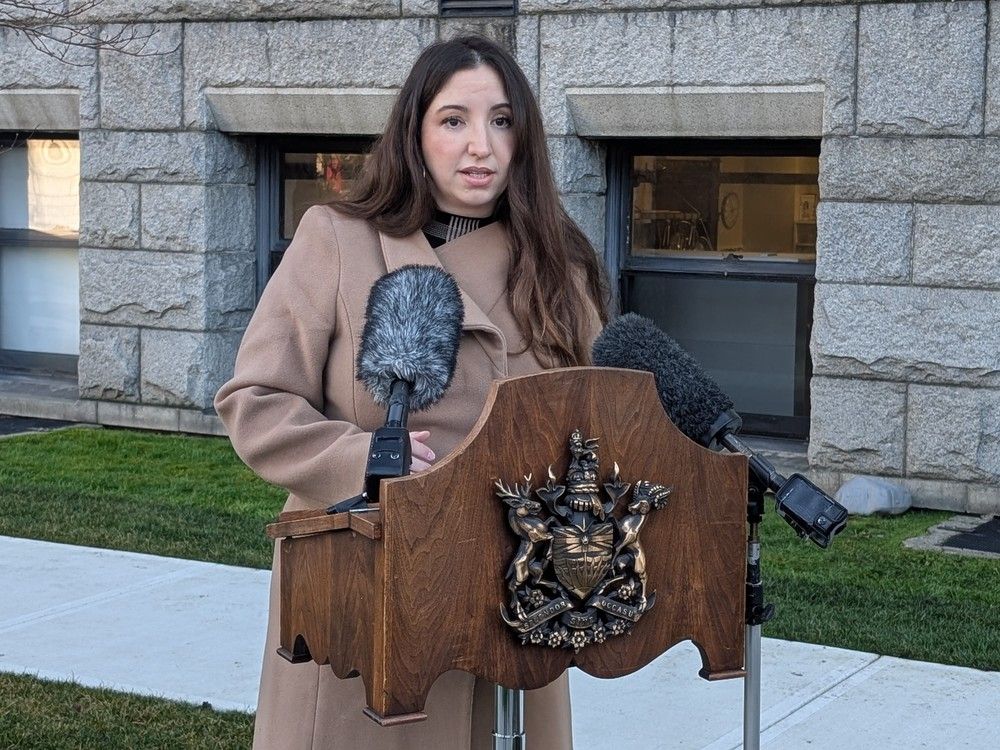
A terminal cancer patient is speaking out about the waiting times she warns will take her life.
Sara Gillooly, a Port Moody real estate agent, had her nightmare begin in May last year. Despite being told she was en route to recovery, she is now staring at a terminal diagnosis. When she noticed a massive lump in her breast, she headed straight to the emergency room.
The mother of a 10-year-old and a four-year-old said she had been feeling unwell for months, dealing with brain fog and memory loss that was uncharacteristic for her. A mammogram later confirmed there was definitely something there but it took a few weeks before an ultrasound was conducted, followed by a biopsy.
“During my ultrasound, I looked at the screen, which I probably shouldn’t have done, because I could see the networking veins coming to the tumour. And it was a very scary moment,” Gillooly told reporters at the legislature in Victoria on Wednesday. “The tech told me, ‘Don’t ever come to these things alone. Always bring someone.’ And I knew then that it was cancer.”
She said her family immediately hit the panic button and called doctors, friends and family members. One of Gillooly’s cousins had cancer and received treatment in Turkey, so they also called the clinic.
After her surgery on July 28, the surgeon and the rest of her medical team told her that she was in the clear, with the tissue around the area where the cancer was removed showing no signs that it had spread to any other parts of her body.
Unconvinced, Gillooly said she practically begged to get a CT scan or a PET scan to see whether the cancer really had remained confined to her breast. She also wanted to be tested for her Ki-67 marker, which would show how aggressive the cancer was.
She said that women under 40 diagnosed with breast cancer usually have much more aggressive forms of the disease than older patients. Given that she had just reached her fourth decade she wanted reassurance that it was a milder form of cancer.
“When I did ask about getting a PET scan, a CT scan, an MRI, this Ki-67, they said it’s not necessary. You have clear margins. Don’t worry about it. We don’t want to give you more radiation in your body. You don’t need it,” said Gillooly.
Despite her self-advocacy, she said it was September before she finally saw her oncologist , who ordered those further scans. Weeks later, she learned that the cancer had spread to her lungs and that she had a five-year survival rate of around 25 per cent.
Now on hormone therapies to manage the disease, Gillooly says part of her wishes she had gone to Turkey or the U.S. to get care, which would have been conducted quicker and potentially extended her life.
“Those months have made a difference. From May to November I had very little treatment. I was on some hormone replacements, but that was about it,” she said. “I did everything I was told, I waited, I trusted, I tried to advocate for myself. I wonder still if I should have left, if I should have gone to Turkey or if I should have gone to a different hospital. A part of me is happy that I got to spend time with my community . With my friends, especially my family. But now I’m wondering, is this going to prevent me from spending more time?”
Amelia Boultbee, Independent MLA for Penticton-Summerland, said she has known Gillooy since her undergrad and would have much rather been standing in front of reporters Wednesday to speak about her friend’s accomplishments than the terminal cancer she faces.
She said she wished that Gillooly’s story was an outlier, but argued it’s all too common in a province where thousands of patients die on a waiting list while seeking treatment.
“We have one of the worst medical systems per dollar spent, per bed and per patient among developed countries,” said Boultbee.
According to provincial data obtained through a Freedom of Information request by the think-tank secondstreet.org, 4,620 British Columbians died on waiting lists between April 2024 and March 2025.
B.C. Premier David Eby responded to Gillooy’s case while in Prince George to attend the Natural Resources Forum and announce the next steps in the expansion of the Mount Milligan mine.
He cited his government’s progress on reducing waiting times and sending patients down to the U.S. for treatment but said he knows more needs to be done.
“There is still a huge strain on the system. We have an aging population. The sophistication of cancer treatment means that treatments are more successful, but it also means that more people need treatment for longer,” Eby said.
What the province needs is a waiting list database, says Doctors of B.C. president Dr. Adam Thompson.
He said that the time it takes to see a specialist can be anywhere from up to 10 weeks for urgent cases to 10 months for non-urgent cases and the waiting times to receive imaging for PET and CT scans are similar.
“We know that unmanned wait lists have been a problem for some time now and getting to unprecedented levels,” said Thompson. “Unless there is further action, immediate action, these waiting lists are going to continue to grow, patient care will continue to decline, and we will hear, sadly, probably more stories like this.”