 BURST
BURST
Here’s the latest news concerning climate change and biodiversity loss in B.C. and around the world, from the steps leaders are taking to address the problems, to all the up-to-date science.
Check back every Saturday for more climate and environmental news or sign up for our Sunrise newsletter HERE.
In climate news this week:
• Carney announces $3.8 billion to protect nature
• B.C. government relaxes 2035 zero-emission vehicle sales mandate
• Some companies change chocolate recipes as climate change causes cocoa prices to soar: report
Human activities like burning fossil fuels and farming livestock are the main drivers of climate change, according to the UN’s intergovernmental panel on climate change. This causes heat-trapping greenhouse gas levels in Earth’s atmosphere, increasing the planet’s surface temperature.
The panel, which is made up of scientists from around the world, including researchers from B.C., has warned for decades that wildfires and severe weather, such as the province’s deadly heat dome and catastrophic flooding in 2021, would become more frequent and intense because of the climate emergency. It has issued a code red for humanity and warns the window to limit warming to 1.5 C above pre-industrial times is closing.
According to NASA climate scientists, human activities have raised the atmosphere’s carbon dioxide content by 50 per cent in less than 200 years, and “there is unequivocal evidence that Earth is warming at an unprecedented rate.”
As of March 5, 2026, carbon dioxide in the atmosphere was 429.35 parts per million, up from 428.62 ppm the previous month, according to the latest available data from the NOAA measured at the Mauna Loa Observatory, a global atmosphere monitoring lab in Hawaii. The NOAA notes there has been a steady rise in CO2 from under 320 ppm in 1960.

Quick facts:
• The global average temperature in 2023 reached 1.48 C higher than the pre-industrial average, according to the EU’s Copernicus Climate Change Service. In 2024, it breached the 1.5 C threshold at 1.55 C.
• 2025 was the third warmest on record after 2024 and 2023, capping the 11th consecutive warmest years.
• Human activities have raised atmospheric concentrations of CO2 by nearly 49 per cent above pre-industrial levels starting in 1850.
• The world is not on track to meet the Paris Agreement target to keep global temperature from exceeding 1.5 C above pre-industrial levels, the upper limit to avoid the worst fallout from climate change including sea level rise, and more intense drought, heat waves and wildfires.
• UNEP’s 2025 Emissions Gap Report, released in early December, shows that even if countries meet emissions targets, global temperatures could still rise by 2.3 C to 2.5 C this century.
• In June 2025, global concentrations of carbon dioxide exceeded 430 parts per million, a record high.
• There is global scientific consensus that the climate is warming and that humans are the cause.
(Sources: United Nations IPCC, World Meteorological Organization, UNEP’s 2025 emissions gap report, NASA, Copernicus Climate Change Service, climatedata.ca)
Latest News
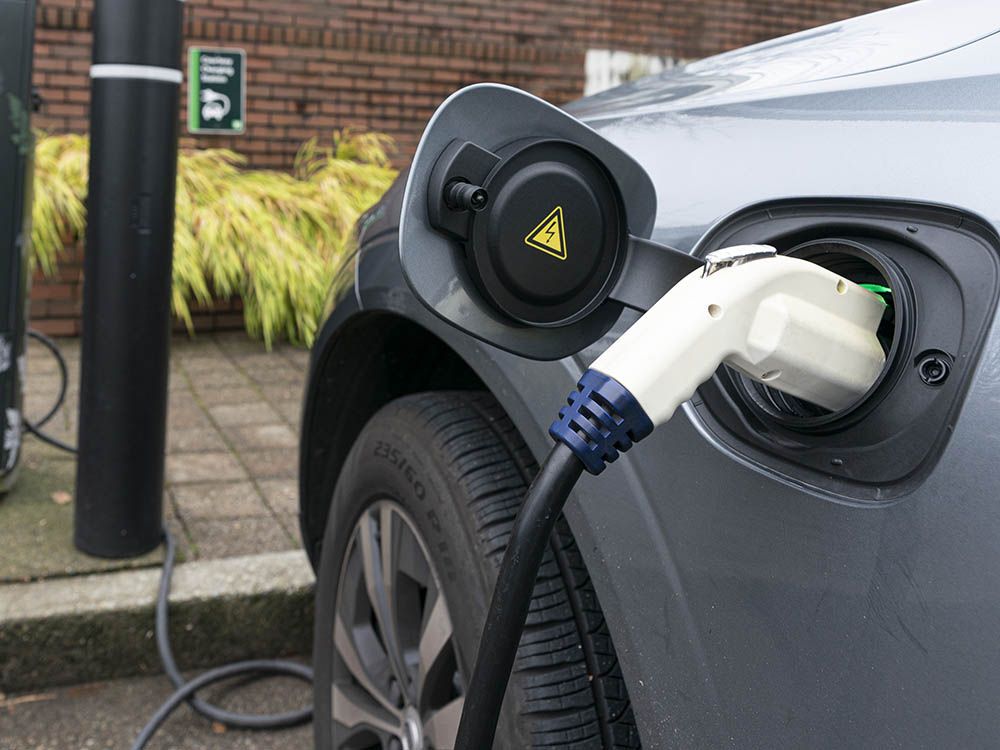
B.C. government relaxes 2035 zero-emission vehicle sales mandate
The provincial government has backed away from a plan to outlaw the sale of all new gas-powered, light duty vehicles in the next decade.
On Wednesday, B.C. Energy Minister Adrian Dix said an earlier mandate enshrined in provincial law — requiring that 100 per cent of all new vehicles sold be zero-emission by 2035 — will be amended. Instead, the new target will be 75 per cent.
Dix said the changes to the 2019 Zero-Emission Vehicles Act would bring the province in line with recent changes to federal goals around the uptake of zero-emission vehicles and give consumers more flexibility.
“The alignment will provide certainty for automakers, reduce their regulatory burden and support them in addressing challenges, such as slower-than-expected consumer adoption driven by supply chain disruptions and U.S. tariffs,” the ministry said in a news release.
In B.C., a zero-emission vehicle includes electric and hydrogen-propelled vehicles and plug-in hybrids. Most hybrid vehicles sold in B.C. aren’t plug-in.
—David Carrigg
Carney announces $3.8B to protect nature
Prime Minister Mark Carney on Tuesday announced $3.8 billion in funding to protect nature, with a renewed pledge to meet 30 X 30 conservation targets.
The 30 X 30 target refers to commitments Canada made during the 2022 Biodiversity Conference in Montréal to protect 30 per cent of land and water by 2030. Only 14 per cent is protected now with Carney promising to an additional 16 per cent by 2030 with new parks and conservations areas.
In announcing the new Nature Strategy, Carney said Canada is home to 20 per cent of the world’s freshwater, 25 per cent of global wetlands, almost a quarter of boreal forests, and more than 80,000 species — from the iconic polar bears, beavers, and Canada geese, to the unique eastern wolf, Vancouver Island marmot, and Peary caribou.
“Nature is an asset that provides a flow of goods and services over time. These ecosystem services make nature our greatest ally to fight against climate change,” he said in a statement. “When we protect nature, we are protecting Canadians — the air we breathe, the water we drink, and the rivers we swim in.”
Carney said the money will help create new national parks and marine conservation areas, new national urban parks, and new other effective area-based conservation measures, which are sites where the land and water can be conserved while allowing other activity. It will also go to two new conservation sites in Québec and Manitoba.
“It is encouraging to see the commitments made by the federal government in this strategy toward meeting our nature protection goals, including support for Indigenous-led nature conservation. This signals that the government understands that healthy ecosystems are essential to all Canadians’ economic, physical and cultural well-being,” said Michael Bissonnette, a lawyer with West Coast Environmental Law.
—Tiffany Crawford
Gas keeps grip on U.K. power prices even as renewables rise
Gas-fired power plants set U.K. electricity prices about two-thirds of the time last month, highlighting the fuel’s stubborn grip on the market even as renewable generation continues to climb.
The data shows a growing mismatch between how Britain produces its power and how prices are set. Gas accounted for only about a fifth of the electricity mix in March, yet it mostly remained the country’s marginal fuel, the last — and most expensive — fuel brought on to meet demand.
With gas costs rising sharply last month following the outbreak of war in Iran, the issue is front-of-mind for policymakers, not only in Britain but throughout Europe. The head of the International Energy Agency last week urged countries in the region to look at ways to sever the link between gas and power prices to keep a lid on rising energy bills for households and industry.
A fuel doesn’t need to dominate the generation mix to dominate the price formation,” said Ed Porter, European director at consultant Modo Energy. “The current pricing system masks the progress made by renewables, which isn’t always trickling through to prices.”
In the U.K., renewables — particularly wind and solar — supplied about 43 per cent of electricity in March, close to a record, while gas made up only 22 per cent of generation, according to the system operator.
—Bloomberg News

Some companies change chocolate recipes as climate change causes cocoa prices to soar: report
Cocoa prices have surged to record highs over the past year, driven largely by weather extremes in West Africa, where about 70 per cent of the world’s cocoa is grown, according to a report by the Weather Channel.
The report says countries such as Ivory Coast and Ghana have been hit by a combination of intense rainfall, disease and periods of unusual heat, all conditions scientists say are becoming more likely in a warming climate.
Hershey’s director of strategic sourcing, Mark Taylor, on their website said: “In my years in this industry, I’ve never witnessed a cocoa market quite like the one we’re experiencing today.”
The report notes the issue went viral after the grandson of the inventor of the Reese’s Peanut Butter Cup called Hershey out for altering the recipe after noticing differences in the taste and texture.
This week, Hershey’s reversed course and announced it will return to using classic milk and dark chocolate recipes in all of its products by 2027. The report says other companies are also adjusting ingredients.
Trump threatens to ‘possibly’ destroy Iran’s desalination facilities
The White House threatened further escalation of its military campaign against Iran, which later attacked a Kuwaiti oil tanker near Dubai, as the war entered a fifth week with little relief for jolted global markets.
President Donald Trump said in a social media post Monday that if Tehran doesn’t reopen the Strait of Hormuz, “we will conclude our lovely ‘stay’ in Iran by blowing up and completely obliterating” electricity plants, oil facilities and ‘possibly’ desalination infrastructure.”
Trump has regularly vacillated between saying a deal with Iran is imminent and warning that he’s prepared to increase the military tempo. The threat to water facilities would constitute a war crime as defined by the Geneva Conventions.
The president has told aides that he’s willing to end the U.S. military campaign, even if the strait remains mostly closed, the Wall Street Journal reported, noting the White House officials didn’t immediately respond to a request for comment.
—Bloomberg News
A winter without snow depletes Europe’s clean energy reservoir
High in the mountains of southern Norway, where winter is usually measured in meters of snow, engineers are confronting an unfamiliar sight.
Standing atop the Vatndals dam on a recent day, the hydrologist Sverre Eikeland looked out over craggy slopes that should still be blanketed in white powder. The reservoir, large enough to fill nearly half a million Olympic swimming pools, depends on spring melt to replenish and generate electricity. But after Norway’s driest winter in decades, the water level is far below where it should be, prompting companies to limit outflows.
“Less snow means less energy stored in that snow,” said Eikeland, who advises power utility A Energi. “There should be more.”
Norway, with its thousands of dams, is often called Europe’s biggest battery. Under normal conditions, the country’s hydropower system produces enough electricity to meet domestic demand and export large volumes. Last year, net sales abroad amounted to about 15 per cent of its production.
But months of dry weather have upended that pattern. This winter was Norway’s coldest since 2010, the result of persistent high pressure near Greenland that blocked flows of moist Atlantic air into the Nordic region. With little precipitation, snow reserves have fallen to their lowest levels in two decades, creating a deficit of about 25 terawatt-hours of energy, according to Tuomo Saloranta, a hydrologist at the Norwegian Water Resources and Energy Directorate. That’s nearly a fifth of Norway’s total hydropower output last year.
—Bloomberg News
Boralex jumps as analysts see potential deal at $8.7 billion
Analysts covering Boralex Inc. say potential buyers may have to bid $39 per share or more in a takeover, representing a premium of over 30 per cent from where the stock was trading before Bloomberg News reported the firm is exploring a sale.
The Montreal-based renewable power company confirmed Monday that its board has formed a special committee to review and recommend strategic alternatives. Boralex is working with Canadian banks to handle proposals, but the deliberations are early and there’s no guarantee of a deal.
Shares of Boralex were up 8.8 per cent to $33.39 this week. The company builds and operates renewable energy production sites in Canada, the U.S., France and the U.K., including onshore wind, solar, hydroelectricity and energy storage.
National Bank of Canada analyst Baltej Sidhu said the public market valuation “is not fully reflecting” Boralex’s asset base and growth pipeline. “This disconnect has elevated the likelihood of private capital stepping in should the shares fail to re-rate in the public markets,” he wrote in a note to investors.
—Bloomberg News
Related
I’m a breaking news reporter but I’m also interested in writing stories about health, the environment, climate change and sustainable living, including zero-waste goals. If you have a story idea related to any of these topics please send an email to ticrawford@postmedia.com