 BURST
BURST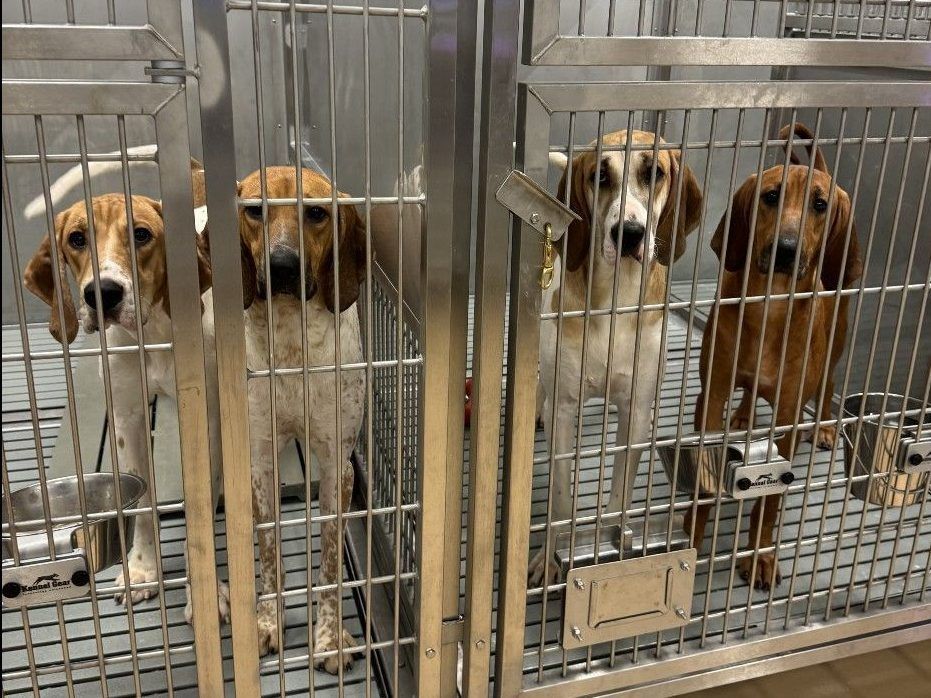
The Ontario government has introduced draft legislation that aims to restrict invasive medical research on dogs and cats.
It is the first proposed law of its kind in Canada, triggered by an Investigative Journalism Bureau investigation in August that detailed cardiac research on dogs inside St. Joseph’s Hospital in London. The research involved inducing hours-long heart attacks in puppies.
If passed, the proposed legislation would restrict the practice of invasive experimentation on dogs and cats, except for specified purposes such as veterinary research. The bill also prohibits breeding cats or dogs in Ontario for research purposes.
“If passed intact, this will be one of the most meaningful scientific and ethical shifts in Canada’s modern history,” said Charu Chandrasekera, founder and executive director of the Canadian Institute for Animal-Free Science.
Bill 75, which includes provisions that would amend the Provincial Animal Welfare Services Act, was introduced by the Progressive Conservative government on Nov. 25.
The legislation defines invasive medical research as that which alters an animal’s “physical integrity,” causes “significant impact” to the animal’s physiological systems or results in moderate to severe pain, “extreme distress or death.”
The legislation would also ban “medically unnecessary” procedures performed for cosmetic purposes or convenience, such as removing vocal cords or declawing. The types of permitted invasive procedures will be outlined in future regulations.
Animal welfare groups hailed the draft language as a major step forward.
“Ontario is taking a groundbreaking step by introducing laws to end the cruel and outdated use of dogs and cats in experiments,” said Camille Labchuk, lawyer and executive director of Animal Justice.
Some experts and animal rights advocates are concerned that the legislation focuses on dogs and cats, rather than all species that can feel comparable pain.
“Surely what should matter, from an ethical perspective, is a particular animal’s level of development, such as whether it can experience pain and suffering, not whether politicians have them as pets at home,” said Udo Schüklenk, a professor of philosophy at Queen’s University and the Ontario Research Chair in Bioethics.
Schüklenk believes the legislation would also have damaging impacts on research in Ontario.
“Valuable clinical research that could lead to medical breakthroughs benefiting generations of people will be undertaken elsewhere,” said Schüklenk. “None of that makes sense.”
Angela Fernandez, director of the Animal Law program at the University of Toronto, said the legislation, while novel, doesn’t go far enough.
“In addition to a ban on breeding dogs and cats in the province for research purposes, there needs to be a ban on importing them from other jurisdictions. Research facilities will continue to experiment on non-locally produced dogs and cats brought in from the U.S. and other provinces unless that loophole is closed.”
Last week, the IJB’s ongoing investigation into animal testing detailed how a Scarborough scientific research facility has been importing test dogs from a Wisconsin-based breeder accused of animal cruelty dating back years.
The Wisconsin firm recently surrendered its breeding licence in exchange for the state agreeing not to pursue criminal charges. The agreement stipulated that the company made “no admission of fault or criminal or civil liability” in entering into the agreement.
The Scarborough research facility has not commented.
The Investigative Journalism Bureau (IJB) at the University of Toronto’s Dalla Lana School of Public Health is a collaborative investigative newsroom supported by Postmedia that partners with academics, researchers and journalists while training the next generation of investigative reporters.