 BURST
BURST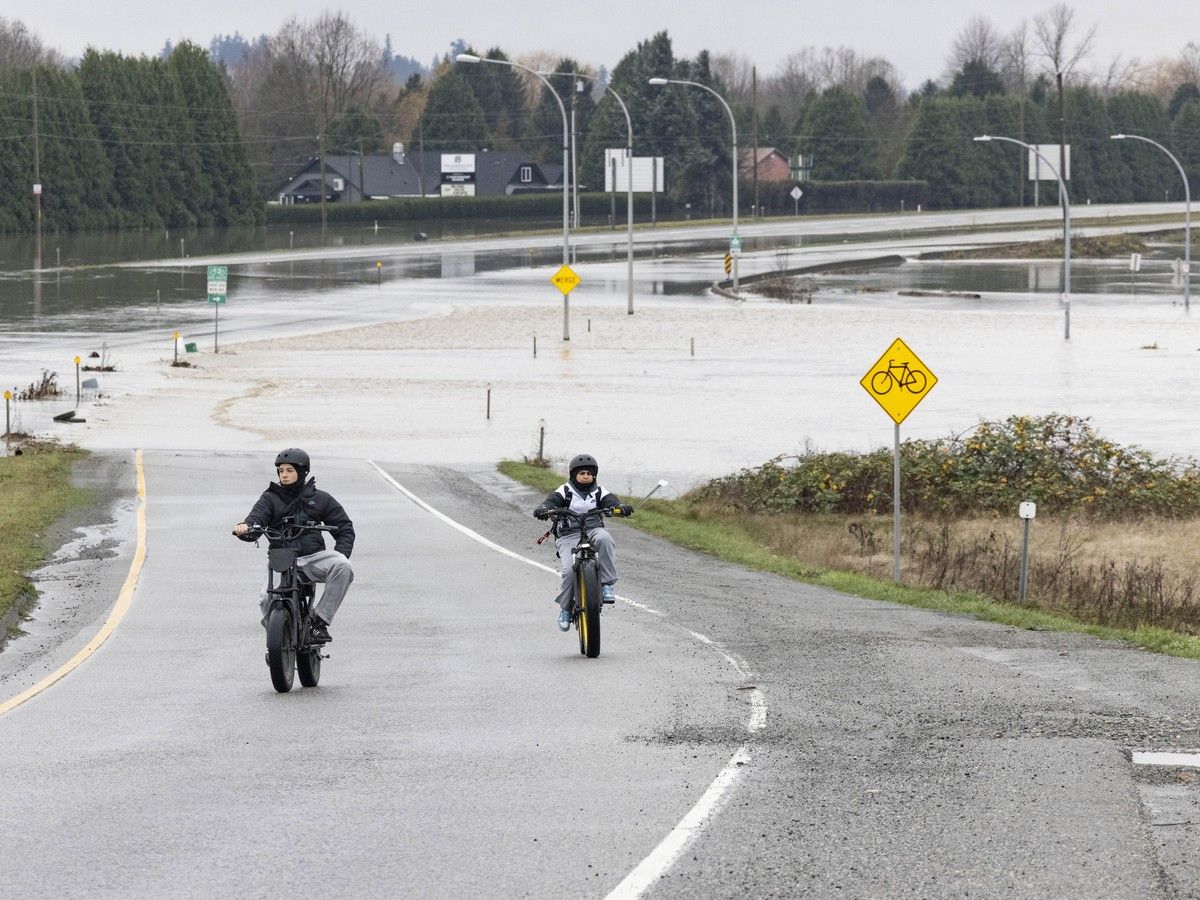
Upgraded flood protections have been completed in Grand Forks, a B.C. Interior community that was devastated by high waters that overflowed rivers in 2018. Hundreds of homes had to be evacuated and the military was called in to help.
In 2019, the federal and provincial governments announced $50 million in funding to increase flood resilience, including money to help buy about 90 properties in the highest-risk flood prone areas in the community of 4,300 near the B.C.-Washington border and east of Osoyoos.
With contributions from the City of Grand Forks and the Regional District of Kootenay Boundary, spending on flood protection reached nearly $70 million.
The money was used to build four new dikes, new stormwater and drainage systems including two pump stations, and restore a floodplain, including an off-river habitat channel.
“In the wake of the devastating 2018 flood, we made a commitment to rebuild stronger and reduce the risks posed by future flood events. Today, our neighbourhoods, businesses, industries and critical infrastructure are better protected because of that commitment and the strong partnership between the city, the province, the federal government and our community,” said Grand Forks Mayor Everett Baker. “This investment not only enhances public safety, but also provides greater confidence and resilience for generations to come.”
An area of floodplain about the size of 10 city blocks was restored to create room for the river to spread between the new dikes downtown and south of the Kettle River.
Funding was used to purchase the 66-home North Ruckle neighbourhood and remove houses, foundations, roads, utilities and the existing dike from 1974 that overtopped and breached in 2018.
The federal government provided about $20 million in funding to improve flood resiliency, the province nearly $40 million, the city $9 million and the regional district $815,000.
“The success of the Grand Forks flood mitigation program shows what’s possible when all levels of government work together to reduce risk to people and communities that are experiencing the consequences of a changing climate,” said Kelly Greene, minister of emergency management and climate readiness.
The flood protection upgrades in Grand Forks are an example of the type of work that needs to be carried out in more communities in B.C., a 2022 Postmedia News investigation showed , and underscores the amount of time it takes. Scientists and climate policy analysts have warned that more funding is needed because events such as so-called atmospheric rivers are expected to increase in severity and frequency because of climate change.
An atmospheric river in November 2021 was catastrophic in southwestern B.C. and the Interior, causing billions of dollars in damage, washing out roads, bridges, rail lines, pipelines and houses. Thousands of people had to evacuate their homes and five people died.
Another atmospheric river hit southwestern B.C. in December 2025 , but it caused less flooding and damage. Following this past December’s flooding, Postmedia reported that there had been little progress on reducing flood risks that require spending of billions of dollars.
The B.C. NDP government released a 10-year flood mitigation plan in spring 2024, but it had no price tag, no project priorities and no timelines.
In September, when Metro Vancouver representatives met with Randene Neill, B.C.’s minister of water, land and resource stewardship, and Greene, they were told there is no new funding for the flood strategy because of the province’s financial woes. B.C. has a projected deficit for the 2025-26 fiscal year of $9.6 billion. This fiscal year’s deficit is forecast to be $13.3 billion.