 BURST
BURST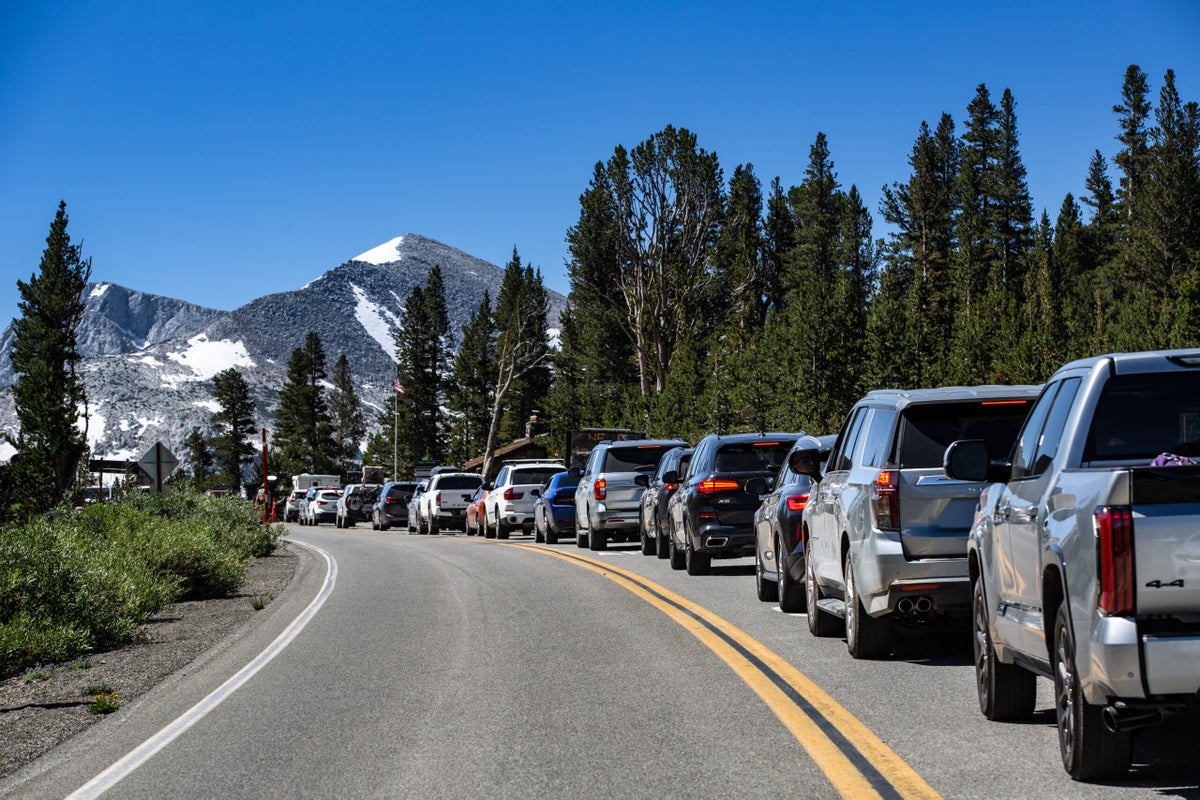
About our reporting: Associate Editor Sam MacIlwaine reviewed dozens of court documents dating back to 2007 and spoke with former Hazel Green resident Ken Yager to unearth new details, including the location, of the controversial Yosemite land swap proposal.
It’s 2026, and unfortunately, the sudden downsizing of public lands has become a routine occasion. But sometimes journalists get ahead of it. On Friday, NOTUS reporter Anna Kramer broke the story that the Trump administration was secretly pushing the National Park Service (NPS) to give a piece of Yosemite National Park to a private equity firm. This unprecedented land swap would allow the firm to build a road from its adjacent 83-acre property directly into Yosemite National Park, bypassing existing park entrances.
Several outdoor groups and politicians have denounced this news, including the Yosemite Union, the National Parks Conservation Association, the National Federation of Federal Employees, the Sierra Club, and both California Senators. Even the world’s most famous climber, Alex Honnold, spoke out about the proposed land swap, writing on his Instagram story, “[T]his is the epitome of selling the future to cash out in the present. Craziness.”
Now, with conflicting responses and old court documents uncovered, we have a fuller picture of the origins and potential impacts of this land swap, as well as how it would divide record-long crowds by class and wealth.
As Trump’s DOI calls the story false, the developer confirms it
On Friday, a Department of Interior (DOI) spokesperson outright denied that it has been working behind the scenes to give away NPS land. “This [NOTUS] story relies on anonymous allegations to manufacture a political narrative that simply is not true,” the spokesperson wrote to our sister publication Outside on August 28. “There has been no political pressure to reach a predetermined outcome, and claims suggesting the Department is secretly working to hand over NPS land to a private developer are false.”
However, about 10 hours later, Kingsbarn’s lawyer, Lanny Davis, confirmed that he has been working with the NPS toward such a land swap. “Over the last six months, Kingsbarn Realty Capital and I have been working directly and cooperating with National Park Service staff at Yosemite National Park in California to provide safe access from the Hazel Green property to the park entrance,” Davis wrote in a press release on Access Newswire. “We identified a land exchange for an access road under half a mile.”
On September 1, Kingsbarn CEO Jeff Pori joined the conversation, telling the Washington Post that the DOI referred him to NPS staff during an in-person meeting last year. Pori also told the Post that the Hazel Green parcel is currently being appraised, the next step before the NPS can identify an equivalent parcel to gain in exchange. He confirmed that Kingsbarn’s project will be similar to the previous owner’s plan, which included a 150-room hotel and 80 private cabins.
Where exactly is this proposed new road on Yosemite lands?
Three miles into the park from the Oak Flat entrance, there’s a nondescript spot known to photographers as the Hazel Green Dip, where Big Oak Flat Road temporarily sags. About 600 feet directly west of this point is the privately owned, 83-acre Hazel Green Ranch, hidden by Yosemite’s forest. Mariposa County records note the address of Hazel Green as 12828 Old Yosemite Road.
Yosemite Climbing Association (YCA) founder Ken Yager told Climbing he lived and worked at Hazel Green from 1997 to 1999, operating as a caretaker in exchange for free housing. While he often parked his car at the Hazel Green Dip pullout and traversed over to the ranch through the forest, he vehemently opposes paving a road through it.
“While it’s only a distance of 200 park land yards, [this trail] weaves through a forest of large trees, populated by the most varied wildlife I’ve ever seen in the park,” Yager wrote on August 31 in the YCA newsletter. “An access road would destroy the wildlife and destroy the area.” He told Climbing that he is most concerned about the precedent it would set. “It’s pretty obvious that they’re trying to defund the Park Service and privatize the whole [of the] parks,” he said. “They’re testing the waters.”
Why the land swap is moving forward now
Yager personally witnessed the ranch’s ownership transfer in 1998, when Lewis Geyser bought it with intentions to build an upscale, eco-friendly resort for short-term lodging. At the time, NPS was still finalizing their Yosemite Valley Plan to reduce congestion. During these talks, Geyser offered NPS the use of some spillover parking spots on his property, knowing that NPS would have to build an access road to reach them. But in 2000, when NPS rejected his offer, Geyser lost the promise of his shortcut into Yosemite.
Seeking another way to gain direct access to the park, in 2007, Geyser sued NPS and DOI for the right to use and improve two old stagecoach routes from the 1870s. He didn’t own the land for these routes, but they could offer a slightly more circuitous intersection with Big Oak Flat Road in the park. Between 2007 and 2012, he pursued two complaints and an appeal. Both failed.
“I don’t think [Geyser] believes the [resort] project is viable unless he gets the road access,” a Mariposa County administrative officer, Rick Benson, told Bay Area paper The Mercury News in 2012, after Geyser had lost his appeal.
In 2024, Geyser sold Hazel Green Ranch for $4 million to an LLC controlled by Las Vegas private equity firm Kingsbarn Realty Capital, according to the NOTUS report. Kingsburn’s website boasts a $2.8 billion portfolio of “income-driven properties,” including 76 medical centers, 47 office buildings, and nine gas stations. The firm has dubbed the LLC “Sanctuary at Yosemite.”
What makes a small forest so valuable
Having a private road into the park, Yager told Climbing, would transform Hazel Green “from a million-dollar property to 100 million dollars plus.” While the exact numbers are speculative, the financial power of building and controlling a brand-new entrance to a national park—especially one as iconic as Yosemite—is undeniable.
Currently, three sections of privately owned property exist within the park: Wawona, Foresta, and Aspen Valley. But all of these private tracts of land are fully enclosed by NPS land. Residents still must pass through one of five park entrance gates to enter. Hazel Green, on the other hand, is already accessible from several forest service roads that connect to Highway 120 outside the park.
With a shortcut into the park, future Hazel Green resort guests would enjoy the new, exclusive privilege of bypassing the crowded entrance gates to reach the Valley floor—a privilege that not even Yosemite’s own NPS employees are afforded (A significant portion are forced to commute from El Portal, outside the gates). If the park decided to still charge Hazel Green guests for entrance, the burden would fall on a recently downsized NPS workforce to staff a sixth entrance booth.
“There’s no reason to make more of these private rich communities inside the park,” said Yager. “Everyone should be able to visit the park on their own terms.”
What happens next with the proposed Yosemite land swap?
It is not yet clear whether the land swap would require Congressional approval. On September 1, a DOI spokesperson told the Washington Post, “A land exchange does not necessarily require a congressional appropriation if the proponent agrees to cover all associated costs.” Already, Senators Alex Padilla (D-CA) and Adam Schiff (D-CA) have signaled their opposition to the project.
The land swap may also be subject to legal challenges. Jon Jarvis, the National Park Service director during the Obama administration, told Politico yesterday that the land swap “cannot be done” and a “good court challenge” would likely come to that conclusion. He cited the Redwood Act of 1978, which mandates that the NPS’s “authorization of activities,” including construction activities, “shall be conducted in light of the highest public value.” This law could be used to argue that for the land swap to be legal, it would need to benefit the Park Service, not just a private entity.
Regardless of whether it must go through Congress, the project would still have to open a public comment period and undergo a required environmental study to proceed. However, those processes are not foolproof; widespread public opposition failed to prevent Arizona’s most prolific climbing area, Oak Flat, from being transferred to a foreign-owned mining company in March. But where Oak Flat’s land swap was snuck into a must-pass federal law, this new land swap is not yet binding and can still be rejected by the NPS.
Yager warns giving away “even a tiny piece” of Yosemite to private interests would set a precedent for other for-profit businesses to pursue land swaps in national parks.
“If this happens, imagine what’s going to happen in other parks that don’t have the voice Yosemite has,” he said. “If they get away with this, every national park is in danger. Every one.”
The post How the Controversial Yosemite Land Swap Would Effectively Create a Private Park Entrance for the Wealthy appeared first on Climbing.