 BURST
BURST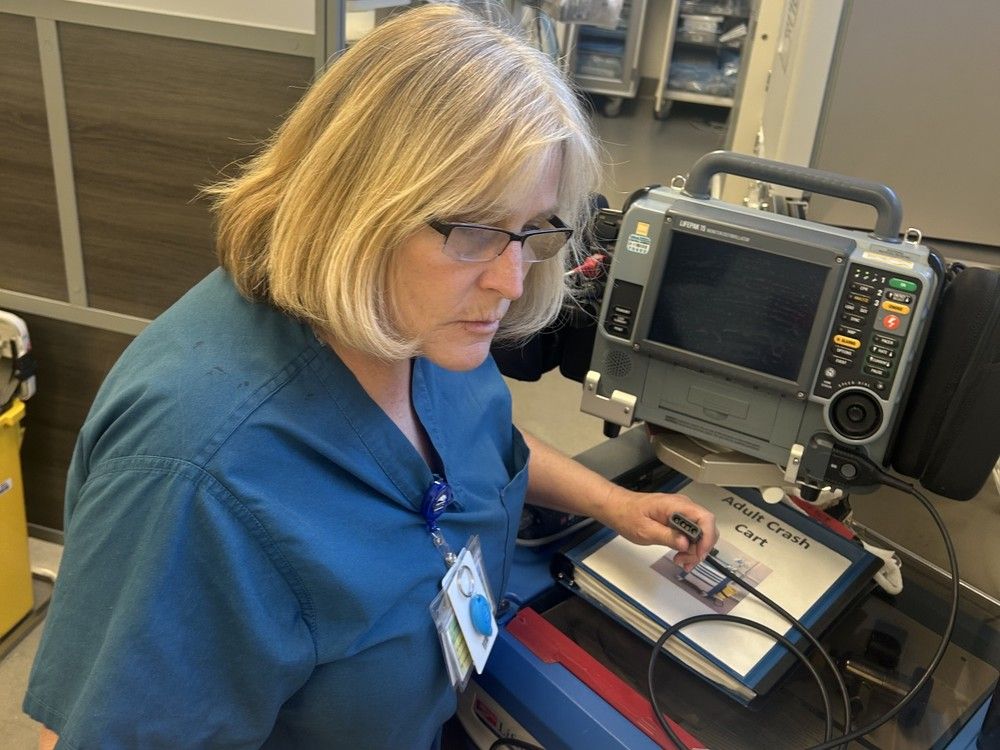
A recruiting campaign launched by the B.C. government last spring to attract U.S. doctors and nurses has resulted in thousands of applications , but the number of workers who have actually made the move has been small.
According to the B.C. College of Nurses and Midwives, 2,155 nurses and nurse practitioners in the U.S. applied to the college between April 2025 and January 2026, with 1,028 of those being accepted.
The College of Physicians and Surgeons of B.C. said it has received 524 applications from U.S.-trained physicians so far in the 2025-26 fiscal year.
But data from the provincial Health Ministry shows that, as of September 2025, only 174 health-care professionals from the U.S. had actually accepted jobs and officially joined the B.C. system, including 104 nurses, 41 physicians, 19 nurse practitioners and 10 other health professionals. The province said this week that more up-to-date numbers will be available in the coming weeks.
A Health Ministry spokesperson said part of the reason for the discrepancy between the number of applications and the number of people who have accepted jobs is that it takes time to find a job, complete all the paperwork and background checks, and move them and their family.
Health-care workers can apply to more than one health authority, meaning there are likely a fair number of people who have submitted multiple applications, the ministry said.
Health Minister Josie Osborne said she has heard from plenty of physicians and nurses who wanted to leave the U.S. because they were fed up with the administration of American President Trump.
She said she hopes the expanded credentialing that the province has implemented will get people into the system faster.
“We have an incredible opportunity , with all of the discontent, we’ll call it, down south, to be able to attract people to a place that has a stable, universal, publicly funded health care system,” said Osborne on Thursday in Victoria. “We’re going to do everything we can with our expedited credentialing that’s in place now, working with people to help them orient and understand what job opportunities are available in different communities.”
Dr. Jason Sutherland, a professor at the centre for health services and policy research at the University of B.C., said he hopes the government recruiting will encourage more doctors to come to the province. At the same time, he said there are many reasons why some might not end up following through after having their application approved.
“I don’t have a definitive answer on that, but I would imagine for physicians that it involves a significant upheaval associated with their being invested in a practice, in their community where they are then. So it might take them four to six to eight months to pull up and to arrive,” said Sutherland. “I’m sure some of them got cold feet, so to speak, in terms of actually pulling the trigger and making the move after further consultations with their families. Or maybe they were surprised to be accepted, and then they had second thoughts.”
Last March, the province launched a campaign targeting U.S. health-care workers and changed the credentialing process so that doctors and nurses wanting to move to B.C. could have their application accepted in as little as a few days.
Under the previous process, having applications reviewed by the B.C. College of Nurses and Midwives could take as long as four months.
The campaign is being funded to the tune of $5 million and includes digital ads online as well as print ads in trade publications.
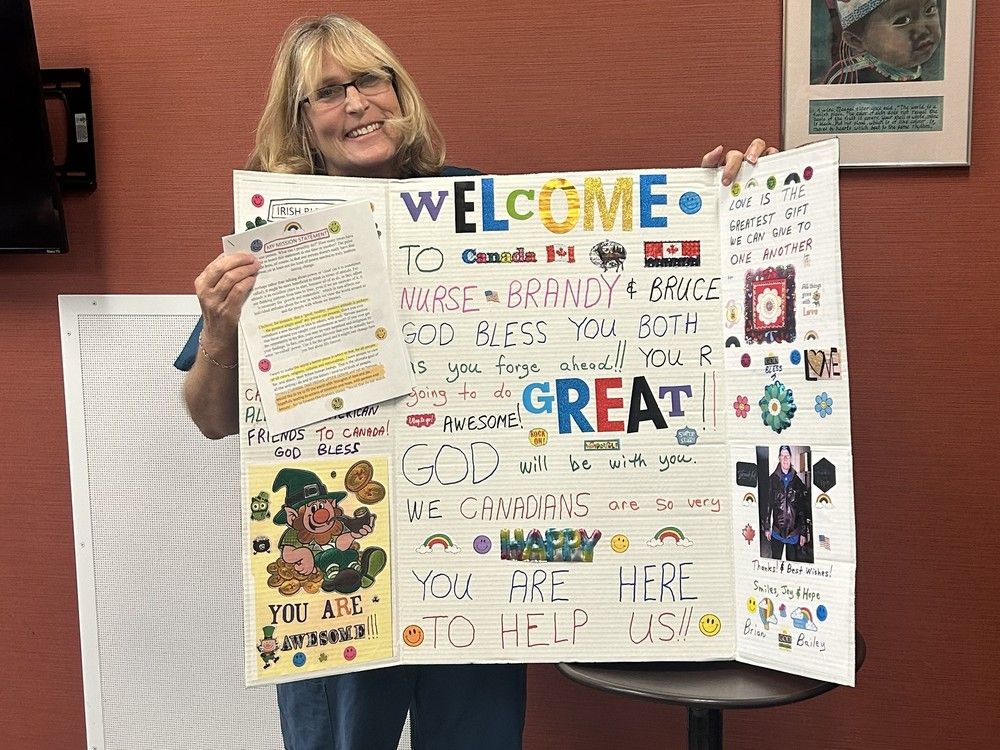
Brandy Frye, a registered nurse from Southern California, said she was motivated to move after Trump was elected and she began to no longer feel safe in her own country. She said she started thinking about moving in February 2025 but didn’t begin the application process until May. It took her five months to get through the application and licensing process, eventually moving her family to B.C. in September and taking up work at Nanaimo Regional General Hospital.
“I applied for the provincial nominee program … And so I’m in on that. I’ve got a three-year work permit, and I’m hoping to get an invite, and I’ve been working ever since,” said Frye.
She said that while the process has been streamlined for doctors and nurses, it still takes months to complete because of the requirements for everything from an official job offer to a medical appointment and FBI check.
B.C. Nurses’ Union president Adriane Gear says that while she is happy the province is trying to attract more health-care workers to B.C., the amount they have brought in so far is a drop in the bucket compared with what the system needs.
She said that recent Statistics Canada data shows a shortage of roughly 6,000 nurses in B.C., a number that has been going up as the province expands services.
“There’s tremendous demands. They’re opening up beds, they’re opening up different services. And so, although there’s some hiring, they never close the gap,” said Gear. “We will need many more nurses to implement minimum nurse-to-patient ratios. It is a drop in the bucket, and many drops in a bucket can sometimes add up to something.”
She urged the government to continue expanding medical school nursing seats and provide further incentives for nurses to come to B.C. as additional ways to reduce the number of vacancies.
Dr. Adam Hoverman, who moved to Nanaimo from Washington state in 2022, said those Americans who are looking to leave the U.S. should look to Canada both for its proximity and its higher quality of life.
He said his decision to move north was due to growing up on the East Coast and spending time at a cabin in Ontario, as well as many years of coming to conferences in B.C. where he saw the province’s commitment to improving public health care.
“I really started to learn what it is to improve both health and health care, and found that B.C. has not only the levers to do so, but also the motivation and the desire to improve health and health care,” said Hoverman, explaining that those interested in moving should check out the opportunities in Canada.