 BURST
BURST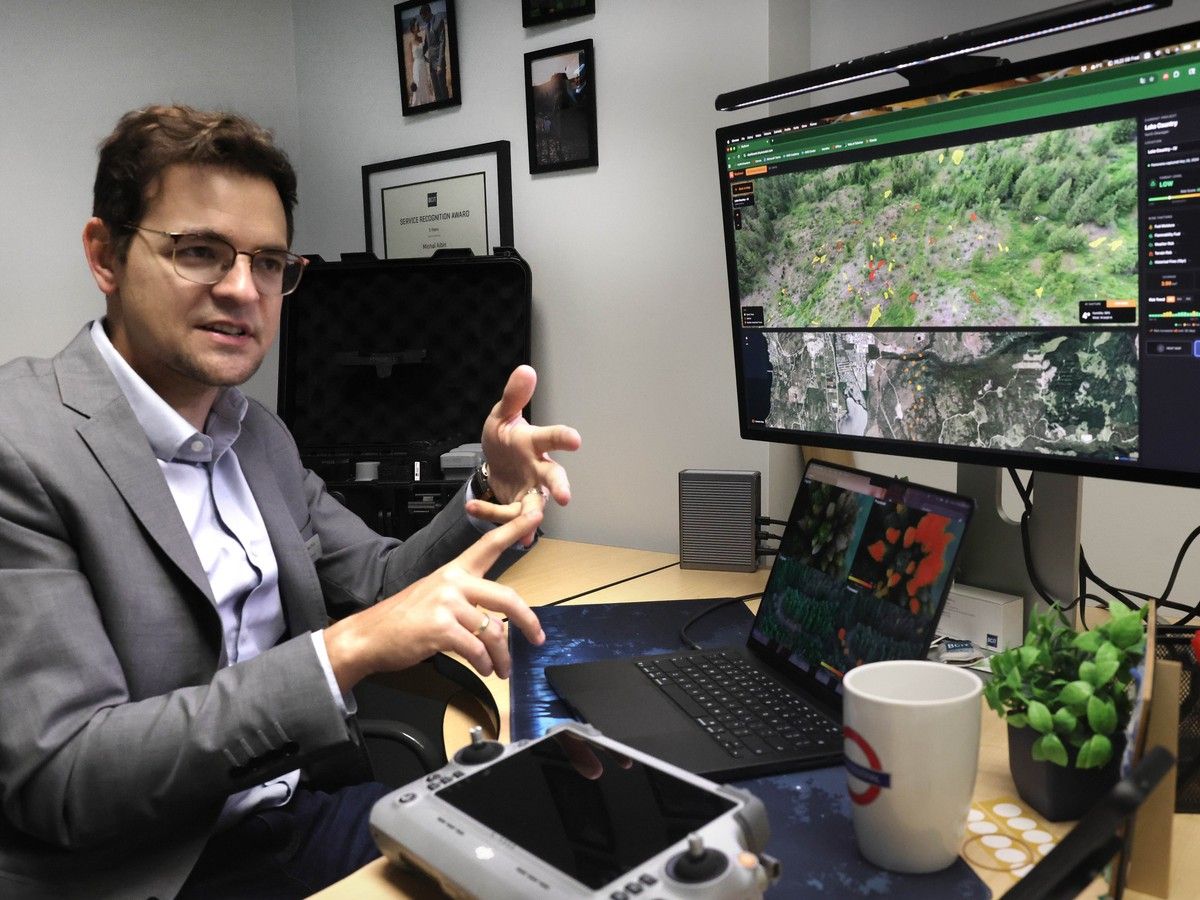
Beneath the spring snow currently melting in the B.C. mountains, the conditions for a catastrophic wildfire could already exist.
A B.C. company is hoping to help communities understand that risk months before fire season starts using an artificial intelligence model that draws from various data sources, including drone footage, to come up with a threat assessment that can guide fire prevention work.
Michal Aibin, program head in applied computing at the B.C. Institute of Technology and chief technology officer for SkyScoutAi , came up with the idea for a fire prevention tool several years ago after realizing that while there is technology to detect fires and fight them, there isn’t much to help prevent them.
“You can’t prevent lightning (or other) random natural events,” he said. “But you can prepare the area to respond better.”
A demo on SkyScout’s website shows live data for hundreds of locations across the province as the system constantly calculates and updates the risk of wildfire based on five factors, including fuel moisture, flammability, weather, terrain and historical fires. Each factor is separately rated to determine the overall threat level for the location.
On Wednesday, in an area on Alpine Way in Whistler, where homes are nestled among evergreen trees, the overall threat level was low, despite a score of 39 per cent risk due to terrain. Other risk factors, such as fuel moisture and flammability, were assessed in the single digits, likely contributing to the overall low threat level.
At a location near Field Road in Kelowna, where homes are packed close together in a subdivision surrounded by forest, the threat level was moderate. Individual risk factors, like terrain (67 per cent), fuel moisture (43 per cent) and weather (28 per cent), appeared to contribute to the elevated threat level, as well as a high fuel load. A bar graph showing trends over the last 30 days showed the threat level alternating between low and moderate as the weather score changed each day, influencing fuel moisture.
A location near Agassiz, showing farmland on the edge of a forested mountain slope, had a low threat level, but high fuel load.
A white paper recently published by SkyScoutAi presents a retrospective analysis of the wildfire that destroyed Lytton in 2021. Using only data that would have been available at that time, the system found “extreme risk conditions (were) present and measurable long before the fire started.” The conditions included high fuel load, such as dead trees, beetle-damaged timber and dry brush, that were observed using drones, as well as other risk factors like weather, terrain and fire history.
“Lytton was not a freak event,” says the report. “It was a textbook interface fire: The kind that happens when a community sits at the edge of the forest, surrounded by fuel, in conditions that were present in the data long before the first spark. … Was that data actionable? The answer is yes.”
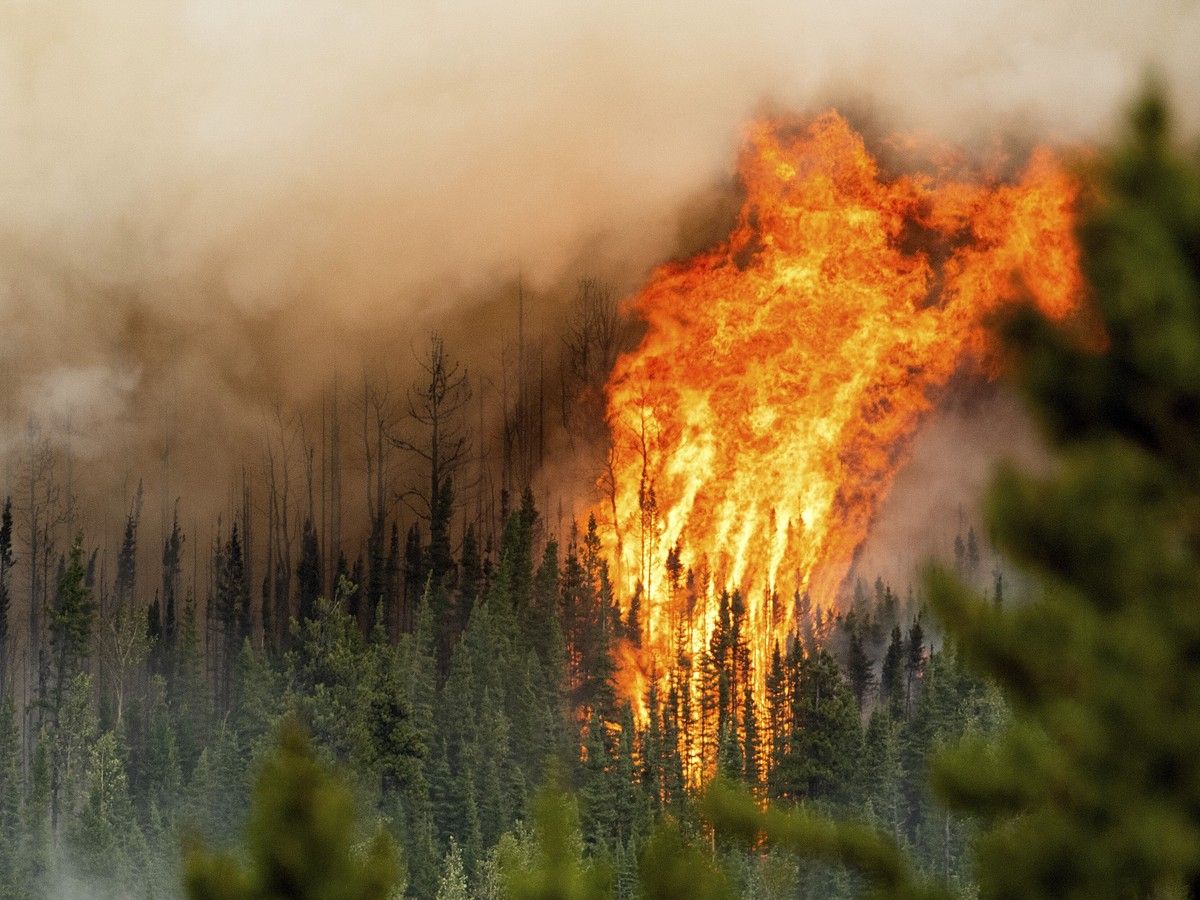
The SkyScoutAi report says that if authorities had its information in the months before June 30, 2021, they could have cleared combustible brush around the community. Firefighting aircraft and groundcrews could have been positioned in the region. And evacuation routes could have been prepared and communicated in advance.
“The 250 residents of Lytton and the 1,500 to 2,000 First Nations members on nearby reserves could have been told, clearly and early: ‘You are in an extreme risk zone this season. Be ready,'” says the paper.
Asked how the warnings might have differed from the general heat and fire risk warnings that were issued as a “heat dome” descended on B.C. in late June 2021, several days before the Lytton fire, Aibin said the tool would have given authorities and fire officials information before fire season — in March, April and May, when risk was building. With time to prepare, and information about what areas were most at risk, prevention work could be more effective.
“It would allow them to stop wildfires before they even start,” he said.
Postmedia reached out to Lytton for comment on the report, but did not hear back before deadline.

One of the system’s greatest strengths is the way it combines information that governments might already have access to — such as historical fire data and weather forecasts — with information gathered by drones about the amount of fuel on the landscape. The algorithm weighs the various factors to determine the threat level and presents it in one place.
Aibin gave the example of Stanley Park. A drone assessment conducted several times a year could provide information on the fuel load on the landscape and help crews “pinpoint” areas that require cleanup.
“Canada is huge,” he said. “It is hard to protect or even actively monitor every single area, but we can highlight the high-priority areas.”
The system is designed to be used by all levels of government, including First Nations and resort communities, as well as utility operators, forestry and mining companies, and the insurance industry.
Aibin couldn’t provide information on potential clients but said there has been interest from some local governments in B.C., as well as in the U.S. This is the first year the tool as been available outside of some early pilot projects and demos. He hopes it could someday be expanded for use in areas outside North America as well.
This is the latest in our series, The Next Metro Vancouver, exploring the innovations and ideas that can help build a thriving region.