 BURST
BURST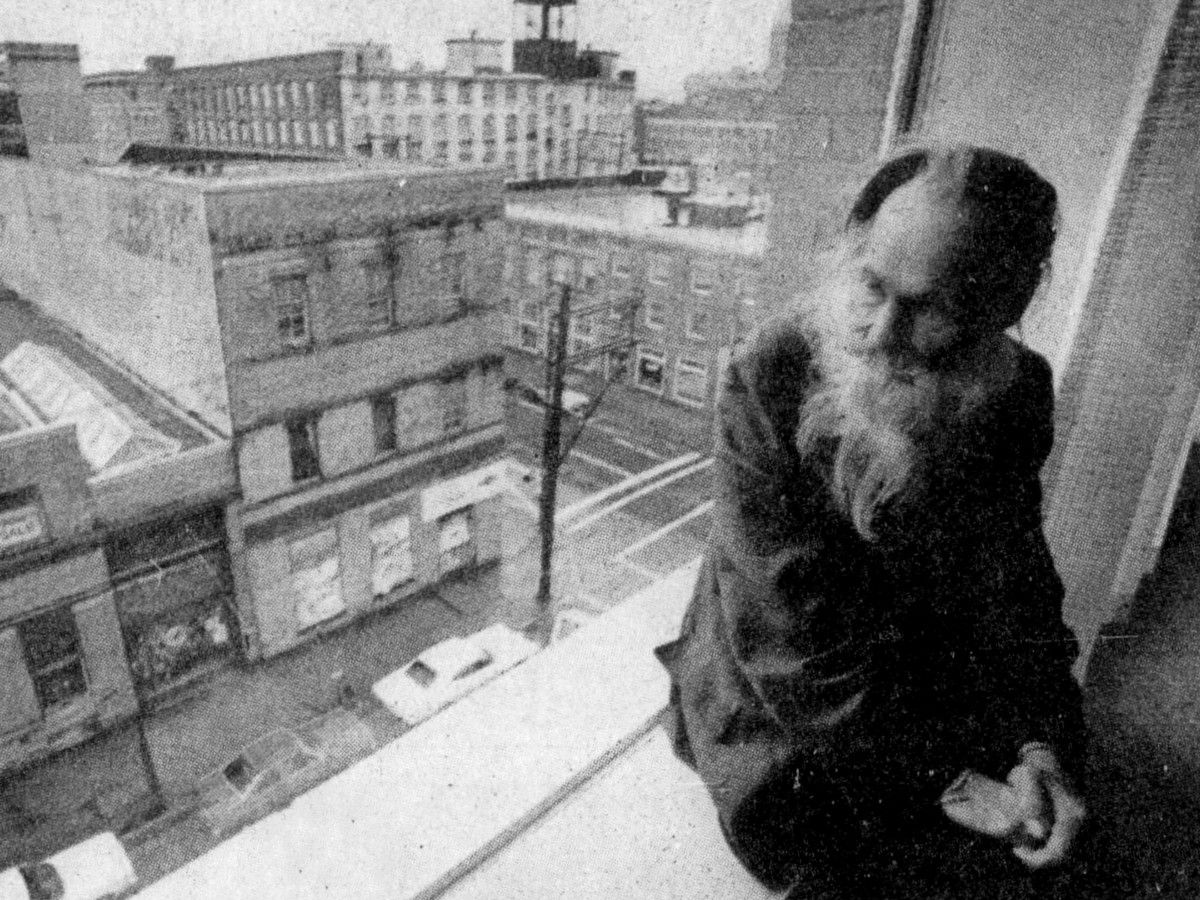
The 40th anniversary this summer of Expo 86 is sure to evoke lots of warm memories among British Columbians.
But there was a tragic side as well — the eviction of poor people from SRO (single room occupancy) hotels so that their rooms could be rented for more money to tourists.
Olaf Solheim was one of the first to be evicted in early March, 1986. The 88-year-old retired logger was kicked out of the Patricia Hotel at 403 East Hastings, where he had lived for over six decades, and it seemed to crush his will to live.
“He lies on his bed, fully clothed, with a bedspread pulled over him for hours every day,” wrote The Vancouver Sun’s Bob Sarti in a March 27, 1986 story. “His hot lunch sits uneaten — and cold — on a table nearby.”
Patricia Hotel manager Max Mitchele said his staff used to “fuss over” Solheim. But they were now too busy, getting ready for Expo.
“We’re not a nursing home,” said Mitchele.
Solheim had lived in the Patricia since he moved to B.C. from his native Norway.
“I don’t know how long I lived there,” Solheim told Sarti. “I worked in the beer parlour when I was 26.”
For decades, “Old Olaf” was a fixture in the Downtown Eastside. He had a chest-length white beard, liked to watch children play at Oppenheimer Park, and would go to the 44 Centre on East Cordova twice daily for low-cost meals. He often offered chocolates to the staff there.
But his health quickly deteriorated after being evicted, and he died on April 18, 1986, six weeks after he was tossed out of the Patricia.
“Honestly speaking, I don’t believe Olaf had the will to live anymore,” his friend Jim Harvey told Sarti for a Sun story. “After he was evicted, his equilibrium was upset. He couldn’t get himself back in the old groove.”
Vancouver’s chief medical health officer John Blatherwick said Solheim’s death was directly attributable to his forced relocation.
“The spark went out of him after the eviction, and he just said, ‘That’s it,’” Blatherick said. “This was a man whose way of life was completely disrupted. He was conscious of what he was doing. He just stopped living.”
In a news release, then-B.C.’s Human Resources Minister Jim Nielsen said that while Solheim’s death was regrettable, you couldn’t blame his death on Expo.
“I can only conclude that those who would do so have ulterior motives,” said Nielsen.

Jim Green of the Downtown Eastside Residents Association disagreed. Green told Sarti that Premier Bill Bennett and other politicians “have said Expo benefits everyone, and all this talk of evictions is just media hype. Olaf Solheim proves differently.”
Andy Yan of Simon Fraser University has been researching Expo 86 for a project. He said at that time it was thought 500 people were evicted from their SROs for Expo, but later estimates say the number may be closer to 1,000.
Solheim was one of several who died after being evicted.
“Olaf was the famous one, but there’s a whole list of others who passed away,” said Yan. “There was another guy who threw himself under a dump truck. There were at least another two or three deaths that were affiliated with this.”
Yan found a 1985 Downtown Expo Housing Survey by Vancouver’s social housing department that predicted there would be evictions during Expo.
“Without rent control or other form of intervention, a small number of building owners will try to fill their vacancies and ‘cash in’ on Expo,” said the report, which was written by planning consultant Donna McCririck.
“If the present seven per cent rate of ‘upscale’ or tourist-oriented renovation doubles to 15 per cent over the next year, this will mean about 34 buildings, or 1,000 tenants, will be directly jeopardized.”
Solheim proved the point. He was a classic old Downtown Eastside resident.
“The Downtown Eastside back then, and to certain degrees parts now, was just people who are poor, they don’t have a lot of money,” said Yan.
“But they were perfectly functional. They had no addiction issues, no mental health issues. They were just maintaining a place in the city.”
Solheim is remembered today at Solheim Place, a social housing building at 243 Union St. in Chinatown.