 BURST
BURST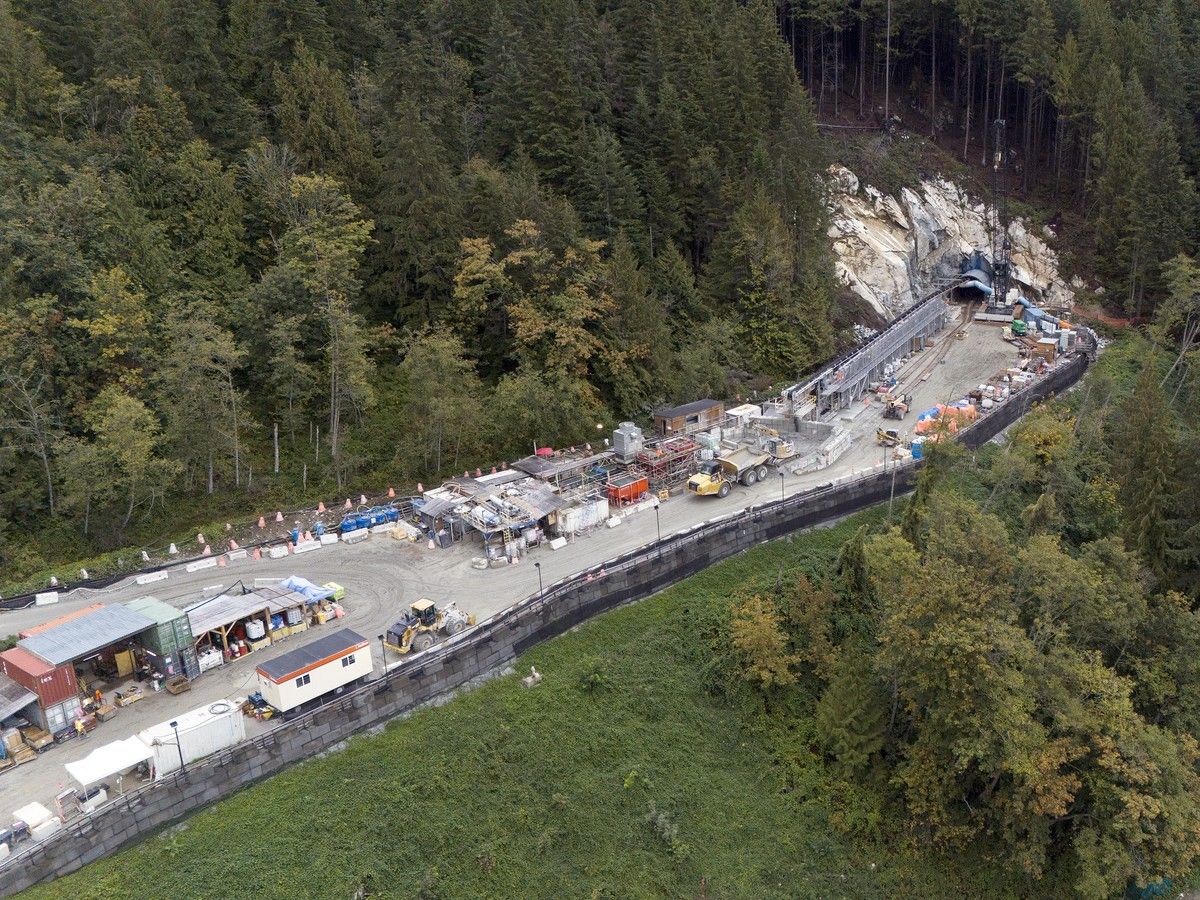
Despite violating environmental regulations and its waste permit for more than a year, FortisBC has been granted permission to quadruple the amount of effluent it releases into Howe Sound.
On July 6, the B.C. Energy Regulator approved a request from Fortis to amend its waste discharge permit at the Woodfibre LNG plant near Squamish. The amendment quadruples the amount of wastewater the energy company is allowed to discharge into nearby East Creek and raises the amount of copper to nearly double the provincial guidelines.
East Creek feeds into Howe Sound, one of three UNESCO biosphere regions in Canada.
“They’re justifying ongoing non-compliance,” said Tracey Saxby, executive director of My Sea to Sky, an environmental group. “Instead of fixing the problem, the regulator has said, ‘Sure, you can go ahead and pollute even more.’”
Fortis is building the pipeline to feed natural gas to the under-construction LNG plant.
The regulator told Postmedia in May that the company had upgraded its water-treatment facility as of March 31 and that it was “performing as intended to manage discharge quality and volumes” and that it had “eliminated the exceedances” of effluent discharged.
Fortis’s own water-quality reports, however, told a different story. The amount of treated effluent released at the site exceeded the permitted amounts on virtually every single day from April 2025 to June 14, 2026, the latest date for which data is available.
The 10 days with the highest volume of wastewater discharge — more than double the then-permitted amount — all came in May or June of this year, after the water-treatment facility was upgraded.
The amended permit also allows for the discharged effluent to contain more dissolved copper than provincial regulations allow.
In December, the regulator issued a warning letter to Fortis about repeatedly exceeding permitted levels of copper found in the wastewater. The regulator found Fortis failed to comply with the conditions of their permit. No penalties or remediation were recommended and the letter made no mention of the daily violations in the volume of wastewater being discharged.
In its email to Postmedia in May, the regulator said its own experts and experts from FortisBC had determined that the exceedances were a “minimal risk” to the environment.
As a requirement of its permit, Fortis is required to conduct weekly water testing on the water in East Creek.
Only five water test results between November 2024 and June 2026 met B.C.’s environmental regulations for dissolved copper. Under the amended permit, copper levels in all the previous tests would have been permissible.
During that same time period, Fortis dumped roughly 360,000 cubic metres more copper and other heavy metal-tainted effluent into East Creek than its permit allowed — enough to fill three typical oil tankers.
Copper and other heavy metals that occur naturally in the rock around Howe Sound can also leach into water naturally, contributing to elevated levels of toxic metals in the Sound.
In its request to amend the original permit, Fortis argued that it needed the increase because samples from the site already contained naturally “elevated concentrations” of the metal.
That was echoed in a statement Fortis sent to Postmedia on Friday.
“To manage the increasing inflows of naturally occurring groundwater, FortisBC expanded the water treatment system at the Woodfibre site this spring to enhance capacity and performance,” the company said.
“While the expansion increased FortisBC’s ability to collect and treat naturally occurring groundwater encountered during tunnelling, it does not control the amount entering the tunnel. As groundwater inflows continued to increase during construction, FortisBC applied for, and has now received, a permit amendment to reflect those site conditions.”
“Elevated background concentrations do not justify more pollution,” My Sea to Sky’s Saxby said. “If it’s an already polluted ecosystem, then they shouldn’t be polluting even more.”
Saxby called Howe Sound a “fragile and recovering ecosystem” after decades as a dead zone caused by acid rock pollution from the Britannia Mine and that millions of dollars of public money has been spent cleaning it up.
“This company is putting the fragile recovery of Howe Sound at risk and that is unacceptable,” she said.
In 2022, FortisBC received a permit from the B.C. Energy Regulator to discharge up to 1,500 cubic metres of wastewater a day into East Creek on the eastern bank of Howe Sound. The company is drilling a nine-kilometre tunnel for the pipeline.
The regulator did not respond to emailed questions from Postmedia.