 BURST
BURST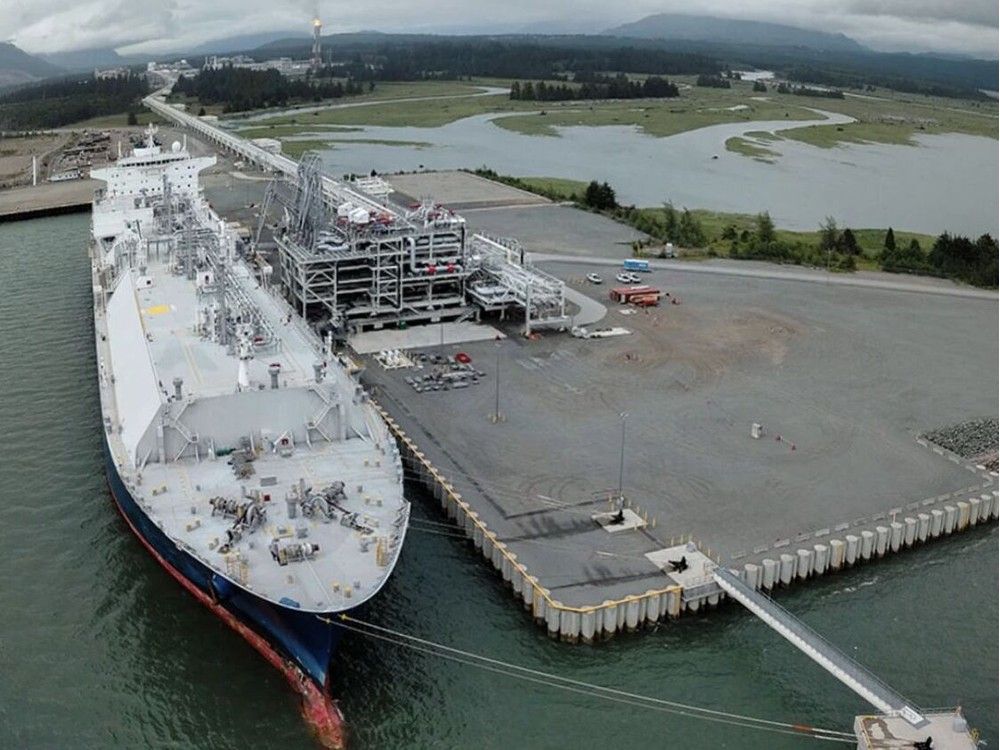
Short-term shifts in global liquefied natural gas markets at the start of 2026 are happening at the same time that two major B.C. LNG proposals are contemplating final investment decisions for multibillion-dollar projects.
Bloomberg News recently reported on Australian LNG producers directing a cargo of the super-chilled gas to a re-gasification terminal in Saint John , N.B., positioning the development as part of the country’s efforts to find sales outside of its traditional markets in Asia.
Some observers viewed the shift as another sign of weakening Asian demand, but others read this shipment, along with other recent LNG deliveries to the U.S. East Coast, more as a short-term response to deep-freeze weather causing price spikes in the area than representing a bigger signal of market changes.
The shipments are happening at a time when final decisions are being weighed on two B.C. projects that would double the country’s output — LNG Canada’s Phase 2 project, which would expand its plant in Kitimat, and the Ksi Lisims LNG proposal for a floating LNG export facility north of Prince Rupert.
LNG Canada’s Phase 1, with a capacity of 14 million tonnes a year, gave Canada its foothold in LNG exports last June . Ksi Lisims would add 12 million tonnes a year of capacity, on top of the smaller Cedar LNG project at Kitimat and Woodfibre LNG’s plant at Squamish, which are under construction.
Asian markets have weakened. Bloomberg, in its report, noted that LNG shipments to China declined 11 per cent in 2025. And forecasts estimate the global market will experience a glut of supply with projects coming online between 2026 and the early 2030s.
Representatives from both B.C. LNG projects with pending decisions didn’t directly answer questions about whether those developments will affect their final investment decisions. A spokesperson from LNG Canada said the company wouldn’t comment on individual shipping decisions or market speculation.
“LNG Canada has not provided a timeline for a Phase 2 final investment decision,” it said. The decision, though, will take “overall competitiveness, affordability, pace, future GHG emissions and stakeholder needs” into account.
“We continue to work in close collaboration with all levels of government to find a pathway to a Phase 2 expansion while navigating a complex global trade and tariff environment,” the statement concluded.
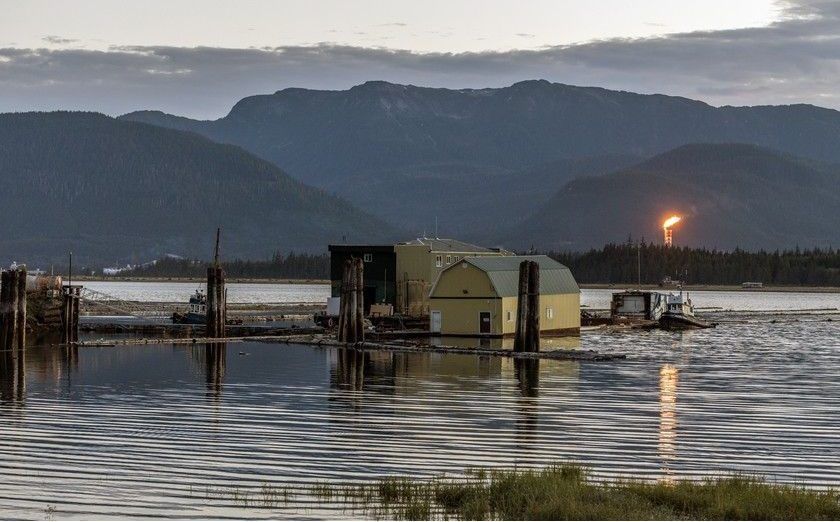
At Ksi Lisims, which has indicated a final decision could be made early this year, CEO Davis Thames, in an email response to Postmedia News questions, said short-term trading in LNG is dependent on logistics and “mean nothing for long-term contracting decisions.”
The shipment from Australia to Eastern Canada represented LNG produced in excess of sales contracts. LNG projects, however, needs firm contracts to make final decisions.
“For Ksi Lisims LNG, once we take (a final investment decision), our off-takers will be obligated to load cargoes for the entire term, regardless of market conditions,” Thames said in his statement.
One analyst said short- and medium-term developments will likely have little bearing on the decisions of either project.
“Timing is the key point here,” said Alex Munton, research director for the market consulting firm Rapidan Energy Group.
The shipment from Australia to the New Brunswick facility, which serves Canadian and U.S. distribution systems, happened at the same time very cold weather dealt them a spike in demand and sent gas prices “to very high levels,” Munton said.
Thames, in his statement, noted that spot prices for LNG in Boston and New York hit US$25 a gigajoule at the start of February versus US$11 in Asia, which “would justify a ship coming from anywhere in the world to unload at the facility.”
Munton added that it “was a signal to the market that the U.S. needed gas. I don’t think there’s much to read into it beyond that.”
Munton said that in the longer-term timing is also a factor for Ksi Lisims and LNG Canada Phase 2, which will likely be able to wait out a medium-term period of oversupply.
The International Energy Agency, in its latest World Energy Outlook, estimated that the global capacity to produce LNG is expected to increase by about 50 per cent by the end of the decade.
And in the scenarios it considered, the International Energy Agency estimated demand could increase in-step with that supply, if there were no changes in existing government climate policies, or lead to a supply glut that would last until about 2035 if governments adopt more ambitious climate policies that build more sources of renewable energy.
“The market is looking beyond this sort of current cycle, sort of into the 2030s, and I think that’s where (Western) Canadian projects are actually relatively well-positioned,” Munton said.
From the time either makes a final decision, assuming it’s positive, Munton said it could take up to seven years to construct a facility, which, in Ksi Lisims’ case, would include a new pipeline.
“That’s when the (International Energy Agency), and others have that supply-demand gap sort of opening up again on the basis of demand growth,” Munton added.
There are analysts skeptical of projections for rising LNG demand, such as the Institute for Energy Economics and Financial Analysis, considering the rate at which countries in Europe and Asia are also adopting renewable energy.
However, looking at the next couple of decades, considering likely sources of LNG demand growth, Munton said, “it’s really an Asia story. That’s why the West Coast is of perennial interest to the major players.”