 BURST
BURST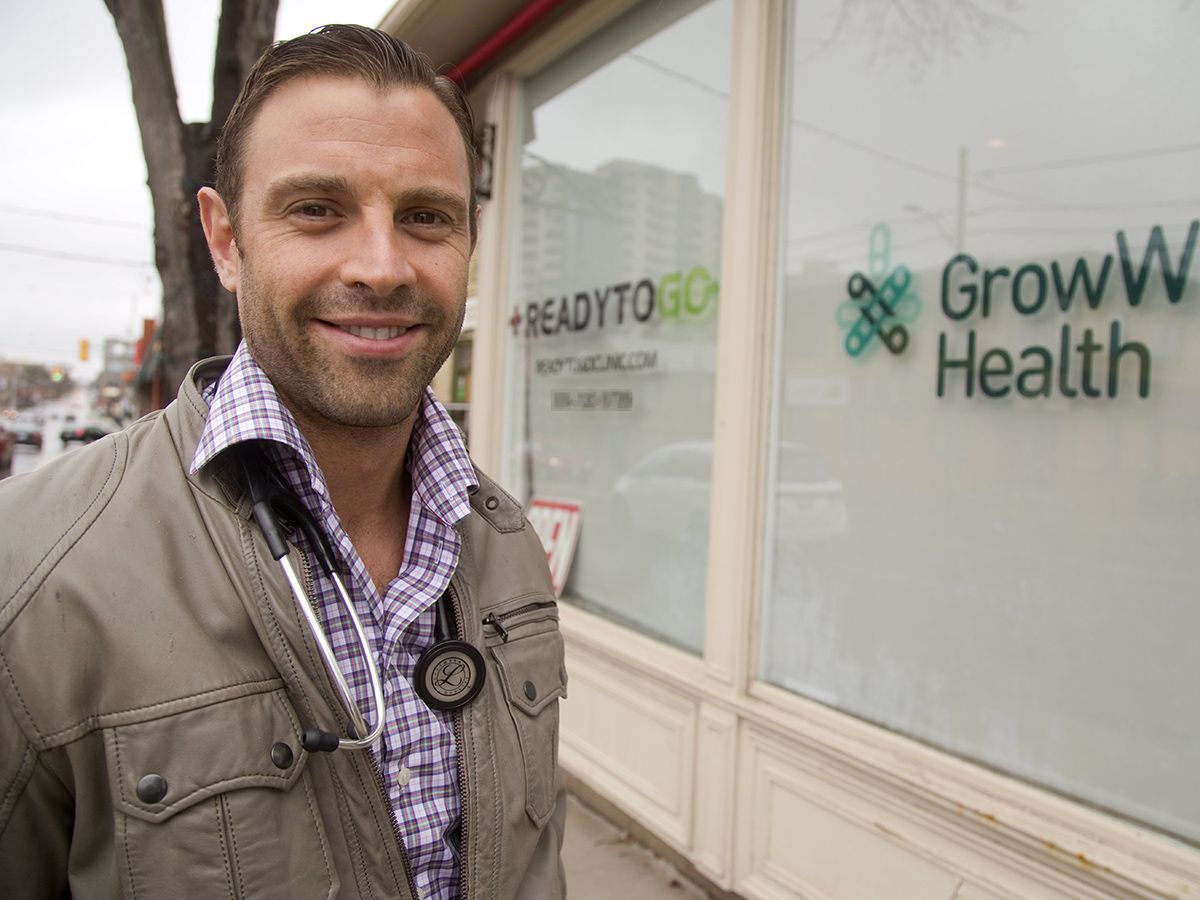
An Ontario family doctor who prescribed ketamine over the phone and asked patients to sign away their right to sue him or make a formal complaint “of any kind” has been suspended from practising for six months.
Dr. Michael Hart, a past guest of U.S podcaster Joe Rogan who was “cautioned” by the College of Physicians and Surgeons of Ontario multiple times dating back to 2016, including over his social media posts, engaged in conduct that would reasonably be regarded as “disgraceful, dishonourable and unprofessional,” according to a recent ruling.
“What is more, it was disgraceful, dishonourable and unprofessional to ask clients to sign a document promising not to take legal action against him or make a complaint to the college,” the Ontario Physicians and Surgeons Discipline Tribunal wrote.
“Physicians may not attempt to hinder the College’s regulation of the profession in the public interest by encouraging withdrawal of complaints” or attempting to discourage patients from exercising their legal rights.
The discipline panel accepted the parties’ joint submission proposing a penalty of a six-month licence suspension, effective July 8, as well as a permanent restriction prohibiting Hart from prescribing ketamine or testosterone replacement therapy upon his return to practice, among other terms and conditions.
The tribunal wrote that a joint submission must be accepted, unless it is “unhinged” from the circumstances and would bring the college’s discipline process into disrepute.
According to the college’s records, Hart was previously cautioned six times by its Inquiries, Complaints and Reports Committee, including over complaints involving his social media posts regarding gender-affirming care and COVID-19.
“Progressive regulation only protects patients if the physician on the receiving end responds to it, and the (Hart) file shows how long a practice can continue substantially unchanged while the warnings accumulate,” medical malpractice lawyer Paul Cahill blogged.
In a statement to National Post, the college said that while the complaints committee can make a range of dispositions, some of them remedial in nature, it doesn’t make findings of professional misconduct. “Where a matter requires the determination of disputed facts or involves allegations of professional misconduct,” the case may be referred to the discipline tribunal, which is responsible for adjudicating those matters.
What most stuck Cahill was Hart providing two patients with a document asking them to promise never to file a lawsuit or a grievance with his licensing college, which the tribunal found was itself disgraceful, dishonourable and unprofessional.
“I’ve been practising medical malpractice litigation for over 20 years now, and I’ve never come across something like that,” Cahill said in an interview with National Post.
“You do see cases where waivers are signed if you’re about to do some dangerous sport. Waivers exist. But medicine? It just didn’t seem right…. That’s an alarm bell. It’s not what happens, or should happen, in our health system, at all,” Cahill said.
“It’s worth letting the public know that.”
A lawyer who represented Hart declined to comment. Hart did not respond to requests for comment before deadline.
Hart has an active social media presence . He was profiled by local media as the first family doctor in London to write prescriptions for medical marijuana and appeared on Rogan’s podcast for a cannabis debate.
According to the discipline tribunal, his practice was found to have “multiple deficiencies” in a case stemming from complaints by two patients and a review of 34 other patients’ charts by two different assessors.
“Dr. Hart showed a lack of knowledge, skill and judgment that harmed patients in multiple ways,” according to the tribunal decision.
One concern was his prescribing of ketamine, a powerful anesthetic used for years to sedate people before surgery that has recently gained attention for its potential for treating severe depression. Actor Matthew Perry’s fatal overdose death in 2023 involved heavy doses of legal and illicit ketamine.
According to the tribunal’s findings and penalty reasons, “Dr. Hart failed to properly assess patients, obtain consent, educate patients, prescribe appropriate dosage or keep records.”
The tribunal described how an anonymized “Patient A” sought treatment for anxiety and depression in 2022 from Hart at his ReadyToGo clinic in London, where he was the sole owner and practising doctor.
Both Patient A’s encounters with Hart took place over the phone. “Dr. Hart did not see or assess Patient A in person at any time.”
Among the documents the woman received before her first appointment was a form requiring her signature that read: “I agree not to take any legal action against the assessing physician, the ReadyToGo Clinic or to make a complaint of any kind to the College of Physicians and Surgeons (of) Ontario.”
The woman was prescribed ketamine after an initial phone consultation and experienced side effects she described as “horrific” and “scary,” including loss of balance, slurred speech, increased heart rate and dissociation, meaning a sense of disconnection from reality.
The effects lasted throughout the day until she went to bed that night.
“Follow-up care was limited to a phone call two weeks later,” according to the tribunal report. “During the call, Dr. Hart pressured Patient A not to complain to the College by repeatedly asking Patient A not to take any action against him or report him. This behaviour made Patient A feel uncomfortable, coerced, intimated and harassed.”
In 2020-21, Hart treated Patient B. Once again, appointments took place over the phone and Patient B was asked to sign a document with the same wording promising no legal action or complaining to the college, according to the tribunal.
Patient B was referred to Hart by therapist Tatiana Zdyb for a prescription for ketamine to be used in combination with psychotherapy. “Dr. Hart identified her as Dr. Zdyb, despite knowing that she did not have a doctoral degree in clinical psychology,” the tribunal wrote.
Zdyb’s licence was revoked last year by the College of Psychologists and Behaviour Analysts of Ontario over inappropriate use of ketamine and psilocybin, misrepresenting her credentials and violating professional boundaries by having a sexual relationship with a client.
Hart prescribed Patient B four capsules of ketamine to be taken prior to therapy sessions. He renewed the prescription six months later at a higher dose when Patient B reported that, while the therapy was helpful during sessions, there was no sustained benefit. Four months later, he prescribed at-home ketamine without assessing for a risk of addiction. He also yelled at the patient during a telephone appointment when he realized the patient was calling from a car.
Independent experts who reviewed 34 charts found frequent deficiencies, including lack of appropriate assessment and rationale for ketamine treatment and escalating doses based on the patient’s preference, rather than medical need.
Hart’s misconduct “was not a lapse or gap in one area: there are fundamental problems with Dr. Hart’s approach to the practice of medicine,” the discipline tribunal wrote.
Some of the same issues Hart was cautioned about in the past “happened in this case,” the discipline tribunal said. “This misconduct is more serious, given that it occurred after these warnings.”
Hart pleaded no contest, “saving costs for the College and avoiding the need for witnesses to testify,” according to the tribunal.
“Unlike an admission or entering into an agreed statement of facts, however, the registrant has not demonstrated insight or remorse.”
National Post
Our website is the place for the latest breaking news, exclusive scoops, longreads and provocative commentary. Please bookmark nationalpost.com and sign up for our newsletters here.