 BURST
BURST“TikTok reads 230 of the Communications Decency Act to permit casual indifference to the death of a ten-year-old girl.” - Judge Paul Matey, 2024
Over the past week, jurors have made two different important decisions to hold big tech accountable. In one trial, a Los Angeles jury found Meta and Google liable for addicting and harming a child. They assessed the companies $6 million, opening the floodgates for thousands of similar lawsuits. In a related but different one, a New Mexico jury penalized Meta firm $375 million for violating state unfair trade practice and nuisance laws, based on a suit brought by the state’s attorney general, Raúl Torrez.
These cases are a big deal, because in many ways, they are the closest we can get to ordinary Americans expressing their informed views of corporate power. In a trial, after weeks of evidence, twelve men and women deliberate and make a decision about who is at fault. In both of these cases, they found the oligarchs had violated the law.
The argument in Los Angeles was that the design of the Facebook and Google products, including things like infinite scroll, algorithmic recommendations and autoplay videos, was designed to addict young users. The victim is a 20-year-old woman who started using Instagram and YouTube as a child. Her allegation is she suffered from “severe body dysmorphia, depression and suicidal thoughts” due to her “near-constant use of the apps and the constant notifications that made it difficult for her to stop.” Meta and Google unsuccessfully argued that their products were not a major factory contributing to her distress, that she instead suffered solely from parental child abuse or neglect. But the jury believed otherwise.
Internal documents showed how Meta executives focused on ensuring young users kept spending time on these platforms, to the detriment of their mental health.
At one pivotal moment, Zuckerberg went on the stand, and had to explain why he overruled 18 experts concerned about beauty filters. His argument? He said he wanted to promote “free expression,” instead of being “paternalistic” and “overbearing.” The jury found these comments callous, but also thought him dishonest. As one juror said, Zuckerberg “changed [his testimony], and that didn’t sit well with us.”
It’s a meaningful win. It’s unusual to win a jury trial right off the bat on a new topic, it usually takes a couple of attempts to figure out how to make the right argument. So that means big tech is really hated. And as lead lawyer Mark Lanier noted, there are thousands of similar cases that can now draw upon the evidence and tactics used at this trial.
In the New Mexico trial, it’s a slightly different situation. Raúl Torrez, the state attorney general, brought the case, and the violation was over three counts of a state law against unfair practices, and one nuisance claim. But the narrative arc was similar to the Los Angeles trial. Here’s Torrez:
The evidence presented at trial – which included internal Meta documents and testimony from former Meta employees, law enforcement officials, and New Mexico educators – established that Meta’s design features enabled pedophiles and predators to engage in child sexual exploitation on Meta’s platforms. Evidence from those witnesses and other industry experts also demonstrated that Meta intentionally designs its platforms to addict young people and, contrary to Meta’s public commitments, expose them to dangerous content related to eating disorders and self harm.
Such outcomes shouldn’t be a surprise to anyone. Last October, in a piece titled “How to Overturn an Oligarchy,” I noted that corporations are starting to get worried about a populist turn among juries. A law firm that advises on jury selection found that “the jury landscape has fundamentally shifted. 72% of Americans now see their role as sending messages to corporations—a dramatic increase from 2022.” And that’s what happened in the case against Meta and Google on addicting children. “We wanted them to feel it,” said one juror. “We wanted them to realize this was unacceptable.”
So what happens now? Well, there are still elements of these cases that aren’t complete. In New Mexico, the judge will hear arguments about whether Meta is a “public nuisance” and may issue an order to change the product design. And both cases will be appealed. But Meta’s stock price is down significantly, because investors understand it’s a strategic defeat for the company.
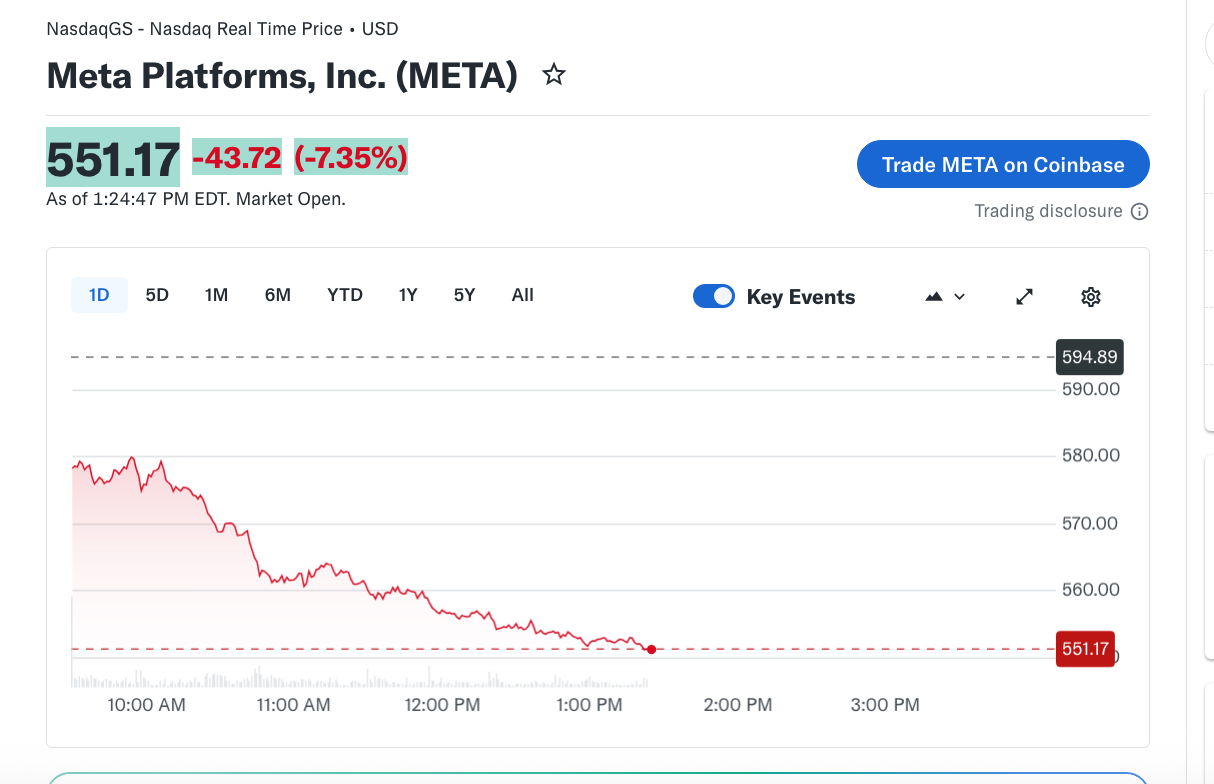
There are many reasons for this decline, but the big one is that big tech’s aura of invincibility is gone. Indeed, most of the public response has been positive, with the gist being “finally someone has held these guys accountable for something.” I mean, it feels like there have been endless scandals, with no consequences.
So this week, in these cases, that juries could make these decisions, and did, matters. But these trials also suggest an interesting and important question - why has it taken so long to get any accountability? The answer, in short, is that these companies are protected, formed even, by libertarian legal assumptions. And changing those is a slow process.
Section 230
Law works through analogy, and for 30 years, internet law has been understood as a question of speech, and therefore, as revolving around the First Amendment. The network of law professors who have until recently been the intellectual guardians of internet law, are very invested in this analogy. Eric Goldman, co-director of the High Tech Law Institute at the Santa Clara University School of Law, is a good example. In response to this case, he said “I think the internet is on trial, not social media.” Here’s a conservative free speech organization, FIRE, making a similar point.

To normal people, these are very weird things to say. Clearly, one can distinguish between ‘the internet’ and Mark Zuckerberg addicting children with beauty filters. But legal elites have a reverence for a certain corporate-friendly version of the mid-20th century First Amendment. They fear the government, and only the government. To them, it’s always 1971, and the New York Times is always facing Nixon over the Pentagon Papers. The result is many free speech advocates have adopted a deeply immoral and corporatized vision of speech. For instance, it was a Ralph Nader group that first put forward the idea that money was speech, until that got solidified in Citizens United in 2010. Since then, corporations have used that provision of the Constitution to block labor law, election rules, and regulation of pornography. Alleged corporate landlord rent-fixing conspirator RealPage tried to use the First Amendment to protect its right to price-fix!
This strange view of free speech has created a disconnect of libertarian legal elites towards basic morality. Indeed, in 2024, Paul Clement, a lawyer for a Facebook and Google trade association, told the Supreme Court that algorithms fostering suicide had First Amendment protections.
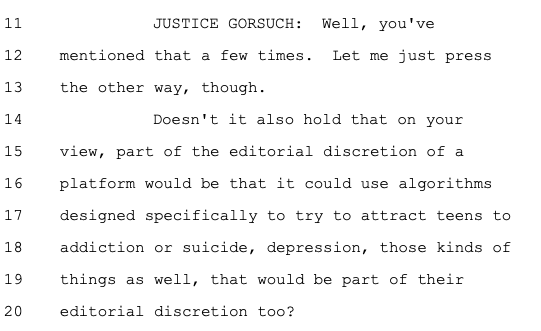
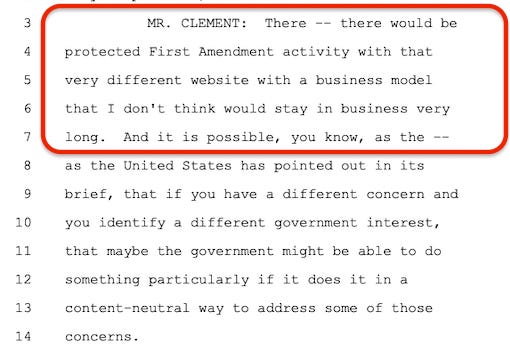
In the case of social media addiction, the specific legal protection for big tech, and the nub of the likely appeal, is a law called Section 230 of the Communications Decency Act.
In 1996, as part of the Telecom Act that consolidated our media, Congress passed this provision. Section 230 says that if an “interactive computer service” is hosting someone else’s speech, they are not liable for what that third party says. There’s a lot of complex case law here, but the short story is that until 10 years ago, courts basically interpreted this law to mean anyone hosting web content had no responsibility for anything. So in 1996, AOL chatrooms went unregulated by traditional common law. By 2016, that loophole applied to huge swaths of the economy, from hotel booking websites to the Amazon marketplace.
The idea that hosting a website meant you were simply a vessel for speech became more and more absurd, as lawyers brought cases with fact patterns demonstrating significant danger.
What are some of the specific harms? Well such bad acts include Grindr knowingly facilitating sexual violence, credit reporting agencies trying to avoid being regulated for mistakes in credit reports, or Facebook fostering ethnic violence. Identity thieves use social media sites to steal money, with the IRS flagging more than 1 million tax returns for identity fraud in 2023, with information largely captured on LinkedIn or Meta’s sites.
Today, “scammers use Facebook to impersonate soldiers so as to start fake long-distance relationships with lonely people, eventually tricking their victims into sending their ‘boyfriends’ money.” And social media firms use algorithms to target gambling addicts with ‘social casino’ apps.
In 2024, TikTok tried to use this law to get out of a wrongful death case after its algorithm encouraged kids to take the “Blackout Challenge,” which encouraged viewers to record themselves engaging in acts of self-asphyxiation. Multiple children unintentionally hung themselves. As one judge wrote, “Today, § 230 rides in to rescue corporations from virtually any claim loosely related to content posted by a third party, no matter the cause of action and whatever the provider’s actions.”
Starting in 2017, savvy plaintiff lawyers like Carrie Goldman adopted a different view of platforms. Multi-trillion dollar corporations like Google and Facebook are not akin to newspapers’ published content. These companies make products. Facebook is more like a firm that sells microphones than a newspaper publisher. And so product liability, not the First Amendment law, applies.
At this point, enough courts have seen awful fact patterns to allow lawyers to sue platforms based on product liability theories, instead of allowing companies to shield themselves under the guise of free speech. It doesn’t help them that there’s legal shapeshifting going on - when companies want to avoid regulation, they claim First Amendment rights. But when someone tries to say they are engaged in defamation, they argue they are merely a vessel for someone else to speak, and thus immune from liability. That dynamic has been noted by Supreme Court justices, who increasingly are skeptical of expansive Section 230 claims.
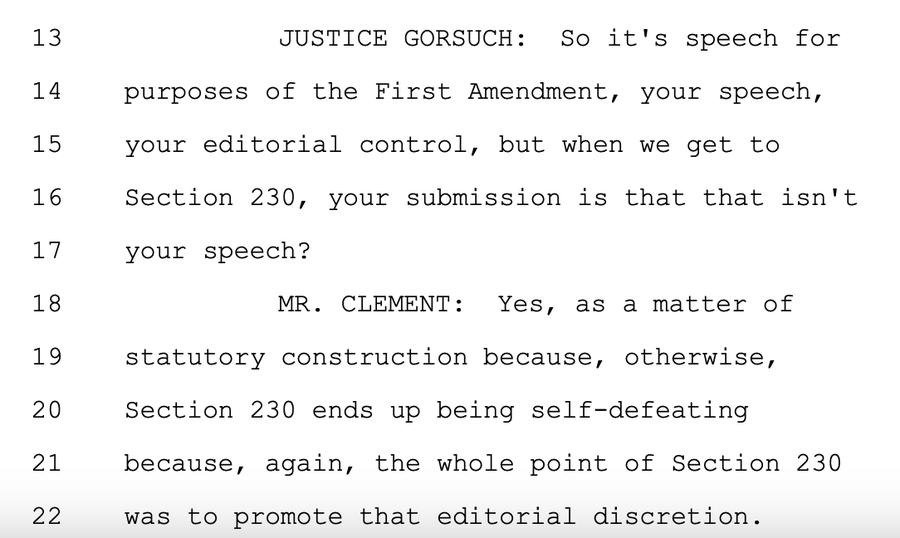
These cases will go on appeal, and circuit courts could overturn them. They might make it up to the Supreme Court, as Section 230 hasn’t been fully addressed. Or Congress could act.
But ultimately, America is a democracy, and in a democracy, everyone who runs a powerful institution has obligations to the people. Not just elected leaders. Everyone. It’s obvious that a super-class of creeps who have seized power in America don’t believe that. There are, however, forums for ordinary people, such as trials by plaintiff lawyers heard by juries. Last week, a jury found Elon Musk liable for securities fraud when he manipulated the price of Twitter stock, ordering him to pay $2.5 billion. And a jury is hearing about Live Nation/Ticketmaster’s monopolization. Either the oligarchs win, and the public will be completely neutered in our ability to have any say over our society. Or they will lose, and be subject to the rule of law.
This week, we can score one of the rule of law.
Thanks for reading! Your tips make this newsletter what it is, so please send me tips on weird monopolies, stories I’ve missed, or other thoughts. And if you liked this issue of BIG, you can sign up here for more issues, a newsletter on how to restore fair commerce, innovation, and democracy. Consider becoming a paying subscriber to support this work, or if you are a paying subscriber, giving a gift subscription to a friend, colleague, or family member. If you really liked it, read my book, Goliath: The 100-Year War Between Monopoly Power and Democracy.
cheers,
Matt Stoller