 BURST
BURST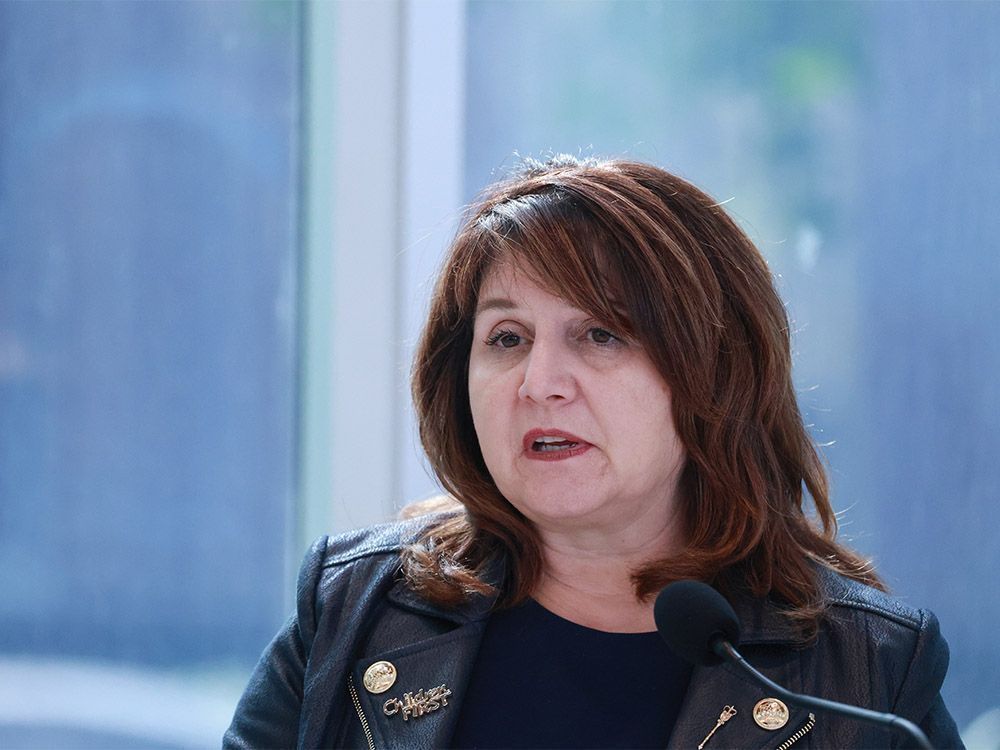
Alberta is proposing a sweeping number of changes to several pieces of health-care legislation to allow specialized physicians to provide both private and public services — but excludes family doctors.
Bill 11 — the Health Statutes Amendment Act 2025, was tabled in the legislature on Monday. The bill proposes a number of changes to existing pieces of legislation that if passed would advance the province’s refocusing of the health-care system, make the province the “payor of last resort” for drug coverage, ensure Albertans have to renew health cards, make changes to food safety, and broaden the eligibility criteria for a chief medical officer of health.
Primary and Preventative Health Services Minister Adriana LaGrange said it is time to make “bold changes” to the health-care system and said allowing certain physicians to work in both the private and public sector would help to retain more doctors.
“There will be no reductions in publicly funded procedures or services, and no Albertan will ever have to pay out of pocket to see their family doctor or receive the medical care they need,” LaGrange said.
Here’s a breakdown of the proposed amendments.
Family physicians not working in dual practice model
If passed, Bill 11 would make amendments to the Alberta Health Care Insurance Act (AHCIA) to change the Alberta Health Care Insurance Plan (AHCIP) so physicians can choose whether or not they will bill AHCIP or a patient privately for some health-care services as the government moves forward with a “dual practice model.”
Under the proposed legislation, family physicians will not be able to participate in the new model at this time, however, this could change via ministerial order in the future.
“Our priority right now is to make sure that every person in Alberta is attached to a primary care provider, and so at this point in time, restricting family doctors not to provide private practice that they would be fully within the public system only makes sense,” LaGrange said
Restrictions would include requiring physicians to have a minimum number of years to practice in the public system before being able to practice in the private system, restricting which specialties can practice in the private system, times of day for private practice and the amount of time spent or services provided in private practices.
There will be no private options for emergency services, procedures and surgeries, including cancer treatment, which will continue to be covered under the public plan.
Before patients receive private services, they must be informed of alternate public options for care, fees, their requirement to pay and a physician’s status.
Alberta NDP hospitals and surgical health facilities critic Sarah Hoffman said the province is pushing for more privatization of the health-care system and called it “Americanizing of our health-care system.”
“ One of the things that makes me so proud to be Canadian, especially when you talk to people who don’t live in Canada, is our health care system and instead of finding ways to make it better and more accessible for all, Danielle Smith’s trying to find more ways to make it look like Donald Trump’s Republican America,” Hoffman said.
Changes to drug coverage, payment compliance
Further amendments to the AHCIA would shift the government’s role to the “payor of last resort,” meaning private insurance plans or employer-sponsored plans would become the primary source of drug coverage with government-sponsored plans covering the remaining portion.
The changes would also require employers to maintain employer-sponsored coverage for employees 65 years and older who are actively employed. Employers would be prohibited from cancelling or denying coverage to an employee based on age.
Officials did not say whether or not the government will step up to cover the remaining cost of drugs if coverage is cut by the employer.
The combination of making the government the “payor of last resort” with requiring employer-sponsored drug and supplementary benefit plans to maintain coverage for employees 65 years and older who are employed — is anticipated to save the government between $35 to $54 million annually.
Since 2020, there has been an average of more than $5.5 million worth of overpayment claims annually, according to the province. The proposed amendments would outline penalties for non-compliance such the ability to remove or suspend a physician’s registration to the AHCIP, publish outcomes of compliance activities, financial penalties, and consequences for third parties with a hand in non-compliant behaviour.
Modernizing health cards
The province plans to implement a health card renewal process which it said would address concerns raised by the auditor general about health coverage eligibility. Details on a defined timeline would be outlined via regulation.
The option to add a health card number onto a driver’s licence or a separate identification card will come in 2026.
LaGrange said there could be a cost associated with the new health card, but it is still to be determined.
Under the proposed changes, provisions are added to create new offences for tampering with or using a tampered health card. It will allow for those health cards to be seized, surrendered or terminate access.
Health information would be shared with the ministries of technology and innovation, and Service Alberta and Red Tape Reduction if passed.
Proposed amendments to the Public Health Act (PHA) would broaden the eligibility criteria for a chief medical officer of health to include fellows of the College of Family Physicians of Canada and enable a wider breadth of candidates for the role.
It would also enable more than one deputy chief medical officer of health to be appointed.
LaGrange said the province should have a new and permanent chief medical officer of health “very soon.” Dr. Soonil Sukram was appointed as interim chief medical officer of health last April.
“There was a short list, and they are just in the interview process. But really it’s to make sure that individuals who apply for this can come to it from an educational background in public health, as well as on-the-ground practical public health experience,” she said.
Amendments to the PHA with regards to food safety would include the creation of a public health investigation team and introduce penalties to address breaches and continued non-compliance.
Modernizing health information and health-care restructuring
With the restructuring of the health-care system into four new agencies, proposed amendments to the Health Information Act (HIA) would allow for information sharing between government ministries, allow expanded electronic health information sharing between other custodians (multiple physicians in a practice using the same medical system), adding in privacy controls, and clarifying when custodians can use health information.
Proposed amendments to the Provincial Health Agencies Act (PHAA) and the Alberta Health Care Insurance Act (AHCIA) would allow for previous announcements like transiting Alberta Health Services to an acute care service provider.
You can also support our journalism by becoming a digital subscriber. Subscribers gain unlimited access to The Edmonton Journal, Edmonton Sun, National Post and 13 other Canadian news sites. Support us by subscribing today: The Edmonton Journal | The Edmonton Sun.