 BURST
BURST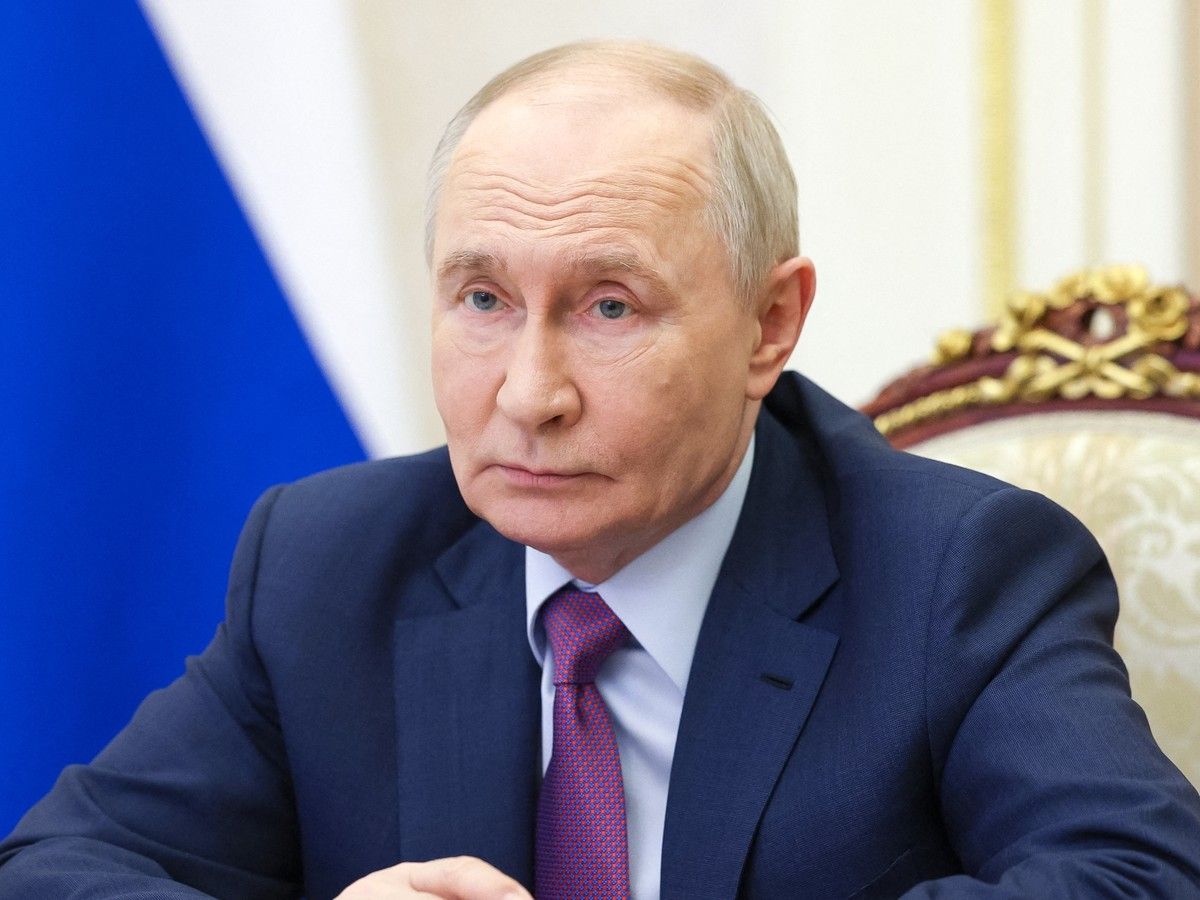
Senior officials have warned President Vladimir Putin that sustaining defence spending at current levels would imperil the Russian economy, the first major sign that the Kremlin’s consensus on the war in Ukraine is fraying.
The country’s top finance ministers and the central bank are urging the government to cut spending or risk the deficit spiraling out of control, according to Bloomberg News . Russia’s heavily sanctioned economy has reportedly depleted fiscal reserves after more than four years of the full-scale invasion.
Russia is expected to exceed its budget by 2 trillion rubles (C$37 billion) in 2026, which could double in a “negative scenario,” according to a letter from the Finance Minister Anton Siluanov obtained by the Financial Times. Further deficit-financed overspending to the tune of 4 trillion roubles was also expected in 2027 and 2028, he wrote. Russia allocated almost 40 per cent of this year’s budget, about 16.84 trillion roubles ($316 billion), to spending on defence and security.
The current budget was planned with eventual reductions to defence spending, which Putin has so far resisted, asking ministers to look for efficiencies elsewhere. In January, the finance ministry asked government agencies to reduce non-essential spending by 10 per cent but excluded social and defence spending, according to FT.
“Reserves are not endless. Weakness in finances cannot be tolerated in the context of such large-scale transformations in the world,” Siluanov said in an interview last week with the Russia newspaper Kommersant, urging “restraint,” according to Bloomberg. Siluanov’s warning comes as Russia’s rainy day stash, the National Wellbeing Fund, has depleted by about 60 per cent since before the invasion in 2022.
Despite a boost from higher oil prices, the Russian economy has run out of momentum. In May, the country’s economic ministry downgraded its gross domestic product forecast for 2026 to 0.4 per cent from the previous estimate of 1.3 per cent. Russia’s war economy had previously confounded expectations, growing in 2023 and 2024 before slowing in 2025 to one per cent.
Officials have blamed the unprecedented sanctions, a strong rouble hurting exports and double-digit interest rates.
Sources tell Bloomberg that some officials in Putin’s circle who continue to support Putin’s war agenda are urging that military expenditure be protected, arguing that it would hurt businesses who rely on military contracts .
Russia has also considered leveraging its commodity-heavy economy by implementing a windfall tax on producers and banks to fill its budget gap, Bloomberg previously reported.
In April, Putin publicly dressed down officials and asked them to explain the slowdown in manufacturing, industrial production and construction. “These are objective circumstances, of course, but it is clear they are far from the only factors determining business and investment activity in the country,” he said, according to Moscow Times.
With money tight, some of Russia’s oligarchs have taken to making large financial donations to the state. According to the Russian-language business magazine Expert, close to 220 billion rubles (C$4.1 billion) were donated. One tycoon argued in a closed-door meeting with Putin and other business leaders that “that the vast majority of those at the meeting started their businesses in the 1990s, and that, in most cases, those beginnings were in one way or another connected to the state,” according to Interfax.
With a military breakthrough in Ukraine becoming harder to achieve, Putin’s belief that Russia can capture all of Donetsk and Luhansk this year seems increasingly remote. According to the Institute for the Study of War, a Washington-based think tank, Russia is seizing or infiltrating only close to eight per cent of territory they advanced into in 2025.
Ukraine officials said in March that Russia’s casualty rate reached 35,351 in March, a new monthly high. An emboldened Ukraine has attacked oil facilities and ports deeper inside Russia with the use of drones, while Russia has escalated its missile and drone strikes across Ukraine.
Our website is the place for the latest breaking news, exclusive scoops, longreads and provocative commentary. Please bookmark nationalpost.com and sign up for our daily newsletter, Posted, here.