 BURST
BURST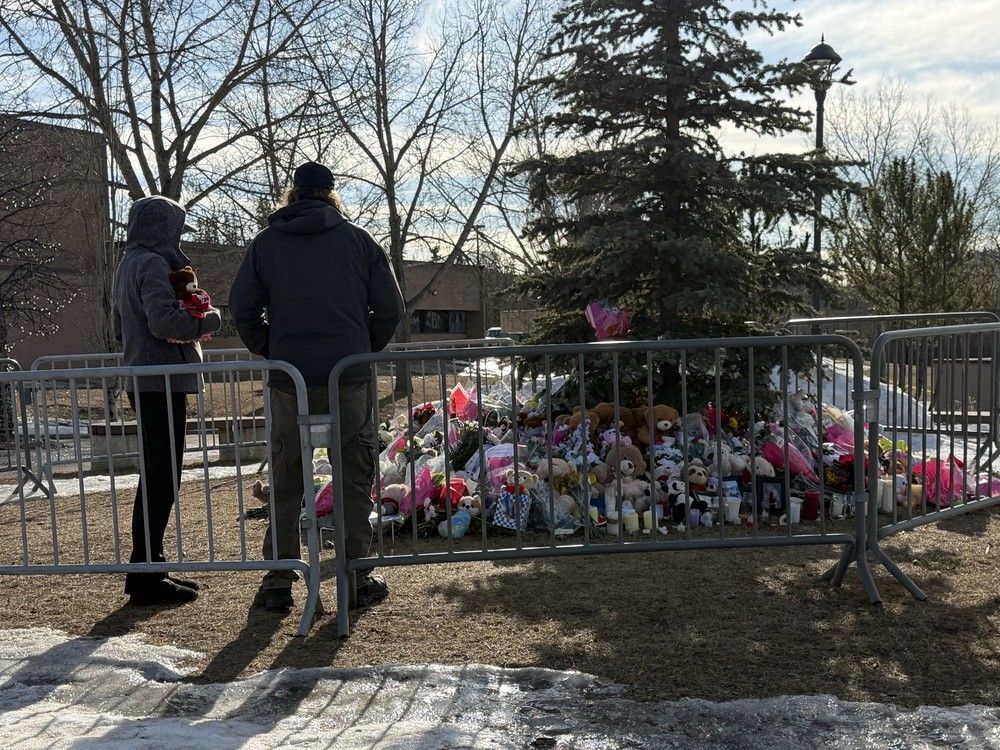
As Tumbler Ridge struggles with its loss following the killing of eight people, shot by 18-year-old Jesse Van Rootselaar, a nagging question remains: were the community’s continued struggles with social and healthcare resources contributing factors?
Policy churn, the starting, stopping, and rebranding of programs, had detrimental impacts on the northern community. Policy guidelines used to determine funding and placement can leave towns like Tumbler Ridge and its boom-bust history with dysfunctional or absent services.
It also compounded the downloading of social and medical responses on police agencies.
Van Rootselaar, a transgender woman, killed five students, a teacher, her younger brother and her mother. She hadn’t attended school in four years and was using social media to document the impact of using hallucinogenic and psychedelic drugs was having on the transgender female.
In the aftermath, Tumbler Ridge RCMP said they responded to the family home numerous times and that they were often related to mental health and sometimes firearms.
At one point, the firearms were seized and removed from the home. However, the owner of the firearms petitioned the court to have them returned “a couple of years ago,” said police.
They did not confirm whether Jennifer Strang, 39, was the owner.
Van Rootselaar’s social media also demonstrated a fascination with firearms and violence.
The warning signs were there.
Healthcare and Tumbler Ridge
Since its 1981 incorporation, the region has experienced waxing and waning services. It was an “instant town” that developed to support coal mining activities. Throughout its history, the community experienced boom-bust cycles based entirely on mining operations.
In September 2025, Northern Health announced that the Community Health Centre hours would be reduced. There would no longer be access to healthcare or emergencies after 5 p.m. It created a domino effect.
While residents protested, the B.C. government pushed virtual primary care and crisis lines.
The change in service levels would also result in a lesser need for ambulance services. With no on-call physician, there would be no medical direction to send patients 100 kilometres north to Dawson Creek after hours, including mental health emergencies.
A month later, residents protested again. ‘Northern Lives Matter,’ they said. Virtual services weren’t going to alleviate emergencies, they argued. The all-important first hour following the onset of a serious health event or injury is critical to survival.
In December 2025, just a few months after the provincial government’s announcement, the worst outcome became a reality.
A resident died in an ambulance during the hour-long transport to Dawson Creek. The degradation of after-hours physician availability had a domino effect on other health services.
Data released by B.C. Emergency Health Services revealed a reduction in ambulance fill rates from September 2025 to January 2026. The prime ambulance had a fill rate of 92 per cent while the secondary ambulance had only 83 per cent of the time.
Of the 194 total ambulance calls, crews from other towns responded to 36 calls.
Where those healthcare issues intersected with mental health emergencies became more complicated. Police had long been relied upon to respond to mental health emergencies.
Should they respond to a mental health emergency, they wouldn’t be able to get the person assessed after hours because the only available physician was in Dawson Creek. The district council opposed and advocated for more transportation options. Tying up police as they transport a medical case to Dawson Creek would compromise Tumbler Ridge.
It would compromise public safety.
Combined with the smaller detachment size, five sworn officers and one or two civilians that make up the detachment team, officers would be expected to be the responders. B.C. would further solidify the role of the RCMP as responders just weeks before Van Rootselaar’s shooting spree.
They launched a new program, a mental health screening tool for police to utilize in a Mobile Integrated Crisis Response (MICR) team.
But the town’s mental health resources don’t include a psychiatric nurse. They didn’t qualify for one because of their numbers. The tool went unused and a MICR team was never realized.
In the wake of the Tumbler Ridge shootings, the town’s RCMP and existing health services have been lauded for their abilities and service to the community by politicians. The surge of resources, including healthcare, victim services and mental health as the town approaches Family Day weekend, serves as a reminder that they become available when the town is in crisis.
B.C. 2026 – 2027 budget highlights impacting healthcare
Rural Retention Incentives: The Provincial Rural Retention Incentive (PRRI) was extended until March 31. It provides up to $8,000 annually for nurses in 74 rural communities.
The Rural Health Equity Fund proposal: The B.C. Rural Health Network is currently lobbying for a $50 million annual permanent budget line in the 2026 budget.
Psychiatric nurse: a population barrier. The continued use of a per-capita formula won’t help the town meet the threshold required for the MICR nurse. It’s typically reserved for cities with populations of 15,000 or over.
Despite the 2026 push for mental health, Tumbler Ridge remains stuck in a “funding gap.”
Virtual services: remote clinicians as the province leans into its virtually enabled rehabilitation program and a 9-8-8 service.
Foundry centre expansion: The province announced there would be more, but the closest to Tumbler Ridge remains Prince George, a four-hour drive from Tumbler Ridge.