 BURST
BURST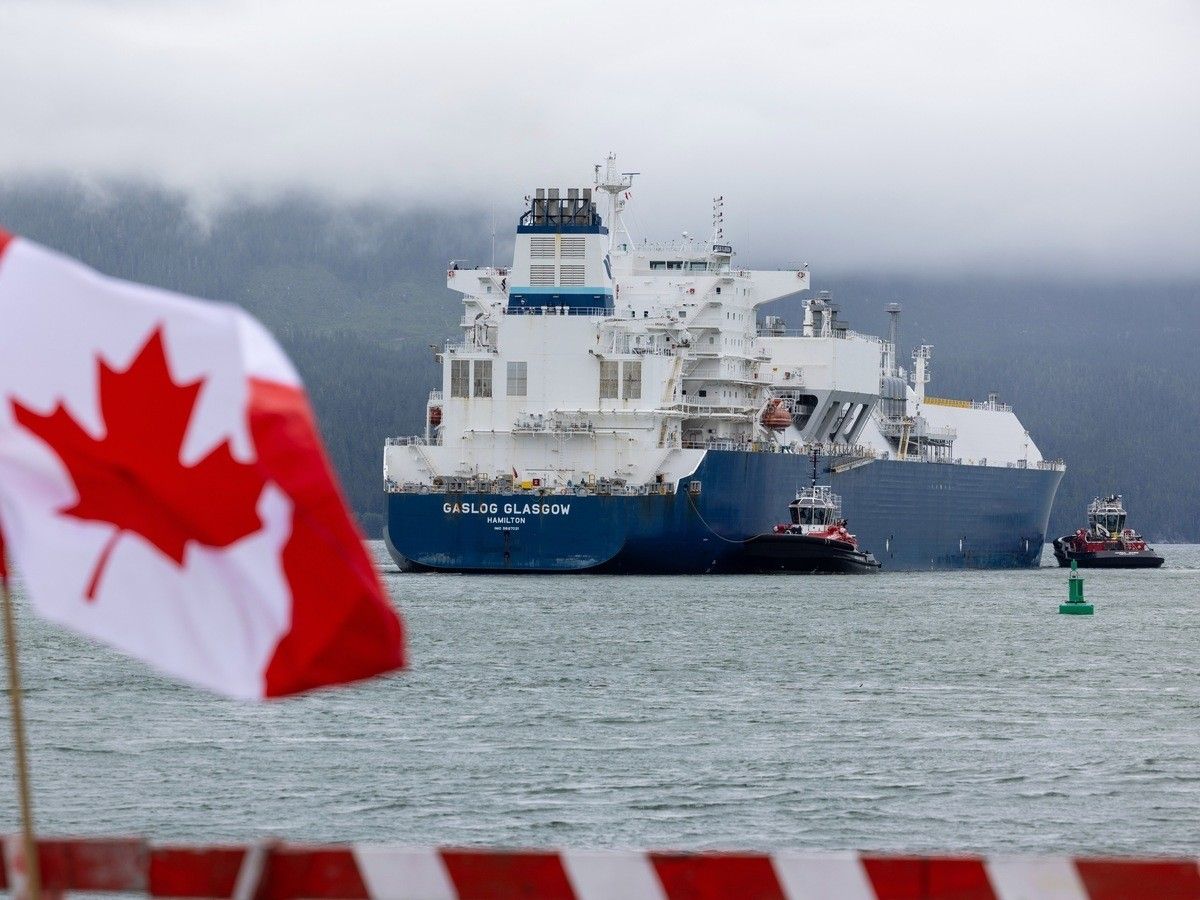
The consortium behind the LNG Canada liquefied natural gas terminal in Kitimat has put its engineering and construction partner on notice to be ready for planning work on its proposed expansion, another sign a final investment decision on the project is getting closer.
Irving, Tex.-headquartered Flour Corp. announced that its joint venture for what has been dubbed LNG Canada 2, has been given “limited notice to proceed,” one of the next, methodical steps LNG Canada needs to take.
“The (limited notice) enables us to initiate early planning and move forward with key activities to support a proposed Phase 2 final investment decision by LNG Canada,” Flour executive Pierre Bechelany said in a news release.
Flour’s announcement, made at the close of business Monday, closely preceded a new trade meeting in Ottawa between a top South Korean government official and Minister of Natural Resources Tim Hodgson on Tuesday, which sought to further cement their relationship over energy shipments.
Kang Hoon-Sik, a special envoy for strategic economic cooperation, as well as chief of staff to South Korea’s president, met with Hodgson to talk about opportunities to expand trade, including through increasing Canadian LNG exports to Korea.
South Korean utility Korea Gas Corp. (KOGAS), the smallest joint-venture partner in LNG Canada, holding just a five-per-cent stake in the $40 billion development, has become its biggest buyer in the plant’s initial startup.
From LNG Canada’s first shipment last June through the first two months of 2026, almost 40 per cent of the facility’s LNG has gone to Korea, according to export figures from the Canadian Energy Regulator.
In a statement, Kang characterized the Canada-South Korea relationship as one built on a foundation of trust, and vowed that “we are committed to elevating this foundation into a fully integrated energy supply chain partnership.”
The government officials also talked about the potential for KOGAS to remain a “prospective partner” for LNG Canada 2, with a commitment that South Korea would import at least 1.4 million tonnes of LNG per year from the facility for more than 30 years.
Dutch energy giant Shell is LNG Canada’s lead partner, holding a 40 per cent stake in the project, Malaysian state-owned Petronas is the second biggest owner, holding a 25 per cent stake, and Chinese state firm PetroChina and Japan’s Mitsubishi Corp. each hold 15 per cent.
Japan and China have also been No. 2 and 3 customers for LNG Canada’s first phase, according to Canadian Energy Regulator trade statistics, taking 27 per cent and 23 per cent of shipments through February 2026.
LNG Canada’s first phase included two gas liquefaction units, referred to as trains within the industry, with the capacity to produce some 14 million tonnes of the super-cooled fuel per year. Phase 2 of the project would double that capacity.
In recent weeks, LNG Canada’s partners reached a new agreement on investment co-operation with B.C. and Ottawa aimed at helping the company make its investment decision for LNG Canada 2 before the end of this year.
The federal government has put the expansion proposal on its list of resource projects deemed of national importance. Prime Minister Mark Carney’s major projects office identified it for possible fast-tracking as a means to diversify Canadian trade.
When the governments and LNG Canada struck its co-operation agreement May 14, company CEO Chris Cooper called it a moment for “purposeful collaboration” on ticking off requirements to make a decision to go ahead with Phase 2 to “seize a generational opportunity” to increase exports.
LNG Canada had already committed what the company characterized as “hundreds of millions of dollar” to pay for additional engineering for the expansion, to potentially reserve long-lead-time components and advance agreements with First Nations.
South Korea’s pledge to purchase LNG Canada fuel, if the expansion goes ahead, is the second trade commitment related to B.C. LNG projects in the last two weeks.
Last week, the German gas utility Securing Energy for Europe said it would pursue purchases of up to one million tonnes per year of LNG from the proposed Ksi Lisims LNG proposal to build a 12 million tonnes-per-year liquefaction plant northwest of Prince Rupert.
Upon the May announcement, Hodgson said a positive decision for LNG Canada 2 could put Canada into the Top 5 of LNG exporting nations.