BURST
BURST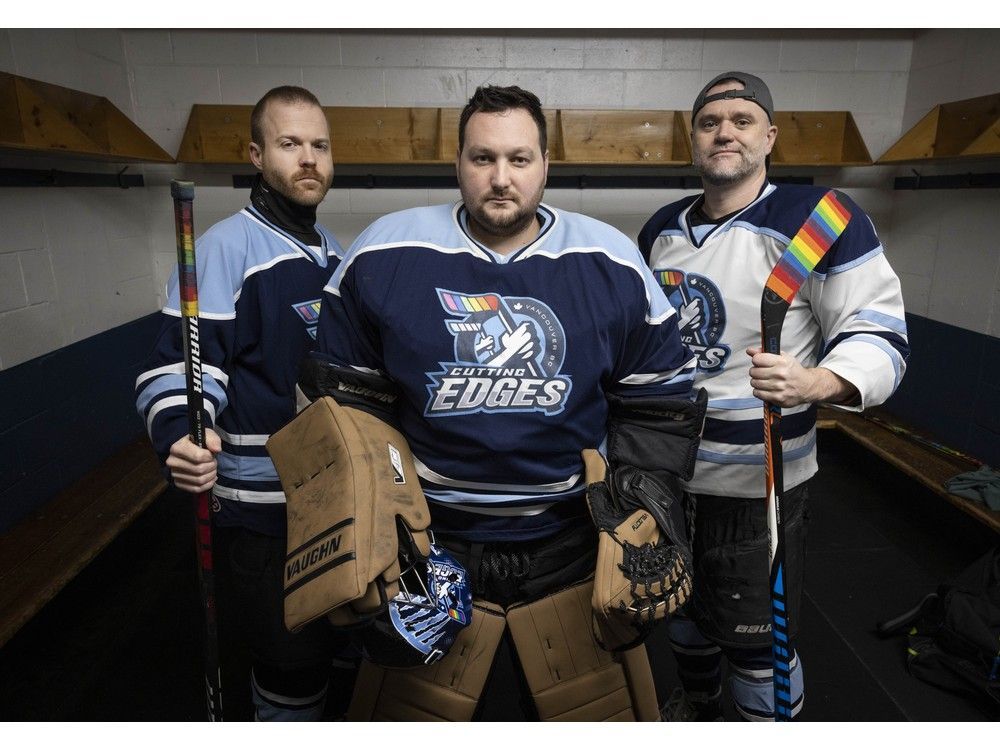
Kyle McCarthy grew up in a hockey family.
He and his siblings laced up, and his father coached. But by the time he aged out of minor hockey in Abbotsford, the game he loved had begun to hurt him.
“In the Valley, locker room talk was dominated by homophobic comments, which were the norm,” McCarthy, now 32, recalls.
Every shift, every drill, every save on the rink as a goalie carried a weight he couldn’t shake — a nagging reminder that his love of the sport and who he loved might never fit together.
“I knew I was gay by the time I was 12, but I also knew that if I wanted to keep playing hockey, I couldn’t be out of the closet,” McCarthy said.
Leaving the sport in his late teens was heartbreaking, but he felt like he had no other choice.
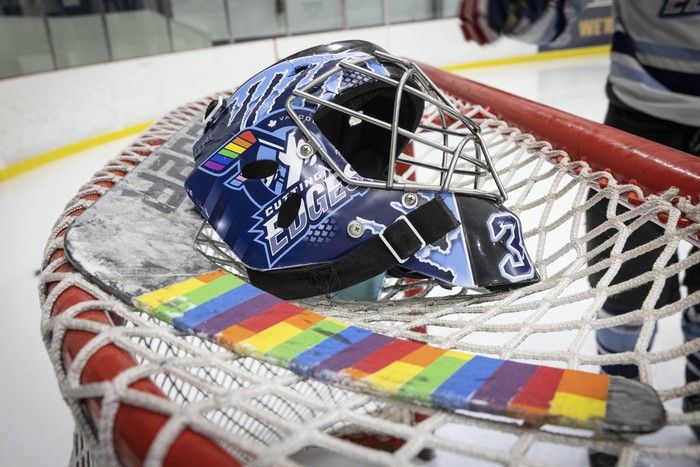
It wasn’t until the summer of 2022 that McCarthy considered the possibility of returning to hockey. Players with the Cutting Edges, Vancouver’s LGBTQ+ hockey association, marched past him in Vancouver’s Pride Parade, donning their signature light blue jerseys with rainbow athletic tape. The league, the first of its kind in Western Canada, is home to more than 100 players ages 19 to 65.
“My husband saw the look in my eyes and said, ‘Contact them,’” he recalled.
Now, McCarthy is president of the Cutting Edges and has been back playing hockey for several seasons.
And he says the hit TV show Heated Rivalry, which showcases the romantic relationship that develops between two closeted professional hockey players, has ignited a wave of local queer players stepping back onto the ice, much like he has.
“We’ve seen a massive surge in interest from people who want to return to playing since the show aired,” he said. “Our social media account alone has grown by 44 per cent.”
It’s not only veterans returning to the ice, but newcomers who are also trying the sport for the first time.
“We’re seeing more people play who say they never felt hockey was for them before,” added McCarthy. “It’s a progression of acceptance we didn’t have 10 years ago, and things like Heated Rivalry are making a world of difference.”
The club itself has a long history. It started in 1993 after a small group, led by Daniel Gawthrop, formed a team for the Gay Games III. At a time when being openly gay in hockey was rare, recruiting involved posting notices around Vancouver’s West End to assemble an eight-player team willing to “come out” both as athletes and as members of the LGBTQ+ community. Gawthrop still plays on the team, three decades later.
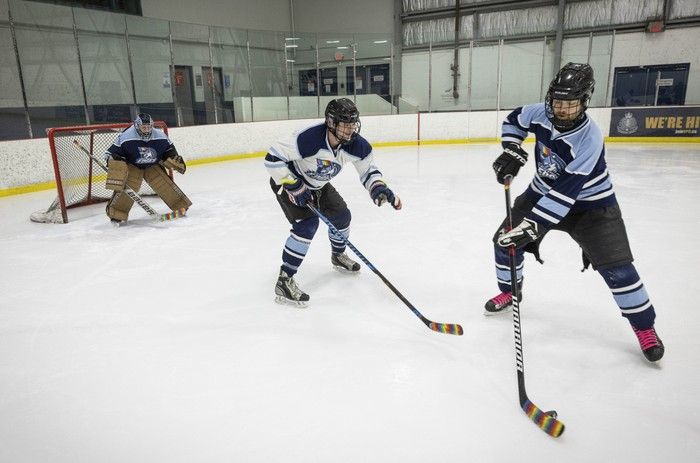
Since its inception as the Vancouver Gay Men’s Hockey Club, the association has grown to three teams that play in a mainstream recreational league out of Scotia Barn rink in Burnaby, including a competitive cohort that travels to Pride tournaments in major cities across North America, such as Palm Springs, Montreal and Toronto. In Vancouver, the non-profit runs a Learn to Play team for newcomers to the sport.
“Some of the teams we play put Pride tape on their sticks when they play us,” McCarthy said.
The association also hosts community skates at the West End Community Centre, offering free ice time and skate rentals six to seven times a year.
“In 2023, we decided to change our name to the Cutting Edges to be more inclusive and reflect our membership, which includes lesbians, non-binary and transgender players,” McCarthy said. “Even straight players come and play with us now.”
But McCarthy says there is still progress to be made. He pointed to the NHL’s decision in summer 2023 to ditch Pride and other themed warm-up jerseys, a move the league said was prompted by some players refusing to participate and the “distraction” that followed. Months later, the NHL also banned rainbow-coloured Pride Tape — a symbol of the sport’s pledge to be welcoming and inclusive — before quickly reversing course after backlash from some players and fans.
“We want to see Pride jerseys being worn in games, or at least during warmups again,” McCarthy said.
According to a report by Hockey Canada, there were 927 incidents of on-ice verbal abuse reported during the 2021-2022 season. Most were aimed at players for their sexual orientation or gender.
But the Cutting Edges are fighting to change that by creating an environment where players can be themselves on the ice, so no one has to walk away from hockey to live openly as queer.
“We want hockey players in the closet to know that you don’t have to leave what you love to be who you are,” McCarthy said. “I lost out on 10 years of playing because I wasn’t aware that there was space for me in the sport.”
The league has fostered on-ice rivalries, lasting friendships and even love stories, while providing intergenerational support for players who were not accepted by their families after coming out.
At one of McCarthy’s recent games, his father, who was often his toughest critic on-ice, came to watch from the stands.
“At the end of the match, I asked him, ‘So what’s your feedback today, Dad?’ ”
“He told me: ‘I’m so happy that you’re playing again.'”