 BURST
BURSTThis issue of BIG is co-authored by Emma Freer, senior fellow for health care at the American Economic Liberties Project, and an anonymous insider who can’t give his name due to a fear of retaliation.
Americans have always disliked high pharmaceutical prices, and ripoffs have been commonplace for so long it’s hard to remember a time when things were more reasonable. But believe it or not, in the year 2000, while some patented drugs were out of reach, the vast majority were affordable. Something happened around then to change this dynamic, such that longstanding drugs started to dramatically increase in price. In this piece, we want to describe to you why the pharmaceutical system went out of control, how FTC Chair Lina Khan tried to fix it, how the Trump administration has reversed the progress, and what we can do going forward.
Let’s start with a commonly understood medication: insulin.
Over 37 million Americans have a condition called diabetes in which they don’t produce enough insulin, the chemical that processes glucose (sugar) and lets it give energy to cells. Without insulin, the body starves itself. Prior to 1921, people with diabetes simply died, often a horrible death. That year, scientists discovered how to produce injectable insulin, first from animal pancreases and then synthesized, which allowed diabetics to get the insulin they needed. Because of this miracle cure, diabetes is now a manageable condition instead of a death sentence. Insulin, aside from these outcomes, also led to a Nobel Prize, and transformed Eli Lilly and Novo Nordisk into global pharmaceutical conglomerates.

For nearly 80 years, insulin was affordable in the United States. Then, around the turn of the century, it wasn’t. For instance, the list price of Humalog—a brand-name insulin manufactured by Eli Lilly—increased more than 1,200%, from $21 in 1999 to $274 in 2017. Following these price hikes, one in five patients with diabetes under age 65 reported rationing their supply. Some died the same way they had prior to 1921.
Insulin isn’t unique. U.S. list prices for the top 25 brand-name prescription drugs have increased 81% on average since their respective launches, despite falling in other counties over the same period, according to a recent AARP report. The annual price of Enbrel, an injectable used to treat arthritis, skyrocketed 863% from $11,000 in 1998 to $106,000 in 2025. What’s new isn’t that prices are high, but that the price of older drugs keeps going up.
What’s the culprit? Pharmacy benefit managers (PBMs) — a type of health care middleman who negotiates drug costs and coverage, on behalf of insurers, with manufacturers and pharmacies.
How PBMs rig the market
The “Big Three” PBMs — CVS Caremark, Cigna’s Express Scripts, and UnitedHealth Group’s Optum Rx — handle nearly 80% of all prescription drug claims. They sit between pharmacists, insurance companies, and patients, routing money, approving or rejecting claims, and negotiating prices for drugs. This position gives them immense market power over the flow of cash.
The way they extract is by demanding secret rebates and fees from drug manufacturers as a condition of covering those drugs for their plan members. Those manufacturers, in turn, raise list prices to cover the rebates and fees demanded by PBMs. Patient and employer cost-sharing is based on list pricing, meaning they also pay higher deductibles and copays as a result of this rebating scheme. PBMs also leverage their middleman power to systematically underpay independent pharmacies relative to their drug acquisition and operating costs, frequently resulting in those pharmacies closing and stranding patients in care deserts.
Manufacturers that balk at higher rebates and pharmacies that balk at lower reimbursement rates lose access to a huge chunk of their customers. Non-participation is not an option.
In other words, like every good monopolistic middleman, they exploit two separate groups. They harm the buyers, or patients, and they harm the dispensers, or independent pharmacists. (It’s not just independents, either. PBMs were behind the collapse of Walgreens’ operating income, which has led to thousands of closures.) They get away with all of this through vertical integration. Each of the Big Three PBMs is also owned by a Fortune 15 insurance conglomerate that also owns a bunch of pharmacies.
This allows PBMs to rig the market in two ways. First, it allows PBMs to steer patients toward their affiliated pharmacies, depriving independent pharmacies of customers. And second, it allows them to allocate much higher reimbursement rates to their own affiliate pharmacies than to their independent pharmacy rivals — up to 16,510% more, according to a recent state audit.
In September 2024, after a two-year investigation, the FTC sued the Big Three PBMs — Caremark, Express Scripts, and Optum — alleging they had “abused their economic power by rigging pharmaceutical supply chain competition in their favor, forcing patients to pay more for life-saving medication.” The complaint proposed real remedies — essentially a blanket prohibition against the alleged misconduct, including accepting manufacturer rebates — if the FTC won in court. Chair Lina Khan alleged the three largest PBMs were engineering “a perverse rebate system” that artificially inflated insulin prices in violation of federal antitrust law.
Independent pharmacy groups had long sounded the alarm about PBM abuses and cheered the legal action. So too, did patient advocacy groups and members of Congress from both sides of the aisle.
While much of what Khan did was disliked by the right, they largely supported the move against PBMs. “I applaud FTC Chair Lina Khan for taking this critical step and sending a message that PBMs’ days of abusing patients are coming to an end,” Rep. Buddy Carter, a Georgia Republican and licensed pharmacist, told Fierce Healthcare. “It is time to bust this monopoly up for good.”
Ferguson and the other Republican commissioner, Melissa Holyoak, did not vote for the case to go forward, but it seemed like they supported it. When they recused themselves, it was because both of them, as state enforcers, had previous involvement in separate PBM lawsuits.
The Failed Trade Commission
Then Trump won reelection. Initially it seemed like Andrew Ferguson, Trump’s pick to replace Khan, would take the case to trial. After Trump fired the remaining two Democratic commissioners in March 2025, Ferguson un-recused himself “to ensure that the case [could] continue.” The FTC litigated fiercely throughout the first year of the Trump administration, and GOP members of Congress actually helped moved some modest PBM reforms into law. Everyone, it seemed, hated PBMs.
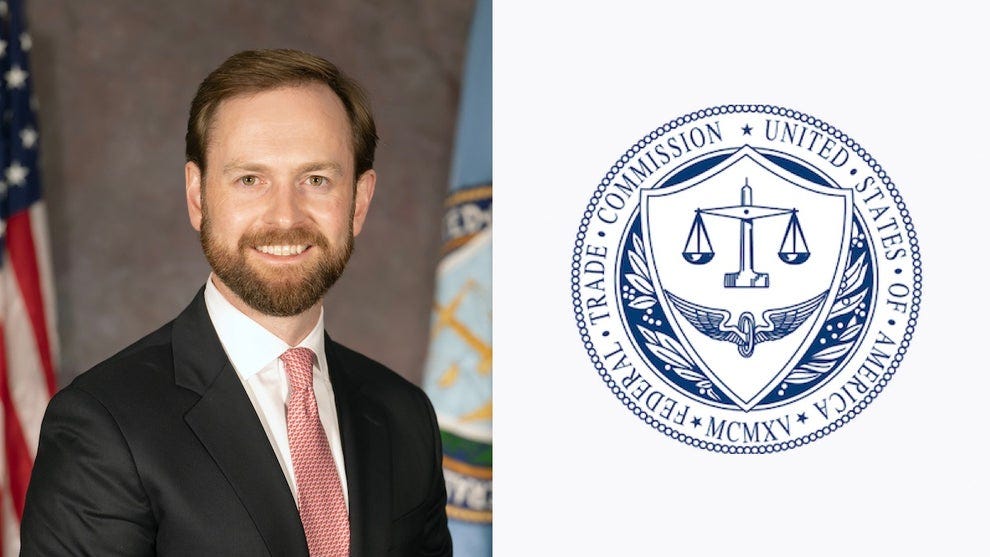
But in 2026, the FTC has proposed settlements with two of the PBM defendants and is reportedly negotiating a similar agreement with the third. Ferguson, who has a lower profile than his predecessor and is presiding over a commission that is 60% vacant, has touted the settlements as “historic” and “imposing important reforms.” In other areas, Ferguson has proudly dropped the claims from Khan, frequently bad mouthing her relentless pursuit of justice. But in the case of PBMs, given the political anger at them, he touted these as wins.
We are skeptical. Ferguson would no doubt argue that sidestepping a costly trial and appeals with a voluntary settlement will bring relief faster, and there is some logic to that considering government usually losses in monopolization trials. Trials are costly, but they are also useful, since they offer a public record of wrongdoing, and help the public and policymakers understand the dynamics of an industry. So avoiding a trial only makes sense if the settlement to avoid one actually addresses the problem. And that’s where our skepticism comes in.
The first tell is that stock prices for both the PBMs’ parent companies, Cigna Group (Express Scripts) and CVS Health (Caremark), actually increased in the immediate aftermath of the deal announcements. In fact, Cigna executives told investors that many of the settlement reforms were already underway but “will not impact our … financial outlook.” So by their own admission, the reforms fall far short of “fundamental changes” to the PBMs’ business model — the FTC’s stated goal and a prerequisite for lowering Americans’ drug costs.
Why is that?
Well, while the problem the lawsuits addressed were secret rebates pushing up prices, the settlements don’t actually stop that practice. In fact, they grant exemptions allowing it.
Take the CVS Caremark deal. It requires the PBM to stop favoring higher-list-price drugs over cheaper alternatives for coverage in exchange for higher rebates — but only for its standard plan. Plans that are customized by employers or that cover Medicare or Medicaid patients or are available on the Affordable Care Act Exchange are carved out, limiting at least one in three consumers from any benefit.
Further, both settlements would require pharmacies to share sensitive cost data with either Express Scripts or CVS Caremark, as a condition of ostensibly fairer reimbursement rates. The problem is, the parent companies of Express Scripts and Caremark also own the mail-order, retail, and specialty pharmacies competing against them for business. After the FTC announced the Express Scripts deal, independent pharmacies reported the PBM had updated its contract terms to further slash reimbursement rates, while placing no limitations on what they could do with the pharmacies’ sensitive cost data.
There’s another extremely weird dynamic here. PBMs have been claiming for years that they don’t keep rebates, but pass them on to customers. However, they have created offshore entities called Group Purchasing Organizations that essentially perform the same functions that PBMs performed, with far less transparency into their high profits. The Khan FTC found that the Big Three created GPO affiliates specifically to dodge PBM reforms and conceal the actual amount of rebates retained by PBMs. According to one Optum executive, "The intention of the G.P.O. is to create a fee structure that can be retained and not passed on to a client."
How does Ferguson handle these entities? Not well. The FTC should simply bar PBMs from having GPOs or other affiliates through which they route fees. Instead, this settlement simply requires Express Scripts to reshore its GPO affiliate, Ascent, from Switzerland, which the FTC claimed “will bring back to the United States more than $750 billion in purchasing activity” over 10 years. But that $750 billion in purchasing activity is simply rebates and fees that would be illegal if paid to Express Scripts directly.
In other words, Ferguson is demanding they do their money laundering domestically, instead of abroad. Not great.
Why Congress must act
My organization, the American Economic Liberties Project, has asked the FTC to redo these settlements before finalization. Given the limits of antitrust enforcement under Trump and Ferguson, we have also endorsed bipartisan legislation, including the Break Up Big Medicine Act, that would prohibit PBMs and their parent companies from owning or controlling pharmacies. One researcher estimates that separating PBMs from pharmacies would lower drug prices by more than 7% — and that’s probably conservative. Mark Cuban, the billionaire who founded Cost Plus Drugs specifically to bypass PBMs, pegged the savings at 30% to 40%, telling Axios the bill would eliminate “all the money that’s going to health insurance companies that isn’t going to care itself.”
Such legislation would build on real, if partial, efforts by Congress to lower drug prices. A 2021 COVID relief package restored penalties on manufacturers that raise drug list prices faster than inflation, prompting Eli Lilly, Novo Nordisk, and others to slash insulin prices by at least 70%. The 2022 Inflation Reduction Act let Medicare negotiate drug prices with manufacturers for the first time, further lowering costs. And earlier this year, a government funding bill banned PBMs from pocketing manufacturer rebates, excluding independent pharmacies from their Medicare networks, or hiding pricing cost data from employer health plans.
The Break Up Big Medicine Act would also build on new state laws in Arkansas and Tennessee, both of which prohibited PBMs from owning pharmacies — and both of which now face legal challenges from the Big Three, who argue, among other things, that state laws are federally preempted. The PBMs and their lobbying group recently issued 18 subpoenas to independent pharmacies, members of the Tennessee Senate, and U.S. Rep. Diana Harshbarger (R-TN-1) — all supporters of the Tennessee law — in retaliation, a bullying tactic designed to deter copycat laws in other states.
So, if you want to be able to take your prescriptions or pick them up at your local independent pharmacy or afford insurance, you should call your representative and tell them two things: The gutted, partisan FTC is no longer up to the job of breaking up Big Medicine.
But Congress is.
Thanks for reading! Your tips make this newsletter what it is, so please send tips on weird monopolies, stories I’ve missed, or other thoughts. And if you liked this issue of BIG, you can sign up here for more issues, a newsletter on how to restore fair commerce, innovation, and democracy. Consider becoming a paying subscriber to support this work, or if you are a paying subscriber, giving a gift subscription to a friend, colleague, or family member. If you really liked it, read my book, Goliath: The 100-Year War Between Monopoly Power and Democracy.
cheers,
Matt Stoller