 BURST
BURST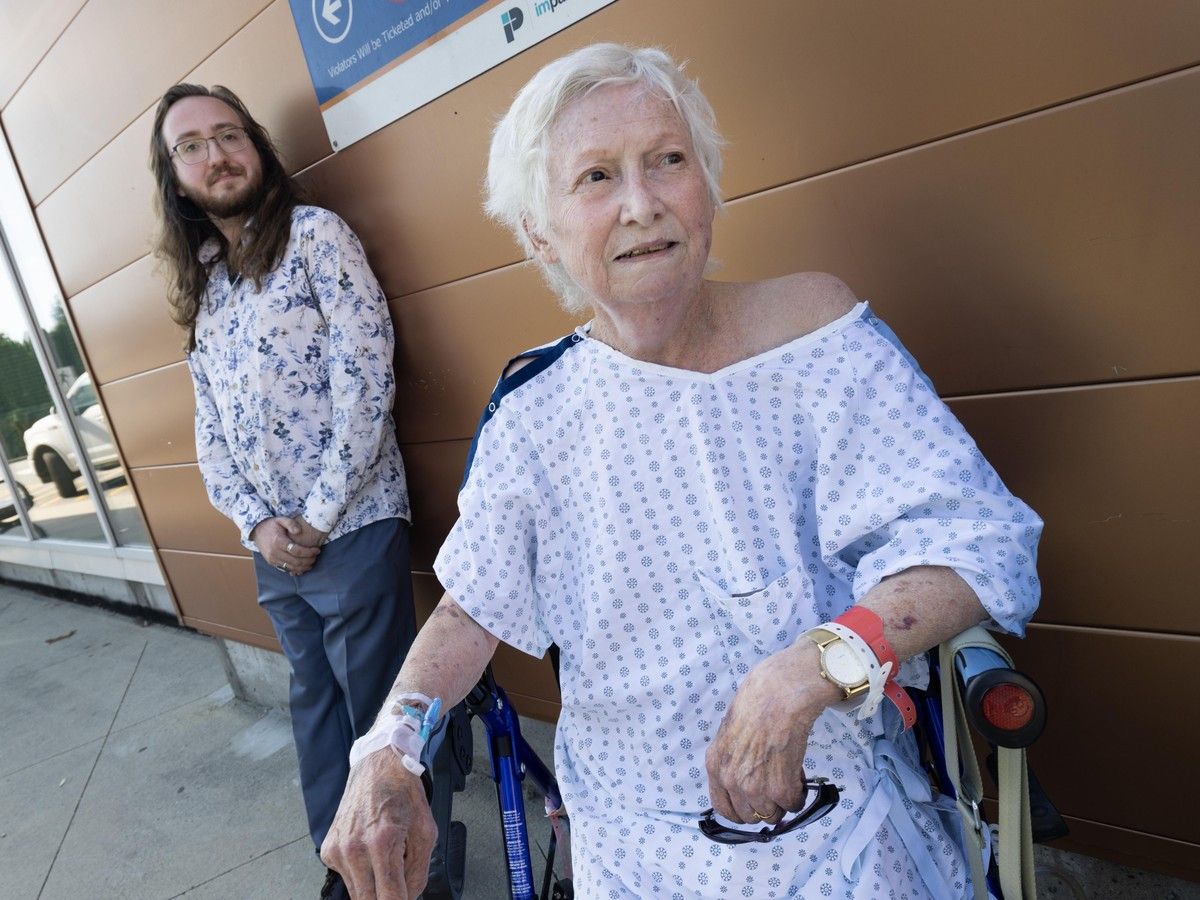
The family of a New Westminster senior is looking for answers about why she was sent to a Vancouver Downtown Eastside shelter, without their knowledge, after being discharged from hospital two weeks ago.
Elizabeth Davis, 78, told Postmedia News she has little recollection of the events following her discharge from Royal Columbian Hospital on Aug. 18, but, in text messages to her family, she said she remembers being dropped off at a shelter near Main and Hastings streets.
Davis was taken from the shelter to St. Paul’s Hospital by ambulance later that same night after having problems breathing, according to her family. She is now at Ridge Meadows Hospital in Maple Ridge while her family looks for a long-term care home for her.
Her grandson, Nathan Davis, said he was “heartbroken and angry” to learn that she had been taken to a shelter.
“We were never told that she had been discharged there or would be discharged there,” he said.
Elizabeth Davis has chronic obstructive pulmonary disease, a lung condition that restricts breathing, and uses a wheelchair. She was evicted from her residence in New West while receiving treatment at Royal Columbian. Her grandson said the family doesn’t have the means to take her in and that she needs full-time care.
Alice Kendall, executive director of the Downtown Eastside Women’s Centre, said Elizabeth Davis wasn’t sent to her facility but noted it’s common for vulnerable seniors to be discharged by hospitals to shelters. She referenced the case of an 86-year-old blind woman who was sent to her facility in 2024 by taxi after being discharged from hospital.
“We push back all the time. We have meetings with all of the hospitals, the health authorities, and they post memos and instructions to social workers telling them not to do this, but it continually happens,” said Kendall. “It’s the dumping ground is what it is, and it’s outrageous.”
Nathan Davis said that he and his aunt, Tina Davis, had been in contact with Fraser Health in the lead-up to his grandmother’s discharge, but staff at Royal Columbian didn’t inform him, or any other family members, when she was being moved and where she was being sent.
He said his grandmother sent a panicked text to his aunt saying she was at a shelter in the DTES and that she was scared. His aunt forwarded him the texts the next morning — by then, his grandmother was at St. Paul’s.
“It seems all they did is give her a list of phone numbers to call,” Nathan Davis said of Royal Columbian staff. “There is no mention of any sort of assessment about her care needs or any discharge planning, and they knew that she is, unfortunately, broke and cannot afford to pay for a care facility or another apartment.”
Nathan Davis shared with Postmedia an email chain between his aunt and Fraser Health. The health authority said on Aug. 13 that his grandmother had confirmed a space at the Les Anges independent living program in Surrey.
Tina Davis wrote back almost immediately to say that didn’t line up with previous conversations and that Elizabeth Davis “regularly provides false information.” She added that Elizabeth wouldn’t be able to afford the $2,000-per-month cost of a room at Les Anges.
Fraser Health acknowledged this in a followup email on Aug. 18 at 2:10 p.m. and that they would discharge her as soon as they found a suitable space.
Tina Davis responded at 4:28 p.m. to ask where Elizabeth was being discharged to but there was no reply.
At 8:20 p.m., Elizabeth texted Tina to say that she had “been discharged today and am now in the Downtown Eastside in Vancouver.”
She added she was on “my own finding a place which will be challenging from here” and that “I have a cubicle with a bed in it” and “no privacy at all.”
In a statement, Fraser Health said it couldn’t disclose specifics of Elizabeth Davis’s “care journey” but stated it has been in contact with the family about her treatment and how it was handled.
“When a person no longer needs to be in the hospital and is ready for discharge, we support them to safely return to their home or into the care of family and/or friends,” the health authority said.
“In situations where a person does not have a home or their usual support network cannot take them in, and where they do not qualify for a placement in subsidized long-term care or assisted living, our care teams will provide them with information and support related to their public and private housing options which may include shelters, transitional housing and other types of housing.”
Fraser Health added that in situations where the patient doesn’t have their own transportation, then “discharged patients make their way to their new housing by paying for a taxi or other transportation.”
Nathan Davis said he hopes that telling his grandmother’s story will stop others from facing the same predicament.
He said the social worker responsible for his grandmother’s care hasn’t been in contact, and that the family is hoping to get his grandmother into a long-term care home as soon as possible.