 BURST
BURST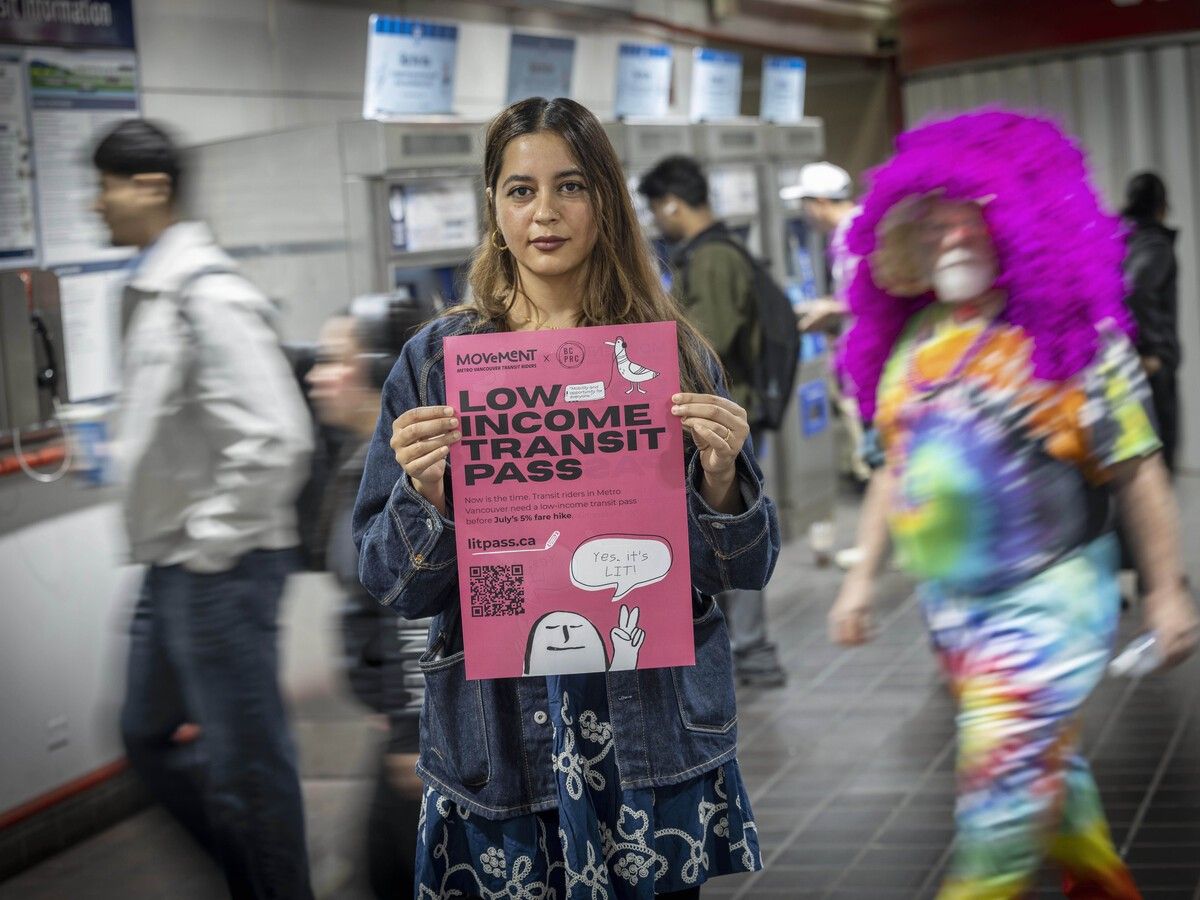
With transit fares set to increase July 1, a Metro Vancouver group is campaigning to get the province to follow in the footsteps of other major cities and create low-income passes for all who qualify.
Advocacy group Movement: Metro Vancouver Transit Riders says the five per cent fare hike will hurt many residents.
“It would be a huge strain on workers and families and low-income riders, and we have this mission that nobody should be denied transit because they can’t afford it,” said Aman Chandi, director of programs and fundraising at Movement.
“We’re hearing from the community — people are choosing between groceries and a bus ride . That should not be the case.”
Chandi said her work with Movement is primarily focused on Surrey, where many newcomers, Indigenous people and seniors use transit.
“We did some engagement with the urban Indigenous Elders in Surrey, and there was an Elder there who showed me that she had $2 in her bank account, and she’s like, ‘I cannot even afford a bus ticket.’ The conditions are dire,” Chandi said.
A discounted transit pass does exist in B.C. — the B.C. Bus Pass — but is only available for low-income seniors and people receiving disability insurance from the province. For low-income seniors, the pass costs $45 annually, while those on disability either choose the bus pass or a $52 transportation supplement.
Movement believes this should be expanded to include all low-income people.
“There are people in Surrey who have to commute to Vancouver to work. Why are we punishing them? Why are we punishing riders with increases?”
The program director said she has spoken to families who are sharing a university U-Pass, risking fines.
Metro Vancouver transit prices are comparable to other major Canadian cities. After the fare hike, a one-zone adult pass paid with cash would go from $3.35 to $3.50, while concession fares for seniors and youth would go up to $2.30.
In Calgary, prices are slightly higher, with adults paying $4 and youth paying $2.65.
In Toronto, adults pay $3.35, youth pay $2.40 and seniors pay $2.30.
But in Toronto and Calgary, discounted transit options are available to all low-income residents.
Calgary’s low-income monthly pass can cost as low as $6.30 a month in its sliding scale system, up to $63 a month for those who qualify.
In Toronto, the low-income pass offers a 36 per cent discount to transit fares, according to the city’s website.
Metro Vancouver’s lack of a similar, more inclusive system is “embarrassing,” Chandi said.
“For a region that cares about equity, we can’t even provide this support for folks who need it,” she added. “We have demographic-based discounts but we want it to be income-based discounts.”
In other parts of B.C., Kamloops offers a low-income transit pass to adults. Penticton residents under the age of 24 ride free.
According to a cost analysis Movement heard from TransLink, expanding the B.C. Bus Pass to all low-income earners in Metro Vancouver would cost a maximum of $70 million, which Movement sees as a “drop in the bucket.”
In a statement to Postmedia, the Ministry of Social Development and Poverty Reduction did not directly respond to Movement’s proposal to expand the B.C. Bus Pass, but said that funding for the program will remain the same in the 2026 budget.
Last year, 66,282 seniors and 42,826 persons with disabilities received the discounted pass.
“Our government recognizes public transit plays an important role in giving people the independence and mobility to safely participate in their communities,” the ministry stated.
Chandi said TransLink supports their campaign. In a statement to Postmedia, the transportation agency stated TransLink would be in favour of equity-based transit discounts if the government would support it.
“TransLink is not in a financial position to implement these discounts independently,” the statement said.
Movement is planning a rally on July 1 to protest the fare hikes and petition local politicians to support their campaign.
“We need leaders to step up,” Chandi said. “We’re just falling behind, this is way overdue and we’ve made really bold moves as a region like transit expansion and development, but affordability is something that we missed along the way.”