 BURST
BURST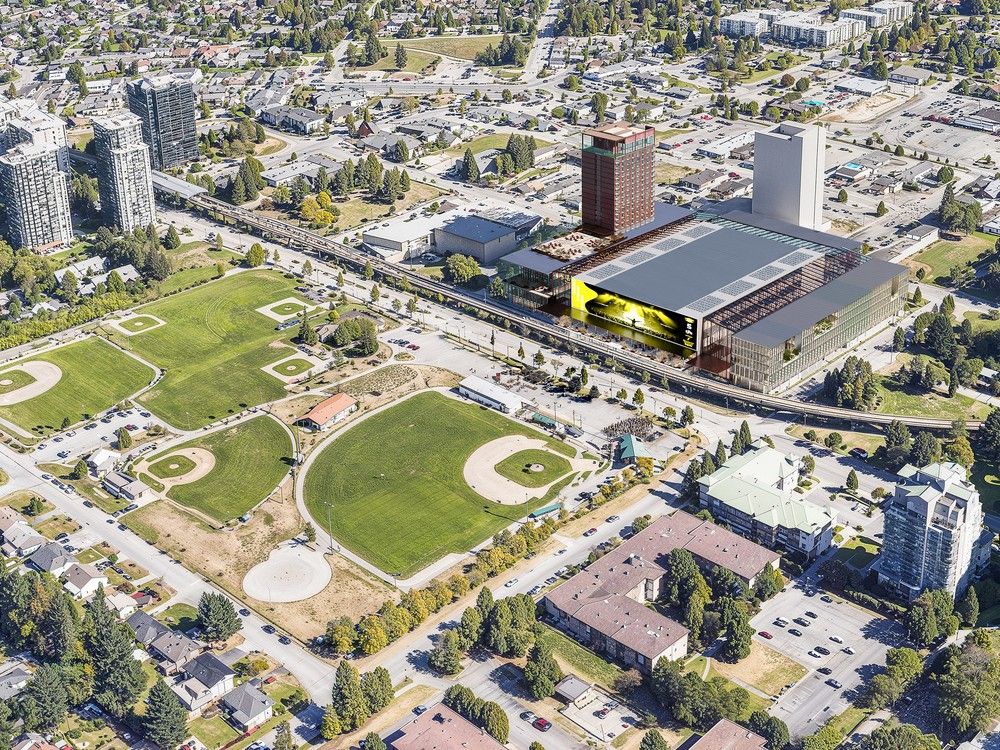
The city of Surrey is proposing to spend $200 million to carry out the mayor’s vision of building a 10,000-seat arena in the city’s central neighbourhood.
It is part of the city’s proposed five-year, $779 million capital plan.
Mayor Brenda Locke acknowledged the city, along with much of the province, is experiencing “a tough economic climate,” but the city was able to put aside the largest sum of money for capital projects ever. In 2024, the city budgeted $715.9 million for capital projects and $701 million in 2025.
Many municipalities don’t seem to be making many new announcements on big projects because of the fiscal challenges they face, said Stewart Prest, political scientist at the University of British Columbia.
“This is a little bit outside the norm, and that’s not necessarily a bad thing,” Prest said.
“Surrey is really a unique situation, because no place is growing faster than Surrey. … So with that increasing population, increasing demand for services, then there is a case to be made for greater investment in brick and mortar projects in the city.”
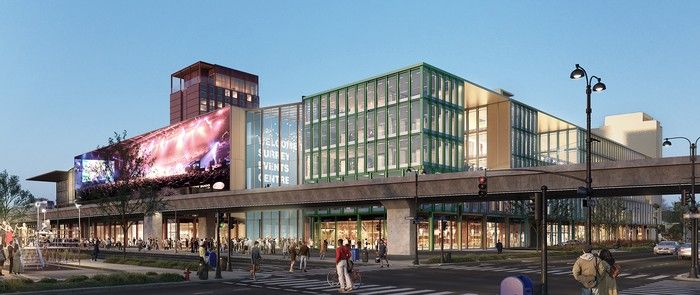
Surrey’s 10,000-seat arena is envisioned to be a hub for sports and entertainment, to compete with other Metro Vancouver municipalities that already have large-capacity centres. It’s hoped its construction will kickstart the city’s plan of creating an entertainment district in Surrey’s central, downtown area. The district would include a hotel, conference and meeting space, restaurants, retail stores and residential dwelling units.
“It is expected that the revenue generated from development agreements, tenanting of the arena and the sale of naming and other commercial/marketing rights will assist in funding the construction, operation, and maintenance of the arena,” the budget reads.
The city said in a statement: “A combination of low overall debt levels and strong development growth, resulting in an expanded tax base, has positioned the city to affordably invest in core services, community priorities, and infrastructure for the future.”
The arena’s construction, expected to begin next year, will be taking over the longtime practice facility used by the B.C. Lions. The site is steps away from Gateway SkyTrain Station, Chuck Bailey Recreation Centre and Whalley Athletic Park.
The project has been a contentious topic for opposition Coun. Linda Annis, who says the project should be put to a referendum.
Prest says it likely won’t be required for the city to call one, since the funding is expected to come from the city over five years instead of a longer period of time.
The city “still may encounter a great deal of negative critique regarding the size of the expenditures at a time when people are suffering from inflation, when people are suffering from a lack of access to immediate services,” Prest said. “It may come across as a kind of luxury at a time where the city can’t afford it, so I think it is a calculated risk for the mayor.”
The city also released its proposed five-year general operating budget that includes a proposed 2.6 per cent increase to property taxes. The city states the increase is needed due to inflation increasing city costs and to hire more police, firefighters and bylaw officers.
While still keeping Surrey on the lower side for property taxes in Metro Vancouver, the city’s proposed property-tax increase contrasts with Vancouver’s 2026 budget, which was approved with no property tax increase.
“Compared to some of the increases we’ve seen in the last four years, in terms of regional comparisons, it’s a justifiable increase this year,” Prest said.
Surrey’s proposed general operating budget includes a police budget of $284.5 million, an increase of $45 million from last year. The increase is largely due to helping the department tackle the city’s waves of extortions and the continued hiring of more officers as the transition away from the RCMP continues.
The proposed general operating and capital budgets are scheduled to go to a public meeting on March 9.
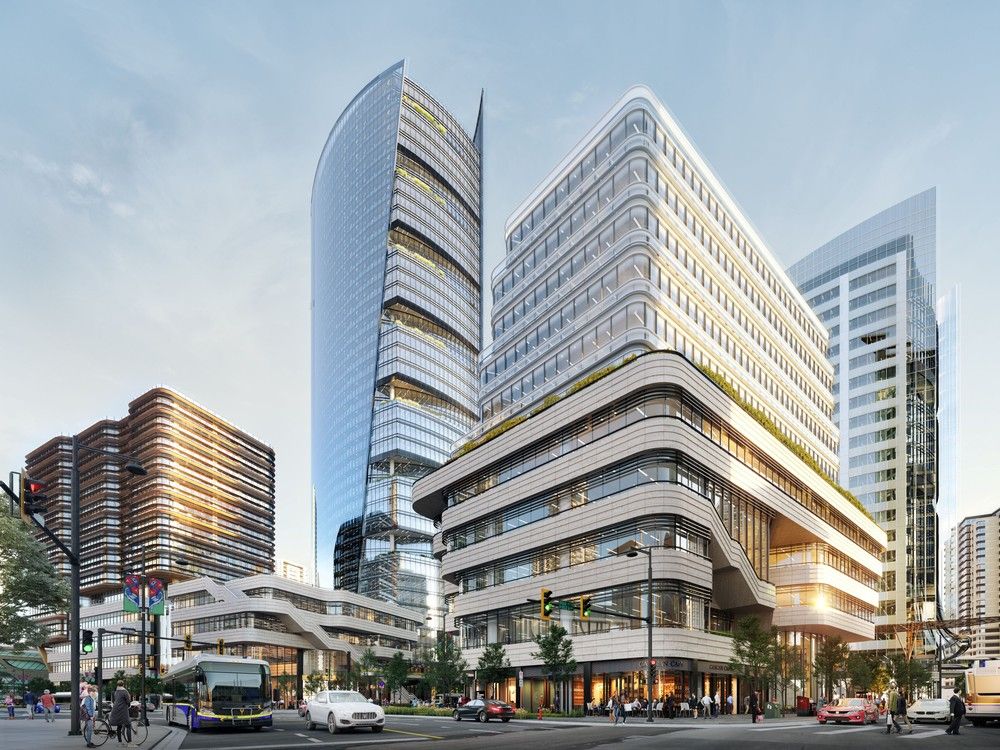
Locke’s downtown concept for Surrey seems to be a key priority, with the second-highest capital project being the first phase of Centre Block, a 12-storey office and academic tower in partnership with Simon Fraser University. The project would receive $152.4 million from the city over five years, in addition to funding from the province to create the university’s new medical school.
For the city’s part, the funding would go toward the ground level of the development consisting of commercial retail space, and 3½ storeys of the office space. Centre Block is slated to be built on the former site of North Surrey Recreation Centre, which is being demolished.
Locke and her council have been trying to make her term more than just about the municipal police transition that was forced on the city despite her opposition, Prest said.
“When we’re talking about a major set of infrastructure projects like these that can reshape the downtown core, it does give voters something to focus on in terms of what the vision is for the city, and that can be useful for her,” he added.
Construction of the medical-school project is expected to begin late 2026 with the completion estimated for the middle of 2030.
The remaining balance of the proposed capital budget would go toward relocating a firehall in Fleetwood ($30 million), expanding some town centres such as Newton, Campbell Heights and Gateway (totalling $14.8 million), the construction of the covered multi-sport facility the city wants to build at Cloverdale Athletic Park ($4.5 million) and further renovations at recreation centres and parks.
Also in the capital budget is $1.2 million to purchase and install barricades to prevent hostile vehicles at events throughout the city to keep attendees safe, a purchase being made in some Metro Vancouver cities after the Lapu Lapu Day attack.