 BURST
BURST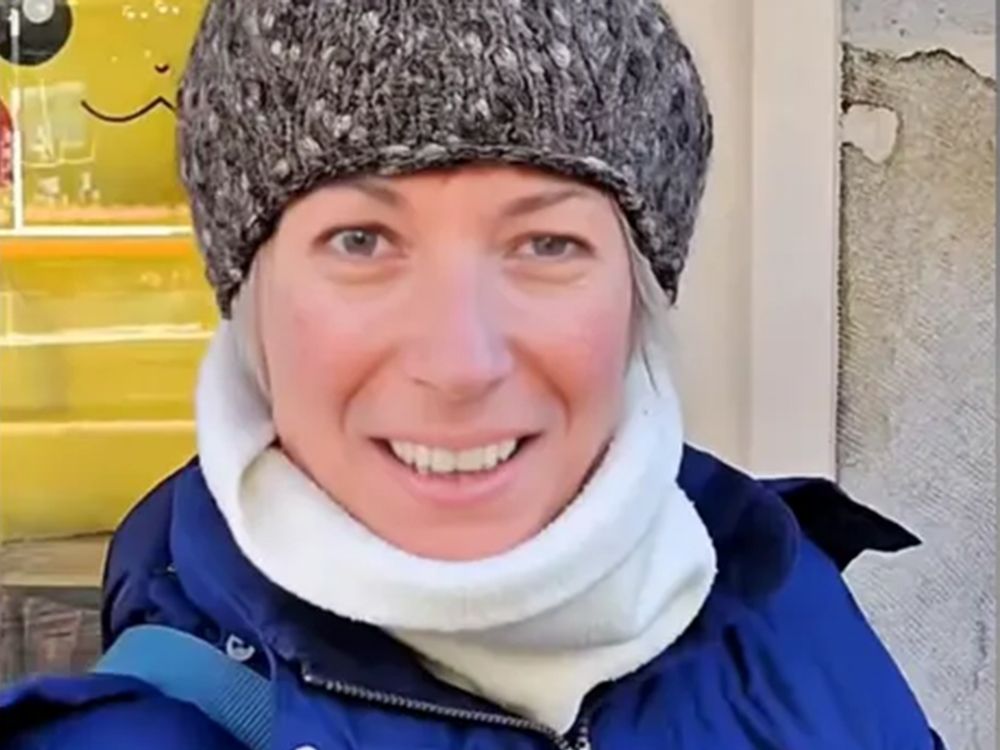
A video of a woman who closely resembles Ghislaine Maxwell, a convicted sex trafficker and co-conspirator of Jeffrey Epstein, walking freely along the streets of Quebec City has gone viral — except it isn’t her at all and the distortion was a joke, the creator admits.
The 13-second clip, posted online last week, is from the perspective of an unidentified person with a cellphone approaching a woman in a winter coat who looks like Maxwell outside a store. He asks “Ghislaine? Do I know you?” and then “You’re not Ghislaine?” The woman replies “No. Sorry.”
The person filming then says “I used to order hella pizza off of her” and that she “always delivered.”
Maxwell, however, is serving a 20-year sentence for what the U.S. Attorney’s Office for the Southern District of New York has described as her “role in a scheme to sexually exploit and abuse multiple minor girls” with Epstein “over the course of a decade.”
The British former socialite was convicted of multiple sex crimes in December 2021. Her sentence was handed down in June 2022, and Maxwell remains imprisoned in the U.S.
The Instagram account clump.qc has not removed the video suggesting Maxwell may be in Quebec, which has amassed seven million views and countless comments as of Tuesday — and has also sparked several news articles debunking the possibility. Upon a closer look at the video, part of the woman’s face appears to glitch when the camera pans away, but only briefly.
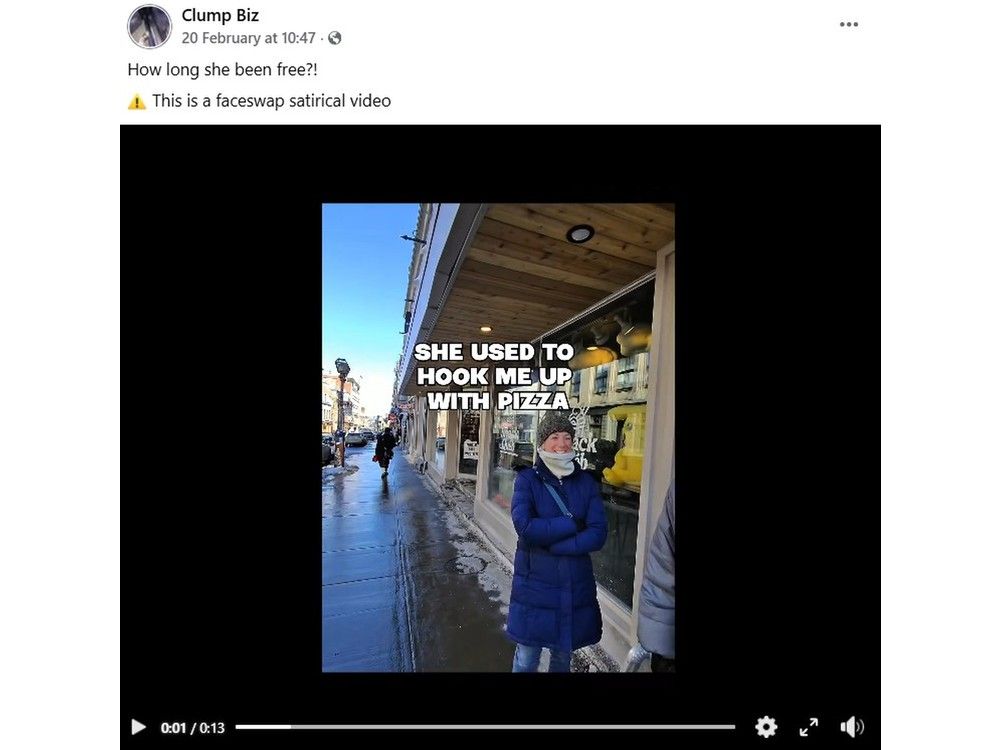
The account has since publicly confirmed the Maxwell video was a “face swap.” According to The Canadian Press, the account apologized in an Instagram story over the weekend, writing: “My intent was never to spread misinformation but to make satire content, and I’m sorry for anyone who fell for it.”
The creator, who would only identify himself as a 19-year-old based in Quebec City, told The Gazette that the video is a joke and that he makes “ironic and absurd” content. He pointed to other similar face swaps he has recently created with the likes of Quebec Premier François Legault, Israeli Prime Minister Benjamin Netanyahu and Epstein.
“I don’t make these kinds of videos to start controversies, talk about conspiracies or mislead people — far from it,” he said Tuesday.
But the Maxwell clip quickly gained traction, and the creator said that included it being used and reproduced in other ways.
“That wasn’t my intention. When I saw it was going to lead to the situation we’re in now, I did my due diligence,” he said.
The post’s caption on Facebook now has a warning that the video includes face swapping. The Instagram video also includes an artificial intelligence disclaimer, and the creator said he has referred viewers to his other satirical content.
The creator said he isn’t deleting the video.
“It’s Instagram, not a news outlet,” he said.
He said he has received hundreds of messages, including “lots of insults” and threats. The Gazette reached out to Quebec City’s police department to inquire about the video and potential complaints, but it declined to comment.
Deepfakes ‘easier than ever’ to produce, expert says
Julie Corrigan, an associate professor in the education department at Concordia University whose area of expertise is in digital media literacy, said fake news has existed “for as long as humans have been able to communicate with one another.”
“But, most recently, deepfakes are now easier than ever to produce, very cheaply and at scale,” she said in an interview Tuesday with The Gazette.
What previously took time, effort and expensive software to manipulate videos and images can now easily be done through artificial intelligence, Corrigan explained.
“These days with AI, we don’t even need those skills,” she said. “They’re produced at scale by bots.
“And in a day and age where a lot of folks are getting their information from social media, we really need to exercise our due diligence.”
With deepfakes becoming easier to create, Corrigan had suggestions to help differentiate what is real from what is not online. She advised internet users to ask themselves two questions: Who made the content and why did they create it?
“And then the one action that we can take is actually to do some of that fact checking for ourselves,” she said, noting that people can do so by verifying with fact-checking websites like Snopes and even Wikipedia.
“I’ve even worked with sixth-graders to do reverse image and video checks. And you can go on YouTube and ask something like, ‘How do I spot a fake video?’” she said.