BURST
BURST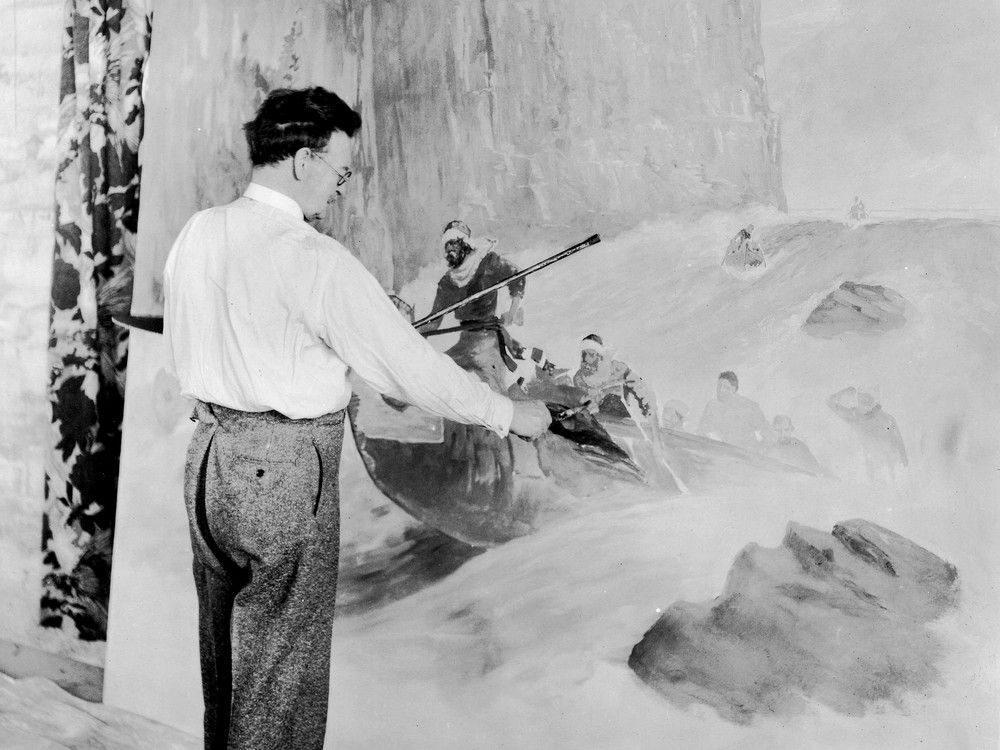
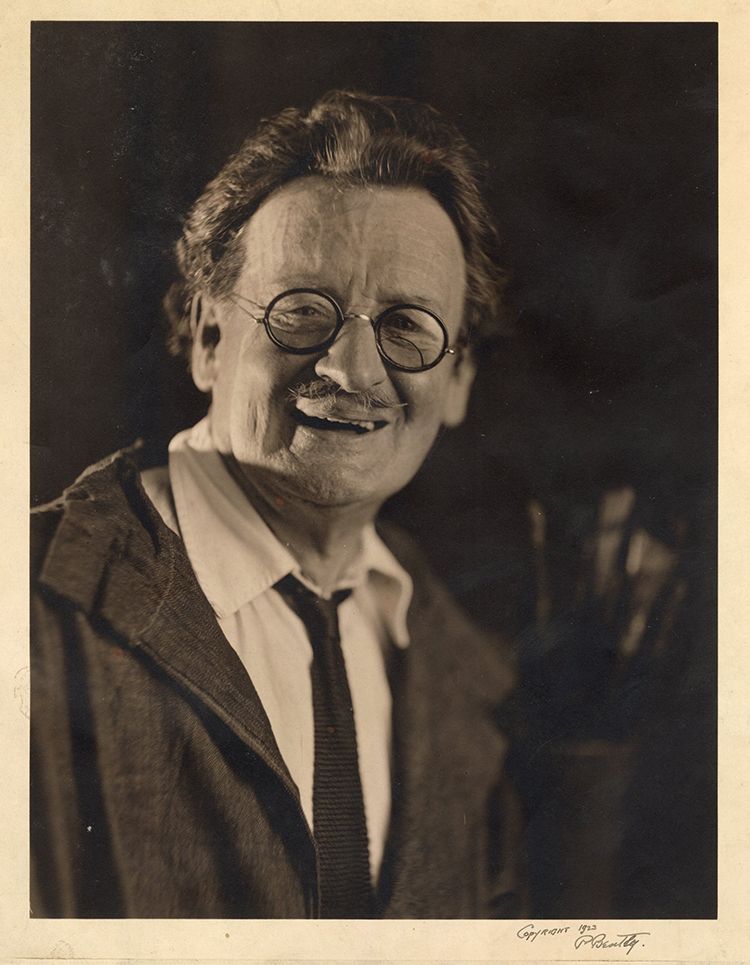
At his height of fame in the 1920s, artist John Innes was dubbed “the Remington of the Canadian West.”
It’s a bit of a stretch — his historical paintings were nowhere near as striking or successful as Frederick Remington’s sculptures of the American West.
Still, he was a big deal in his day. In 1924 he was commissioned by the Hudson’s Bay Co. and the Native Sons of British Columbia to do an eight-painting series on the history of B.C.
When American President Warren Harding died only a week after visiting Vancouver in 1923, he was tapped by The Vancouver Sun to do a painting of Harding speaking in Stanley Park.
His most famous work was The Epic of Western Canada, a 30-painting series from the late 1920s that was shown in Hudson’s Bay stores across Canada, and even in London, England.
But his star faded during the Great Depression, when the commissions dried up.
“Innes’s life ended in poverty, a result of a long sickness,” said his obituary in the Jan. 13, 1941, Vancouver Province. “An invalid for some years, he was unable to resist an attack of influenza followed by a paralytic stroke.”
It was a sad end to a very eventful life.
“Artist, cartoonist, newspaperman, soldier, engineer, cowboy and inventor, he lived a life that brought him into contact with all classes,” said The Province. “His infectious laughter has risen from groups on the open prairie, cultural circles in east and west, and pioneer gatherings across Canada.”
John Clarke Innes was born in 1863 in London, Ont., and came west in the mid-1880s, operating a ranch in High River, Alta. Innes sold horses to the North-West Mounted Police during the Riel Rebellion, operated the first telephone exchange in Calgary, and drew cartoons for The Calgary Herald.
In the 1890s he returned to Ontario, where he worked for newspapers such as The Toronto Mail and The Toronto World before venturing to South Africa to fight in the Boer War.
After the war, Innes moved to New York, where he worked as an illustrator for Hearst magazines. After returning to Canada, he decided to trek across B.C. on horseback in 1905 with former Toronto World colleague John P. McConnell.
“During six weeks of delightful autumn weather they worked their way through Kootenay valleys and over mountain ranges, arriving in the Okanagan and thence down to the coast by way of Merritt and the village of Aspen Grove,” noted Innes’s obituary.
McConnell turned the adventure into stories, and Innes provided the illustrations. In 1912 McConnell started The Sun, and Innes became The Sun’s staff cartoonist. His cartoons sometimes reflected the tenor of the times, which in Vancouver newspapers was that Canada was a white country and should remain so.
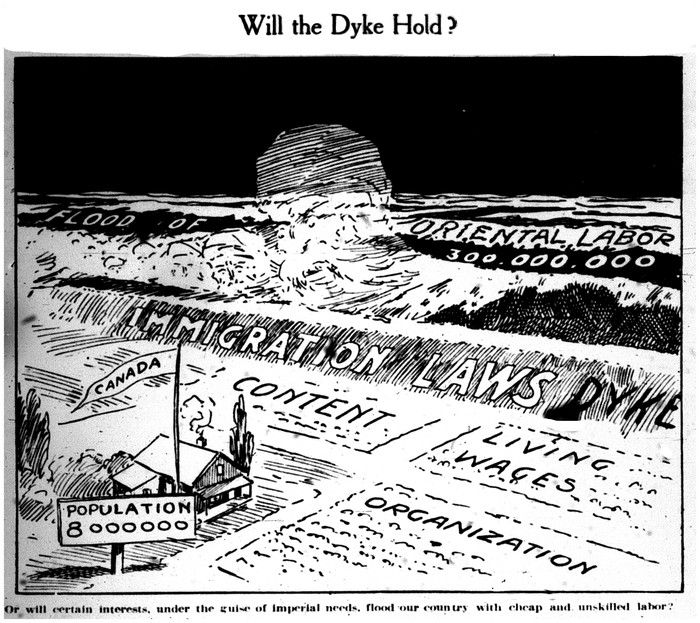
A June 26, 1914, Innes cartoon during the infamous Komagata Maru incident was titled “Will the Dyke Hold?” In this case, the dike was Canada’s immigration laws, which stood between Canada and a tsunami labelled “Flood of Oriental Labor.” If you look closely, the crest of the tsunami looks like an angry man in a turban.
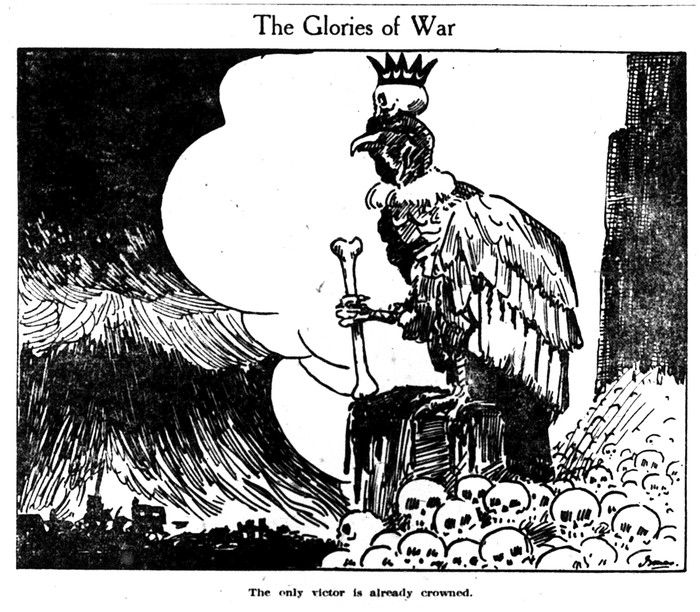
Other Innes cartoons have aged better. On July 30, 1914 — five days before Canada entered the First World War — he drew a cartoon titled The Glories of War, which featured a vulture wearing a human skull as a crown, sitting atop more skulls.
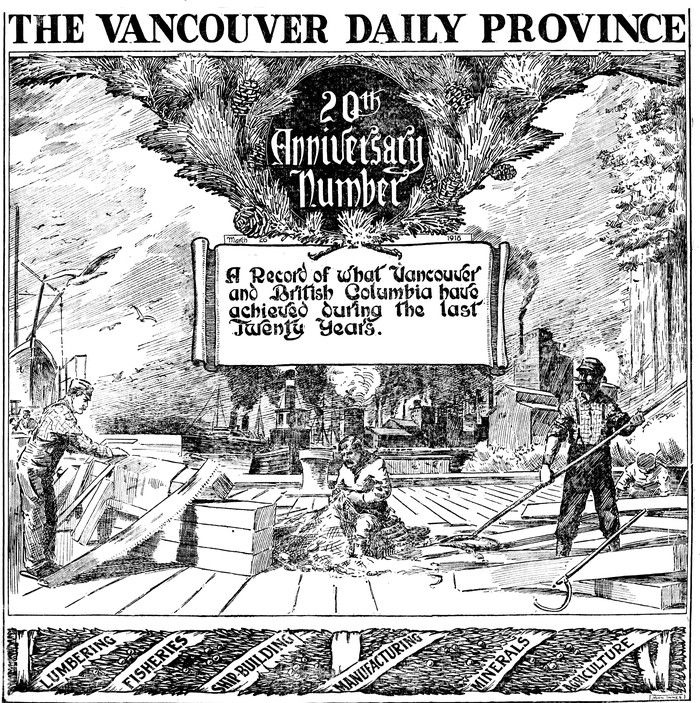
In 1918 he left The Sun to freelance. That year he did the cover illustration for the 20th anniversary of The Province moving to Vancouver. (It started in Victoria in 1894.)
But as the years went on, he focused on painting. His paintings were realistic, but romantic, often depicting subjects like First Nations, the North-West Mounted Police, cowboys on horseback, and buffalo.
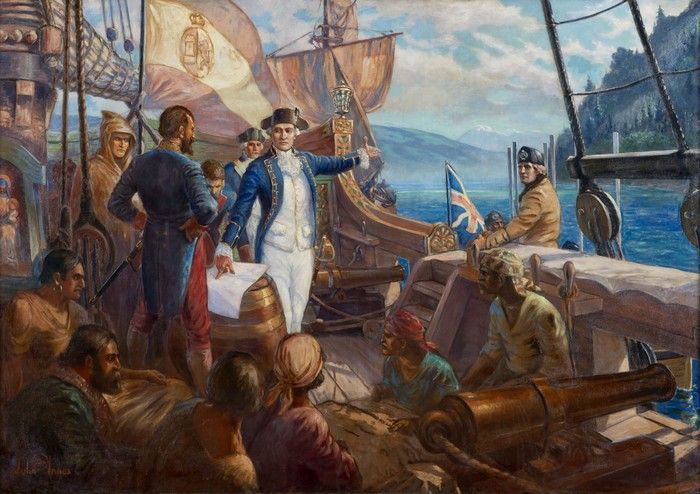
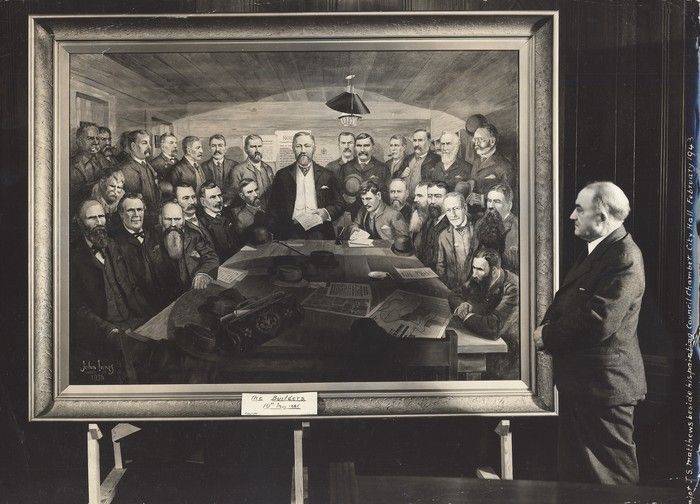
His B.C. history series is now at Simon Fraser University, and includes a colourful painting of Capt. George Vancouver meeting the Spanish explorers Galiano and Valdes at Point Grey in 1792. Another well-known work was a 1934-35 painting of Vancouver’s first council, commissioned by Vancouver’s legendary archivist Maj. James Matthews.
He had a long association with the Hudson’s Bay Co. The Innes painting Samuel Black at Finlay River was part of the sale of HBC art on Nov. 19, 2025, and sold for $61,250, a record for the artist.
Related