 BURST
BURST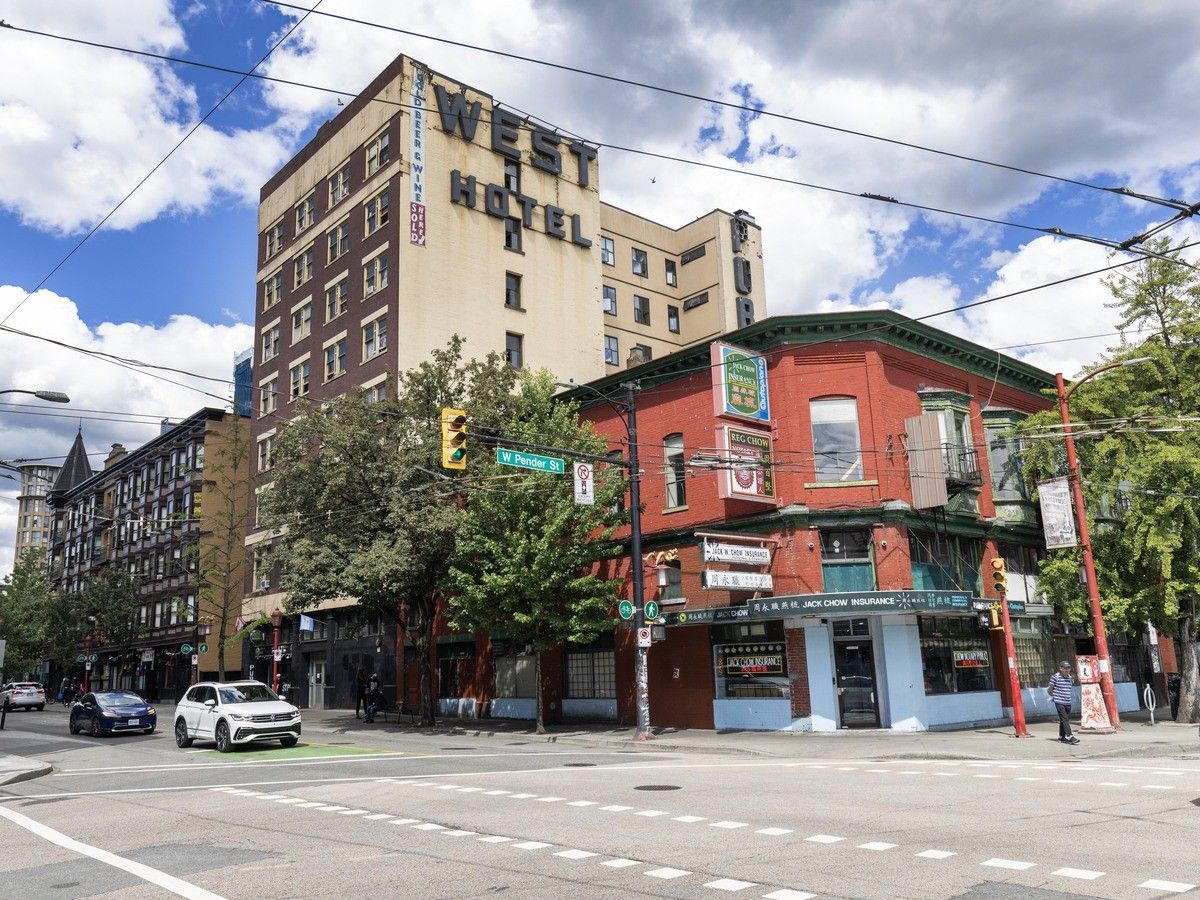
The City of Vancouver intends to create a public “high-risk building inventory” to help reduce earthquake risk in private buildings, the first such move after decades of failed efforts.
It is one of the components of a five-year plan passed by council this week that includes as its first priority creating a technical working group to help guide the strategy.
Although it will take time to create the inventory, build a voluntary seismic retrofit program that supports incremental upgrades, and determine what type of incentives such as fee waivers, tax relief and grants that might be brought in to accelerate work, it marks the first time the city has created a concrete risk-reduction plan targeting private buildings, and one that the city intends to implement.
“This is the big step forward,” Micah Hilt, the city’s lead seismic policy planner, said Thursday. “This is a massive place to get to for any city.”
The high-risk building inventory, comprised of ratings for each building, is meant to underpin the plan, in place of requiring mandatory retrofits which will not be used in Vancouver.

In a report to council, city officials said the public inventory will sharpen understanding of risk, improve policy and program development, and allow for more targeted funding requests to senior governments. Critically, noted city officials, the inventory would advance public awareness, thereby facilitating lasting support for risk reduction.
Public inventories of seismic-at-risk buildings are used all over the world, including in California and New Zealand. Seattle has also produced an inventory of unreinforced brick buildings that can be viewed by the public.
Vancouver’s inventory will cover all buildings types at high risk, which will also include older mid-rise and highrise apartment and commercial buildings, and wood-frame apartment and commercial buildings.
A 2024 report commissioned by the city found high-risk buildings are concentrated in the West End, Downtown Eastside, Chinatown, Strathcona, downtown, Kitsilano, Fairview, and Mount Pleasant neighbourhoods.
The study also found the most-at-risk buildings contain nearly all of the city’s purpose-built rental units, including for low-income tenants and seniors, and small businesses serving neighbourhoods.
Recent computer modelling has shown that a major earthquake would be devastating and deadly for Vancouver.
The modelling estimates that a magnitude 7.2 earthquake in the Strait of Georgia could heavily damage 6,100 buildings in the city, leading to more than 1,350 deaths and severe injuries.
It would also lead to the estimated displacement of more than one-third of city residents and workers for more than three months and result in $17 billion in financial losses.
The modelling does not include the contribution of infrastructure failure, delayed emergency response and recovery, aftershocks, fire following earthquakes, tsunami, landslides, or liquefaction.
Even a less-intense earthquake could leave as many as 25,000 residents and workers disrupted and displaced for more than three months and cause as many as 200 severe injuries and fatalities.
While it is not possible to predict the timing or magnitude of an earthquake Vancouver will ultimately experience, Natural Resources Canada estimates a one-in-five chance of a very strong earthquake in the next 50 years.
Hilt noted that Vancouver’s lack of recent earthquake history makes it even more important to build community support for a risk-reduction plan.
There is a long history of frequent earthquakes in California, including one in 1994 that killed 57 people , making it easier to implement mandatory retrofit programs.
B.C.’s last major earthquake took place in 1946 , resulting in structural damage but only two attributed deaths.
The adoption of the plan by city council comes after a long line of initiatives in the past decades failed to produce a concrete plan to reduce seismic risk in the 90,000 privately owned buildings in Vancouver.
This latest effort started after a 2016 investigation by Postmedia revealed the city had failed to create a plan to reduce the seismic hazards, despite identifying a need to do so as far back as 1994, now more than 30 years ago.
One of the key steps the city took in 2017 was to hire Hilt , who was a seismic planner in San Francisco.
Hilt says he hopes the technical working group will be established by the end of the year.
The committee is meant to include interest holders such as renters, industry representatives such as building owners, community members, and seismic engineering experts.
During engagement with stakeholders, financial feasibility was the dominant concern.
Owners, operators and industry stakeholders consistently flagged rising construction and operating costs, the limited ability to raise rents, and vacancies and regulatory requirements that also include greenhouse gas reductions, safety and accessibility.
The five-year plan also calls for finding ways to leverage redevelopment, particularly in the most at-risk neighbourhoods, to reduce seismic risk, perhaps through loosening development restrictions.
The plan will also identify regulatory changes that will help spur seismic upgrades.
The city will be examining how it can track seismic upgrades of buildings, which its record-keeping system currently does not allow.
In 1994, the city considered mandatory seismic assessments, deadlines for mandatory upgrades, public disclosure of the seismic risk of buildings, and possibly even requiring signs on buildings that weren’t upgraded. Also considered at the time were incentives for seismic upgrades, such as waving building-permit fees, property-tax relief and low-interest loans.
None of it was implemented.
The City of Vancouver also developed plans to reduce the seismic risk of older buildings in 2000 and again in 2011, but never followed through.