 BURST
BURST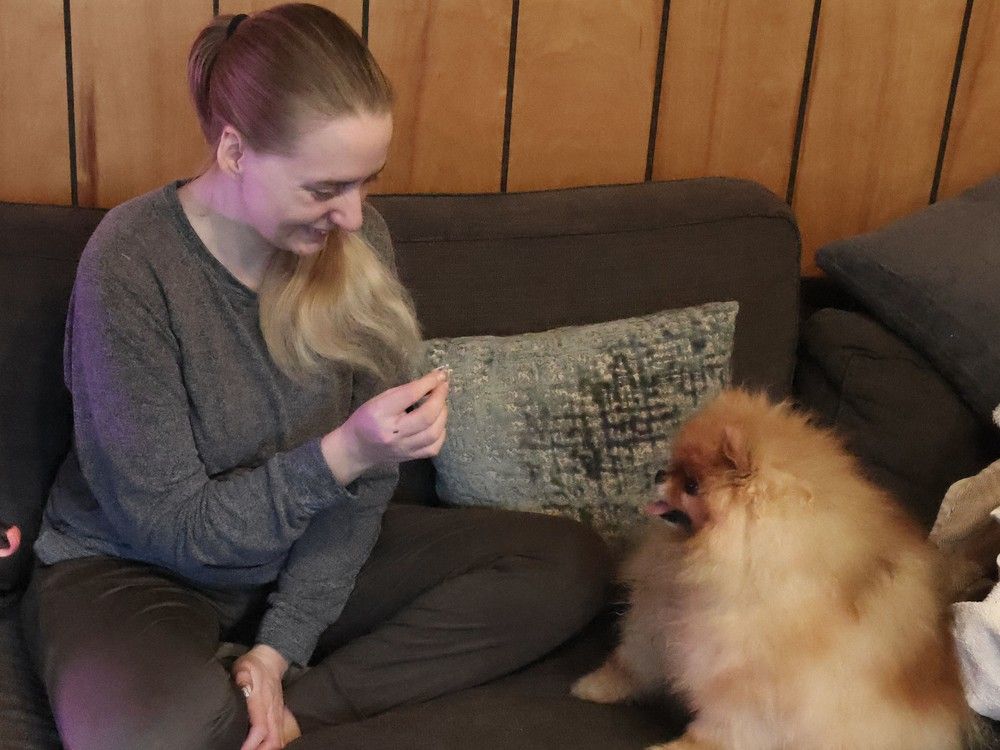
Iris Sharma, a 38-year-old B.C. teacher, began experiencing severe neurological symptoms in the summer of 2023, including short-term memory loss, nausea and dizziness.
By December 2024, the Surrey resident’s symptoms were so bad she found walking and thinking difficult. It would be eight more months of emergency department visits, a referral to an internal medicine specialist, and an extended hospital stay before she finally had an MRI that revealed a brain tumour.
“I just kept going to them and saying, ‘Hey, I feel really unwell. I feel sick.’ I used to be a runner, but there were times where I would run and then I would throw up afterwards. So I wasn’t really sure what was going on.”
In Port Moody, another avid runner, Ken Kuhn, 76, waited seven months to see a specialist for severe hip pain. Then, faced with another near-year-long wait before treatment, the retired teacher decided to pay thousands of dollars out of pocket to go to Mexico for hip replacement surgery.
Colin Kerr of Smithers has been off work for 14 months, and has been waiting more than a year to see a specialist to confirm what he already knows — that he needs knee surgery.
There are thousands of such stories in B.C. social media accounts and Reddit threads are heaving with nightmarish accounts of year-long waits to see a specialist.
More than 1.2 million B.C. residents are waiting to see a specialist, according to a Doctors of B.C. and Consultant Specialists of B.C. survey last year. And that doesn’t include those waiting for diagnostic testing, including MRI, or surgery. So, for example, it could be half a year to see a specialist, but then another year to get an MRI before yet another lengthy wait for treatment.

New survey results, due this spring from the two groups of experts with support from B.C. Family Doctors, are expected to show that specialist waitlists continue to grow.
Despite the provincial government announcing $2.77 billion in additional health spending over three years in last month’s budget, there is no dedicated funding, no structural reform, and no accountability measures to improve access to specialist care, the Consultant Specialists of B.C. said in a statement released Wednesday.
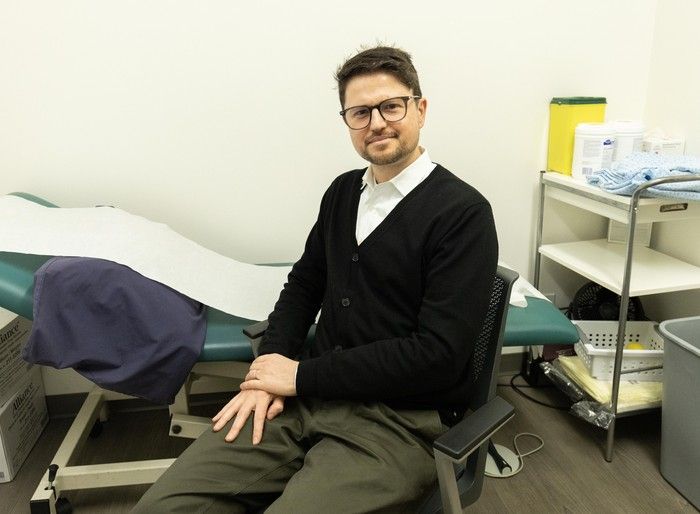
The recent budget “completely ignores” patients waiting for their initial consultation with a specialist, said Dr. Robert Carruthers, a neurosurgeon and president of the Consultant Specialists of B.C.
The longer people wait, the more likely they are to suffer worsening symptoms, pain, and the inability to work or take part in daily activities, which then contribute to a decline in mental health.
“It’s just a continuing spiral. So people who are initially triaged as non-urgent can become urgent. They can experience irreversible decline,” said Carruthers.
Many even die while waiting. More than 4,620 British Columbians died while on waiting lists in one year — between April 2024 and March 2025 — according to provincial data obtained through a freedom of information request by the think-tank secondstreet.org.
Falling through the cracks
Complicating Sharma’s situation is that shortly after she started experiencing her neurological symptoms, a student jumped on her, causing injury to her neck. So she was going to various health-care providers with neck and back pain on top of her memory problems and dizziness.
Her symptoms were consistently dismissed as anxiety, she said. Last March, her symptoms were so bad she had trouble getting out of bed, so she went to the emergency department and waited for 10 hours. The doctor told her it was likely fibromyalgia and to go home. She told a nurse she didn’t think she had been properly diagnosed and asked to speak to another doctor, who referred her to an internal medicine specialist.
She saw the internal medicine specialist for the first time in May, and again at the end of June, when the specialist admitted her to hospital for 11 days. She had many tests done at the hospital, but had to wait until August for an MRI, which revealed she had a left temporal lobe brain tumour.
It’s considered a Grade-2 tumour, which means it is slow-growing but can spread into healthy brain tissue. Such tumours are difficult to remove surgically and have the potential to become a more aggressive form of cancer. Because it’s Grade-2 and not 3 or 4, she was considered a lower priority and had to wait four months before she started treatment.
“By the time August 2025 rolled around, I would say my trust and faith in the medical system was gone completely,” she said. Sharma has since filed a complaint with the B.C. Ombudsperson and with Fraser Health.
“I know British Columbia is doing a lot of work to build more MRIs, build more CT scans, make health care more accessible for everyone, but there are still people like me who have complex cases, who fall through the cracks. It’s like, where do people like us go?”
It turns out many of them go out of province if they can afford it, including Sharma, who travelled to Mexico to get a brain tumour biopsy while she waited for cancer treatment because she wanted answers about what she was dealing with.
Paying for private treatment out of province
“It goes against everything I stand for as a Canadian,” said Kuhn. “But I was in so much pain.”
In May 2024, Kuhn went to his doctor about excruciating hip pain and was referred to a specialist, an appointment he received seven months later in October.
The active senior, who has coached hockey, ran marathons and was still doing the Coquitlam Crunch — a 242-metre plateau with more than 890 steps — was surprised to hear he needed a hip replacement.
Then he learned it likely would be December 2025 or January 2026 — nearly a year later — before he could get the surgery.
Kuhn is also executive-director of the Tri-Cities Seniors’ Action Society, and that requires mobility and community engagement. But his pain kept him from participating. He started looking for other options, but $30,000 for surgery in Alberta was too steep, so he went to Mexico, where he had surgery last April for $14,000.
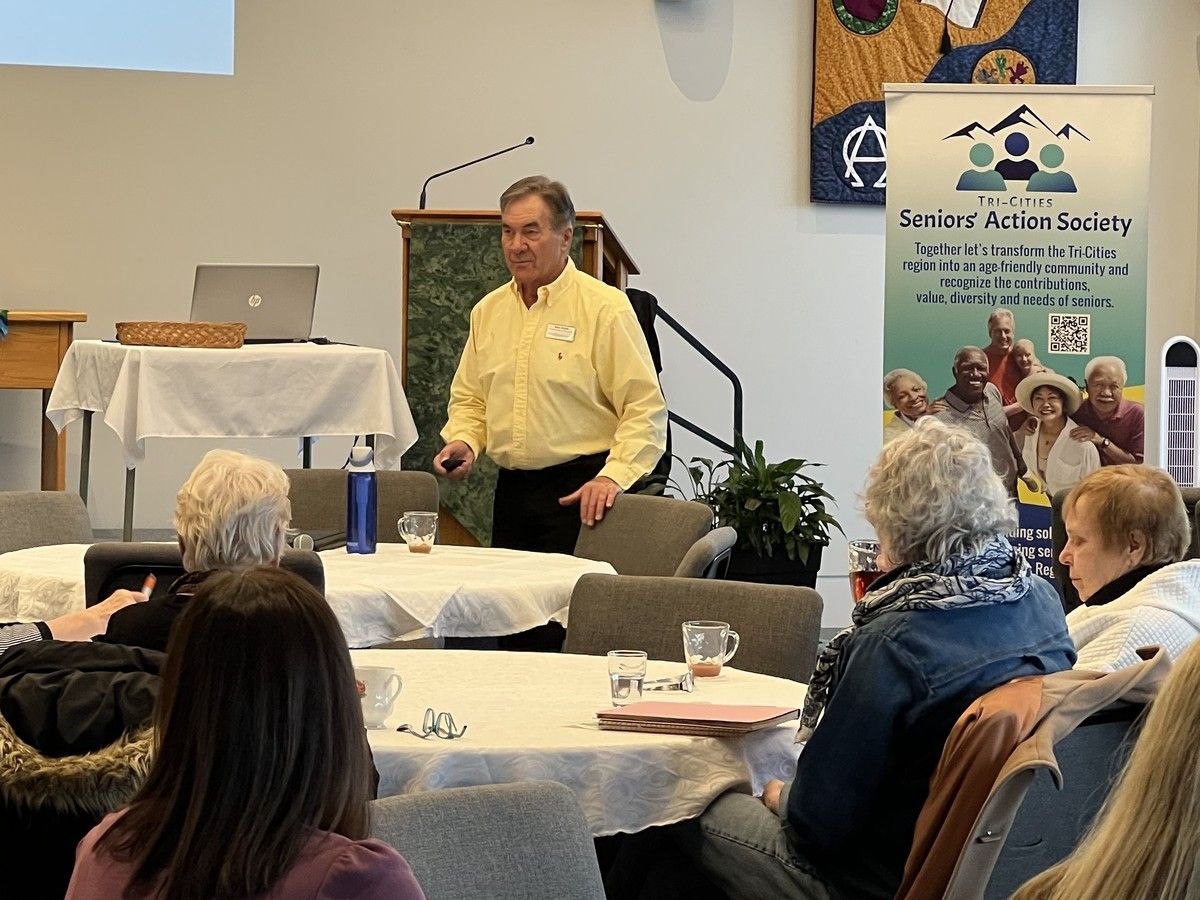
But there have been complications and he needs to have the hip replacement redone. He is in less pain than before the surgery, but he still has to walk with a cane. His orthopedic surgeon told him the wait list for surgery was long, but when the medical staff found out he had a hip replacement in Mexico, they took him off the waitlist. He has been waiting to see his orthopedic surgeon again, which he will do on April 1, to discuss the results of an MRI and X-ray before he can be added back on the surgery wait list.
“I have been exercising at the gym regularly and building up my strength, but in the last two months, I can actually feel the metal hip joint against my skin. It’s a dull pain and I’m taking painkillers. So, yes, it seems to be getting worse.”
He believes if it hadn’t taken so long to see the specialist initially he would have been on B.C.’s surgery waitlist much sooner.
Doctors of B.C. says wait times for a specialist are, on average, four weeks for urgent care, 10 weeks for semi-urgent care, and up to 10 months for non-urgent consultations.
But many B.C. residents tell a much different story of waiting more than a year to see a specialist.
Take the case of Sara Gillooly. The Port Moody real estate agent and mother of two children recently shared her heartbreaking story of how she received a terminal diagnosis after waiting for months to see a specialist following treatment for breast cancer. She told media at a news conference earlier this year that she wishes she had gone out of province to get a CT or MRI scan, saying quicker treatment might have prolonged her life.
The Ministry of Health says it tracks two- to four-week surgical benchmarks for urgent procedures, but Carruthers said this gives people the false impression that wait times are improving. This is the government’s key performance measure for surgical wait times, and the ministry regularly highlights it while forecasting continued improvement, he added.
But the ministry does not track or publicly report wait times for initial consultation with a specialist. As a result, the benchmark measures only the time from consultation to surgery, not the total time a patient spends waiting for care.
In reality, he said patients frequently wait months, or even years, for a consultation with a specialist before their condition is first assessed and the decision for surgery is made.

It will get worse unless action is taken
Carruthers predicts the health-care system will continue to decline.
“While there are many things that we have to be proud of, this type of thing that happened to Sarah Gillooly, I am worried that that will continue to happen, and that it will become more of a common issue.”
Carruthers said the main issue is that the ministry does not have wait time data for all specialists across the province.
All specialists triage in terms of urgent patients, semi-urgent patients, and non-urgent referrals. And as the system comes under increasing strain, determining that a person is in a non-urgent category is becoming the same as denying that person access to care, he said.
“Now it takes longer to triage than before. For some groups like neurosurgery it is taking particularly long. I’m aware of a patient who’s been waiting now 14 months to have a first consultation with an orthopedic surgeon about an ear replacement,” he said.
“And then ultimately, like many people who deteriorate, they end up in the emergency room or having multiple visits with their family doctors, which creates even more inefficiencies in the system.”
A provincewide specialist practice database proposed by Doctors of B.C. and the Consultant Specialists of B.C. would include demographics, waitlist sizes, and wait times updated in real time. It would quantify the scale of waiting, reveal geographic and specialty gaps, track trends over time, enable targeted policy and resourcing decisions, and measure the impact of interventions.
Carruthers has not received any firm commitment from B.C.’s health minister that government will move ahead with the proposed database.
“I really want to underscore that the ministry has zero eyes on this problem.”
Wait times to see specialists in neurosurgery, spinal surgery and orthopedic surgery are some of the longest, he said.
“I have colleagues in neurology, for instance, where the wait time to see a neurologist is two years or longer. So imagine you have a loved one waiting to get a diagnosis of Parkinson’s disease. That’s a long time to wait to see a specialist to get started on treatment.”
Sandra Alexandra’s husband was diagnosed with Parkinson’s disease 30 years ago. Since then, she has been volunteering with the B.C. Parkinson’s Society, and has watched as wait times to see a neurologist have grown, leaving patients frustrated as they wait for a diagnosis.
The Langley resident said the biggest complaint she hears from newly diagnosed patients is that they went to the emergency department but were released without being put on a waitlist for a neurologist. So they have to find another health-care provider who can refer them to a specialist.
“The wait time is a long time, and it varies in regions in the Lower Mainland, which doesn’t make any sense. If you live in Langley, why can’t you go to somebody in Vancouver? It depends on who your GP is. And that’s if you even have a GP,” said Alexander.
“It’s not like waiting for knee surgery, where you’re in pain. It’s just you’re left wondering what it is you have.”
Life on hold
“There are many people in B.C. who would love to go back to work, including myself, but then they end up on short-term disability, long-term disability, waiting for tests to come through, and it comes down to why is the government willing to pay for this rather than if they had tested me from the get-go?” said Sharma.
“How much money would they have saved on emergency visits, on doctor visits, on having me on short-term and now long-term disability? Because it’s been 14 months now.”
Jason Sutherland, director of the Centre for Health Services and Policy Research at UBC, has been studying access to specialized care for more than a decade.
He said that while cancer and other life-threatening conditions are usually taken seriously and these patients are a priority, there are still those falling through the cracks.
Sutherland questions the lack of will among stakeholders to implement strategies such as centralized referrals, which could improve patient flow and reduce wait times.
“Access to specialist care and access to elective surgery is not that complicated. There are strategies and policies that can be implemented to improve the situation, but there is generally not the will to do so,” said Sutherland.
He added that in many countries centralized referrals are standard practice.
“But we don’t do them. We don’t mandate them. So we are left with the same thing that we’ve had for the last 10 to 15 years, and the situation is the same. So I’m just surprised that anyone is surprised.”
With a centralized referral system, patients are referred to the next specialist who’s available rather than the one recommended by the patient’s primary health-care provider.
“But first someone would have to set up this centralized referral system, which would be a database, but it would also have to speak to all the primary care systems and private contractors, so they would have to figure this out and how to submit electronic referrals into a centralized referral system,” he said.
“So this is going to take a lot of money to do but it would be very effective.”
In the meantime, if the government won’t move ahead with the database, then Sutherland suggests there should be more focus on funding for patients whose lives are on hold because of pain, mobility issues, and physical and mental trauma.
For example, more home and community support, mental-health services, and pain management for patients while they wait.
“My opinion is, if we’re going to make people wait, we should give them services that help them cope.”
Already dealing with severe arthritis, Kerr found out he needs a double knee replacement, but accessing care has become an exhausting ordeal.
He has been off work for 14 months, still waiting for his initial consultation with an orthopedic specialist. That’s over 400 days marked by constant pain and worry, with attempts for updates consistently met with silence, he said.
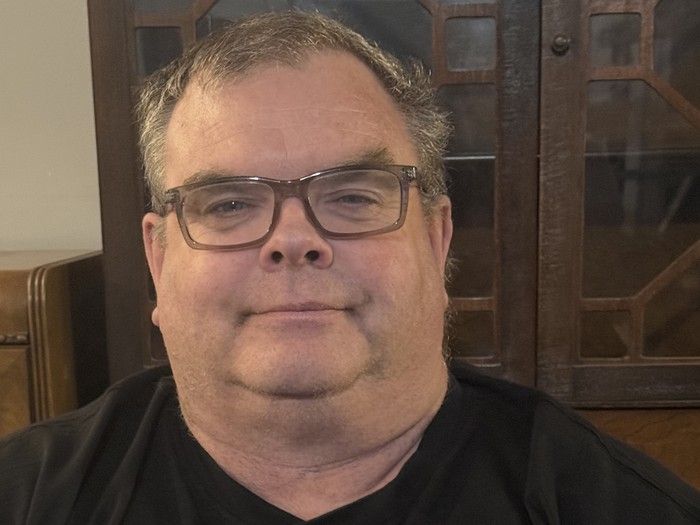
“I’m definitely getting worse, my knee function is declining, and it’s harder to even move around the house. My father passed away during this time, and not being able to return to work or a sense of normalcy made it even harder. I keep following up hoping for an answer, but I’m always met with nothing,” said Smith.
Declining mobility and increasing reliance on medication contribute to his frustration and anxiety.
He wonders why the B.C. government continues to ignore the solutions offered by experts to address long wait times and eliminate the backlog of referrals.
B.C. government’s response
Health minister Josie Osborne has said the province is looking at the specialists’ proposal for a waitlist database.
The ministry agreed that accurate, real-time data is essential to address waitlist management. Yet pressed over several weeks for reasons why the government hasn’t started creating a centralized database or why there’s nothing in the budget to address specialist wait times, the Health Ministry did not provide specific answers.
Instead a brief statement from the ministry said: “At this time, the Ministry of Health is focused on working with partners, including Doctors of B.C. and Consultant Specialists of B.C., on initiatives that improve referral processes, data quality, and patient access in ways that are clinically meaningful and operationally feasible.”
The government says since 2017, it has hired more than 1,000 new family doctors, and the number of nurse practitioners has tripled, so more people can receive primary care when they need it.
The ministry is working to reduce barriers for doctors coming to B.C., and has made it easier for those who are trained in the U.S. to come to Canada but it remains to be seen how many make the move.
A recent Angus Reid poll shows 42 per cent of B.C. residents say it is difficult or impossible to access non-emergency care that could normally be handled by a family doctor.
“As a physician, these numbers are deeply concerning because they reflect fear, delay, and uncertainty for patients,” said Dr. Anna Kindy, Conservative MLA for North Island and Opposition Health Critic.
Kindy calls the wait times to see a specialist a crisis that she blames on years of poor planning by the NDP government.
“The human cost of these delays is devastating. Diseases progress while patients wait in fear and uncertainty. Cancers that are treatable become palliative. Patients who were once non-urgent become emergencies,” she said.
Kindy points to ovarian cancer as an example.
The five-year survival is more than 60 per cent when a patient is treated within a month of diagnosis, but drops to roughly 35 per cent when treatment is delayed just one to two months, she said.
Kindy said Conservatives support the waitlist database proposed by specialists.
“A public, real-time waitlist database would allow targeted recruitment, better regional planning, and informed decision-making by patients. It would also expose the true scale of this crisis, which is exactly why this government has resisted it.”
Next steps
Carruthers said he is hoping for ongoing conversation with the Health Ministry. He also said the government should provide data on how many people are waiting, and the costs associated with those wait times.
“Because we don’t have data, it’s easy for us not to do anything, but I feel like we’re inextricably sliding into system failure,” he said. “And I think it’s time for us to start measuring where access to specialist care is.”
With files from Alec Lazenby
Are you a physician or a patient who has experienced being on a waitlist for a specialist up to a year or more? We’d like to hear from you. Please email ticrawford@postmedia.com.