 BURST
BURST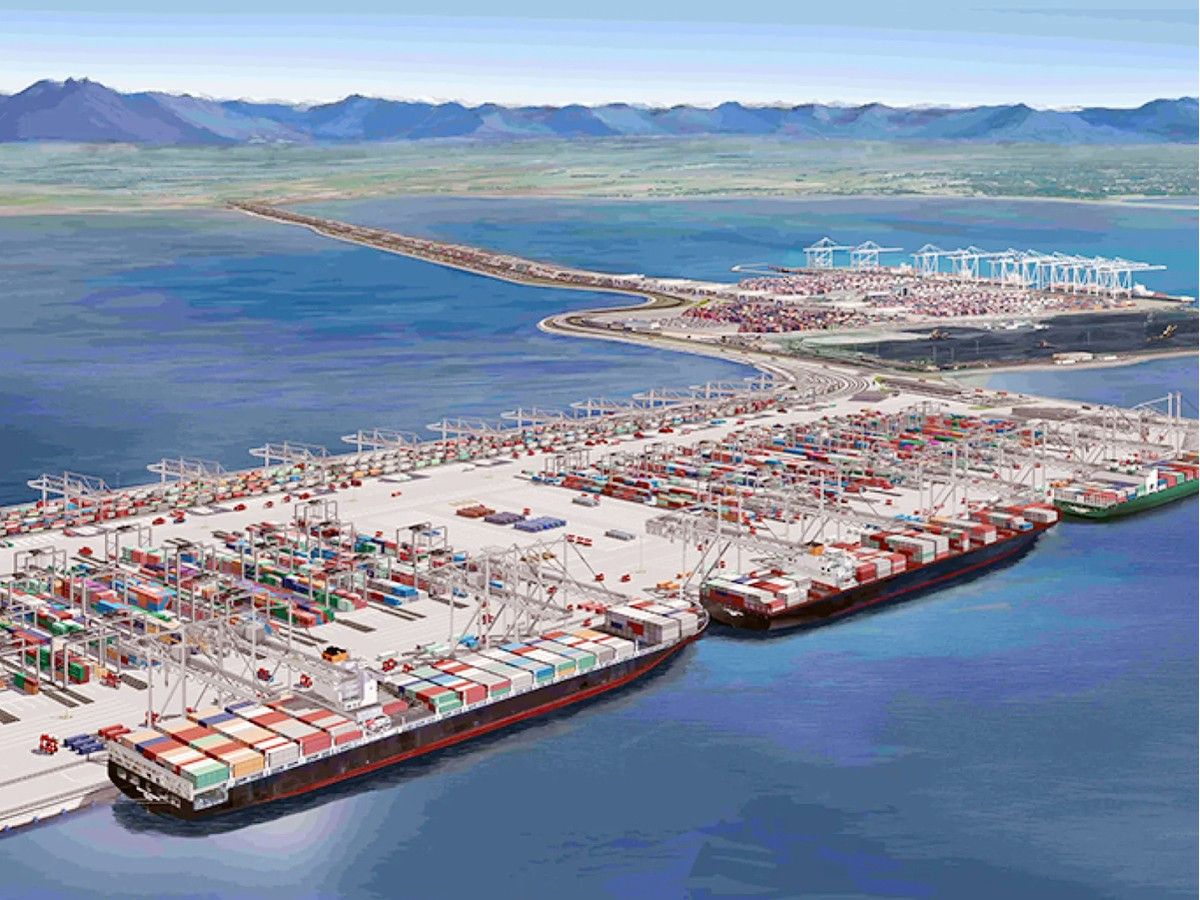
The Port of Vancouver has picked its preferred contractor to build the central part of the massive, $3 billion Roberts Bank Terminal 2 project that will expand the West Coast’s container capacity by 30 per cent.
On Monday, the Vancouver Fraser Port Authority said it has selected a consortium under the name TerraMarine as “the preferred proponent” to build the new 1.3-square-kilometre artificial island and wharf components of the Terminal 2 project.
The selection of TerraMarine from a short list of three qualified bidders touches off a timeline for its consortium to start negotiations with the port authority, and work with First Nations and regulators on a construction plan aimed at establishing costs, a schedule and subcontracting opportunities.
According to the port authority, it intends to award TerraMarine a target-price, design-build contract when this work “has sufficiently advanced” and financial terms close, with early works expected to start in late 2027.
Major work is expected to begin in 2028 and the Port of Vancouver is hoping for terminal operations at Terminal 2 to begin by the mid-2030s.
“As we advance the Roberts Bank Terminal 2 project, selecting a highly qualified construction partner is a major step forward,” said port authority CEO Peter Xotta.
Xotta called the container-terminal expansion “critical to achieving” Prime Minister Mark Carney’s goal to double non-U.S. exports over the next decade.
The existing Deltaport terminal at the existing Roberts Bank Superport artificial island is already Canada’s largest container port, with the capacity to handle 2.4 million 20-foot-equivalent units a year. Terminal 2 would handle an additional 2.4 million TEUs per year.
In its announcement, the port authority said it selected a design-build procurement model with a target price, which will see the contractor create the new 130-hectare island, wharf and berth pocket, as well as a widened and expanded causeway to the superport.
An environmental assessment of Terminal 2 acknowledged the project will have “irreversible adverse effects, but federal authorities approved it with 370 binding conditions including 100 measures to protect wildlife.”
In Monday’s announcement, the port authority said “select environmental mitigation and offsetting projects,” will be part of the contract.
Developments in Roberts Bank Terminal 2 are happening at the same time the federal and the Alberta government are attempting to advance a proposal for a new one-million-barrel-a-day pipeline to a terminus at Roberts Bank under Ottawa’s memorandum of understanding with Edmonton over resource development in the province.
Last week, Vancouver Fraser Port Authority officials told Postmedia that it had no information about the proposed oil development and that “these are two separate projects,” according to spokesperson Hayley Hodgson.
Carney, however, committed $10 billion in federal money to support expansion of the Roberts Bank corridor, more than twice Terminal 2’s projected cost.
Alberta’s submission to the federal major projects office indicated the proposal’s shipping terminal would require 2.6 square kilometres of land to accommodate 15 oil storage tanks, and a two-berth loading facility at the end of a five-kilometre causeway.
TerraMarine is a consortium that includes Flatiron Dragados Canada, a subsidiary of U.S. infrastructure firm Flatiron Dragados; Van Oord Canada, subsidiary of a Netherlands marine contractor; engineering firm Aecon Constructors; and Carlson Construction Group.
Their bid was supported by the design firm Arcadis Professional Services Canada with sub-consultants Stantec Consulting, TYPSA and Tetra Tech Canada.
The port authority is also in the process of negotiating a potential partnership with Global Container Terminals to operate Terminal 2 under a memorandum of understanding the parties signed in April. GCT already operates the Deltaport container terminal at Roberts Bank and the Vanterm container terminal in Vancouver Harbour.