BURST
BURST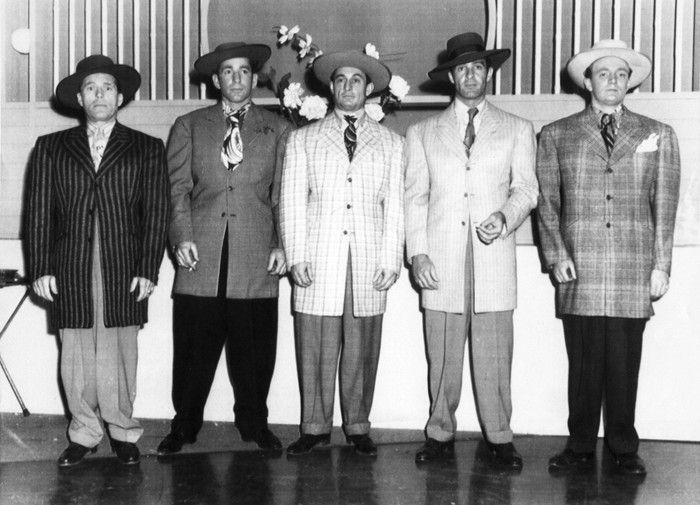
The top story in the March 10, 1942 Vancouver Sun was British foreign secretary St Anthony Eden accusing the Japanese army of “wholesale atrocities” following the Battle of Hong Kong on Dec. 25, 1941.
“Fifty British officers and men were bound hand and foot and then bayonetted to death following the capture of Hong Kong,” said a Canadian Press story out of London.
A story on page 3 of the March 10 paper was far less shocking, but had repercussions for several years: the federal government had ordered new men’s clothing restrictions.
“Sharp restrictions which will eliminate frills in men’s and boys’ clothing, sportswear and waterproof clothing are contained in orders made public Monday by the Wartime Prices and Trade Board,” said The Canadian Press story from Ottawa.
“In general, specifications restrict the amount of cloth which may be used by eliminating fancy designs, patch pockets, trouser cuffs, pleats and double-breasted coats.”
According to the story, the order was conceived to “conserve materials and labor” during the Second World War. And the regulations were quite detailed.
“Designs for men’s sack coats must eliminate belting, bi-swings or pleated backs; patch pockets and inside bellows; vents in either the side or back; cash pockets; arm shields, real or imitation buttonholes, and chain stitching on the sleeves; cuffs on sleeves; double-breasted sack coats or tuxedo coats and buttons on the sleeve.
“The coat length for size 38 is limited to 29 ½ inches and other sizes will conform. For vests, the ban includes back straps, inside breast pockets, pencil pockets, double-breasted vests and collars.
“Restrictions are applied to the length and width of trouser legs with trousers for size 32 not exceed 19 ½ inches at the bottom.”
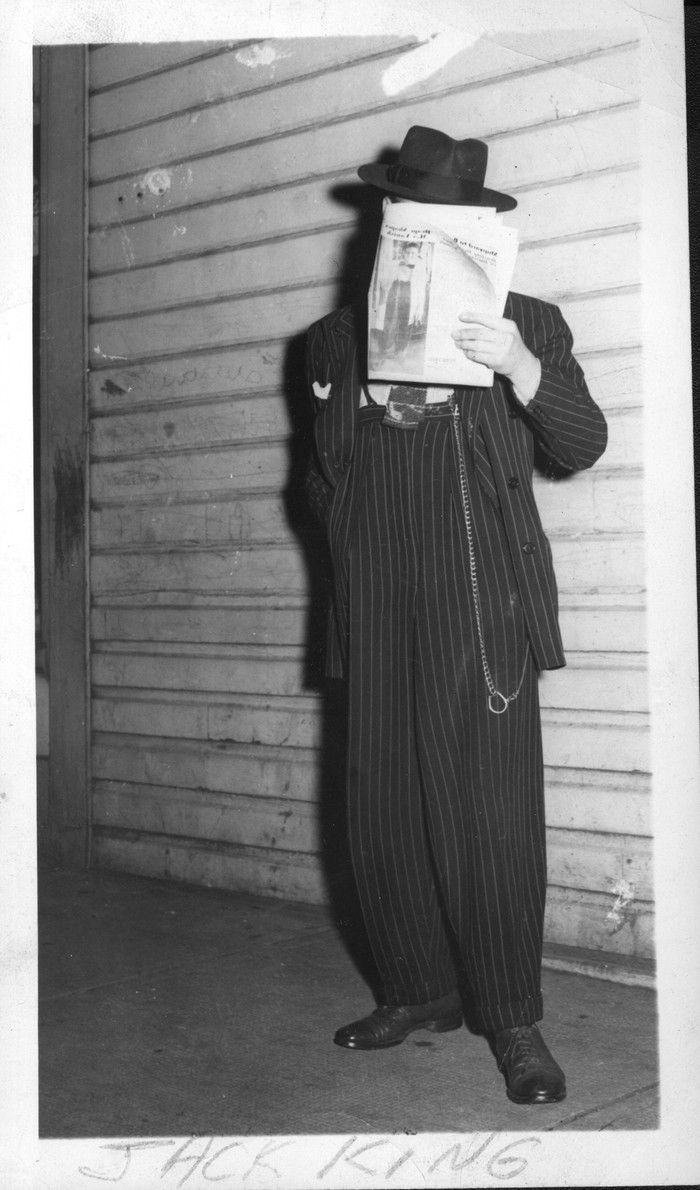
The story doesn’t mention it, but the regulations were probably aimed at the latest clothing craze: zoot suits.
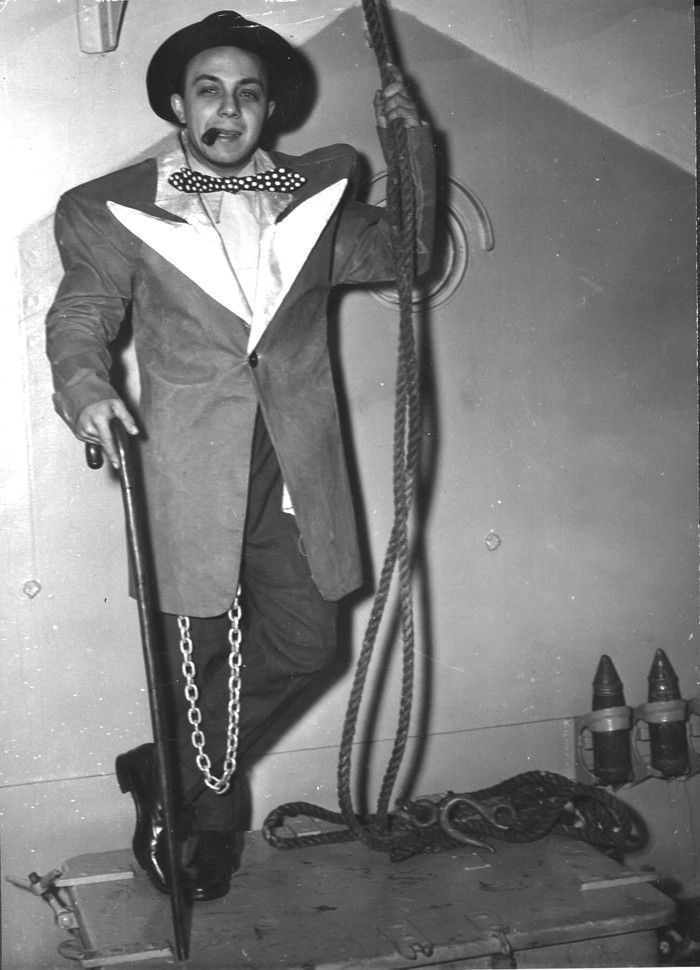
“For the uninformed, the zoot suit, in the language of its wearers, is one with ‘reet pleats, stuff cuffs, a zest vest, svelte belt and ‘won my wings’ tie,’” said a Vancouver Sun editorial on June 21, 1943.
“Translated, that means elaborate pleats in the trousers, extremely tight cuffs, a belt line just a little under the armpits. The costume is completed with a ‘dog chain,’ an exaggerated watch chain which must reach far below the knee, and a knee-length coat with huge lapels.”
The style developed among African Americans in New York’s Harlem in the 1930s, and spread around the continent in the early 1940s, particularly among music fans. You can find a fabulous vintage clip online of a swinging 1942 jazz hit, A Zoot Suit (with A Reet Pleat) , by movie star Dorothy Dandridge and Paul White.
Some saw zoot suits as a sign of youthful unconformity and style, but servicemen during the Second World War hated them, considering them unpatriotic.
In June, 1943, it exploded into violence when white servicemen attacked Mexican American, Latino and Black zoot suiters in Los Angeles. The Zoot Suit Riots went on for several nights, from June 3-8.
“In the heaviest street fighting on downtown city streets in many years, thousands of servicemen, joined by additional thousands of civilians, last night surged along Main St. and Broadway hunting down zoot suiters,” said a story in the June 8, 1943 Los Angeles Times.
“More than 50 zoot suiters had their clothing torn from their bodies as servicemen and civilians converged on bars, restaurants, penny arcades and stores in the downtown area searching for the youths wearing the reet pleats.”
The wife of the American president, Eleanor Roosevelt, blamed the riots on “long-standing discrimination against Mexicans” in California and said “race problems are growing in the United States.”
Vancouver had its own zoot suit riot on Aug. 5, 1944 when zoot suiters and merchant seamen clashed at Richards and Dunsmuir downtown, as well as at Princess and Hastings in the Downtown Eastside.
Two zoot suiters were sentenced to six months in jail, but servicemen seem to have got off easier. Soldier R.J. Brooks was fined $25 or 13 days in jail after he was seen kicking a police officer in the groin. Seaman Peter Evans was arrested while carrying an axe in his hand on Hastings Street, and was fined $25 or one month in jail.
Related