 BURST
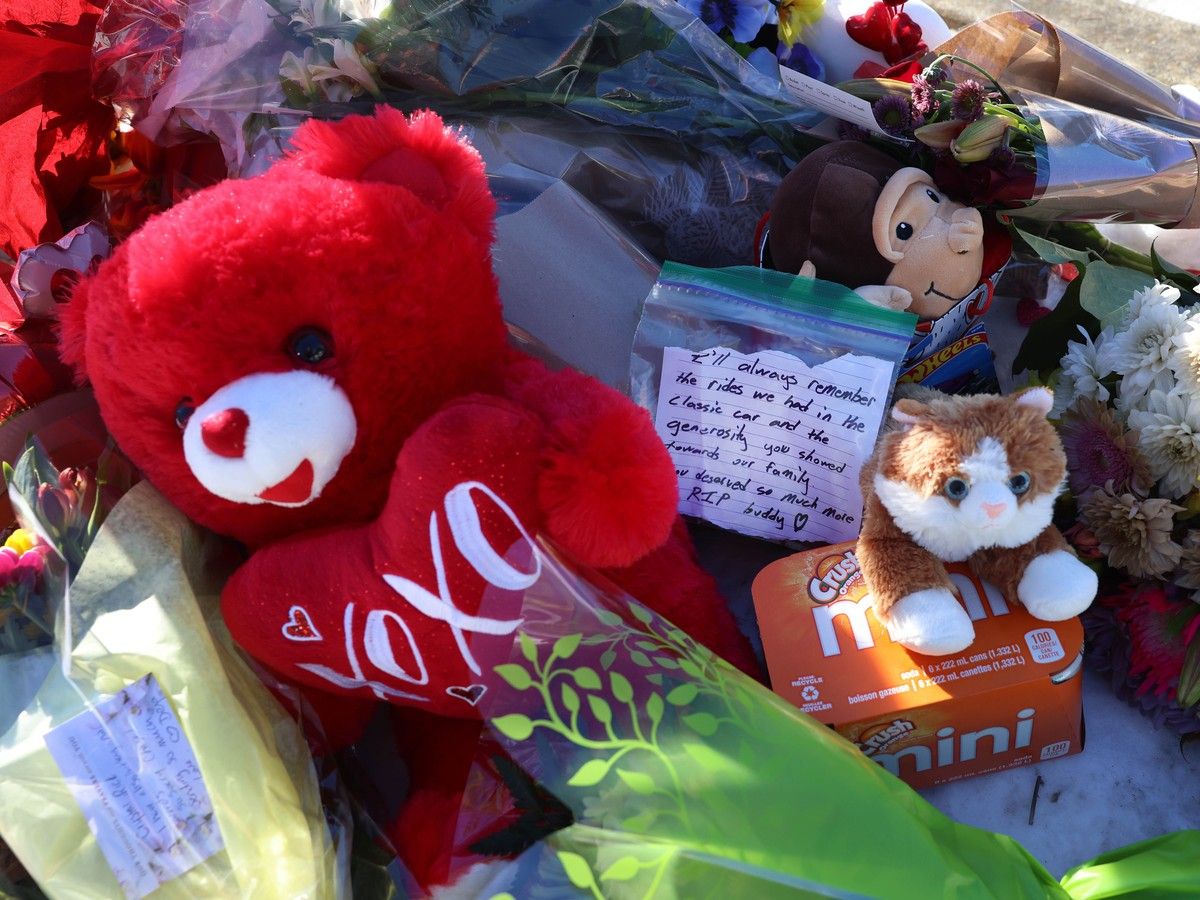
An autistic teenager shot dead by police near his Surrey high school calmly and politely told a 911 call taker that he was depressed, suicidal and had a gun, then abruptly ended the call with a loud expletive at someone approached him.
A coroner’s inquest into the death of Chase De Balinhard, 15, heard a recording on Tuesday of the 18-minute 911 call the boy made in the afternoon of Feb. 9, 2025.
It also heard recordings of police radio transmissions as eight to 10 officers armed with rifles chased the teen in and around the schoolyard and adjacent tennis courts. They followed him to a shipping container next to the lawn bowling centre where he was approached by officers before going on the run again into a wooded area.
Officers in pursuit reported he was pointing the gun at his head and at officers and waving it in the air. At one point he entered a townhouse complex.
Later an officer is heard saying: “He’s making his way out to the road. He can’t go back into the residences.”
The chase continued with officers eventually following Chase out to the street, to the corner of 185th Street and 70th Avenue.
Chase was shot with a single bullet to the upper chest.
The inquest was called to possibly make recommendations to prevent a repeat.
On the 911 call, Chase tells the call taker that “he can’t take it anymore” and that he’s going to kill himself. He said he’s been depressed for two years and has in the past cut himself with a pocket knife.
In a calm, polite voice with an equally calm call taker, Chase told 911 that he was sitting on a bench near the soccer field at Clayton Heights Secondary School. When asked if he has his pocket knife with him, he says: “No, but I have a gun.”
He said he had unlocked a drawer that his father kept the gun. It was later identified as a pellet gun.
Earlier, he told the call taker that he was autistic and had no friends because “they just ignore me” or “they just annoy me.”
Seconds before the call ended, the call taker had asked him what he thought of police and he says “to be honest, I don’t think I trust any police.”
Asked if he had thought about what he would do if the police approached him, he says: “I don’t know, sir.”
When the call taker presses him further, to ask if he would harm them or does he just not trust them, he replies: “Both.”
He stops answering questions and says “what?” to someone. Seconds later he yells an expletive and doesn’t respond to the call taker’s questions about whom he’s talking to or if he’s still on the line.
The call taker testified responding officers would see comments he typed into his computer during the call come up on their computers.
Monique Ross, a retired piano teacher, was out walking her dog when she came face-to-face with Chase, with about three metres between them. Se said Chase was holding a handgun near his waist and he seemed to be looking around.
“I didn’t want to turn around and run because I didn’t want to get shot in the back,” she said.
She, a mother with her infant and others took refuge in a garage in the townhouse complex.
The shooting happened while Surrey was mainly being policed by the RCMP along with some Surrey Police Services officers during the transition to that municipal force.
RCMP Sgt. Kurt Bulow, commander of the response to Chase’s 911 call, testified officers were having trouble containing the scene to communicate with him with the hope of de-escalating the situation.
He considered the call high risk because the area included the sports field and adjoining forested area and was adjacent to a townhouse complex, and Chase was armed and on the move.
Const. Mark Peters, who works on the Surrey Police Services squad that specializes in mental-health issues, testified he approached Chase near the shipping container to assure him he would help him. He was trying to get close enough to Chase to use a weapon that fires bean bags. But Chase took off again through the wooded trail area.
He said his partner spoke to Chase, pleading with Chase to not force police to shoot him.
Peters, who works with a mental-health nurse in what’s referred to as Car 67, said he didn’t witness the shooting but got there soon after and consoled Chase, told him he was loved and was with him as he took his last breath.
“As sad as this event was, we always had a gun,” and it was a high-risk call, and police did the best they could do in prioritizing public safety, he said.
Questions from the family’s lawyer focused on training and protocol for people with mental illnesses or neurodivergency, like autism or ADHD.
The lawyer asked Bulow if he had made an attempt to call Chase’s parents, as required by RCMP protocol. Bulow said he was prioritizing public safety. He also agreed he didn’t assign any of the officers on the call to try to contact the parents.
The inquest continues.