 BURST
BURST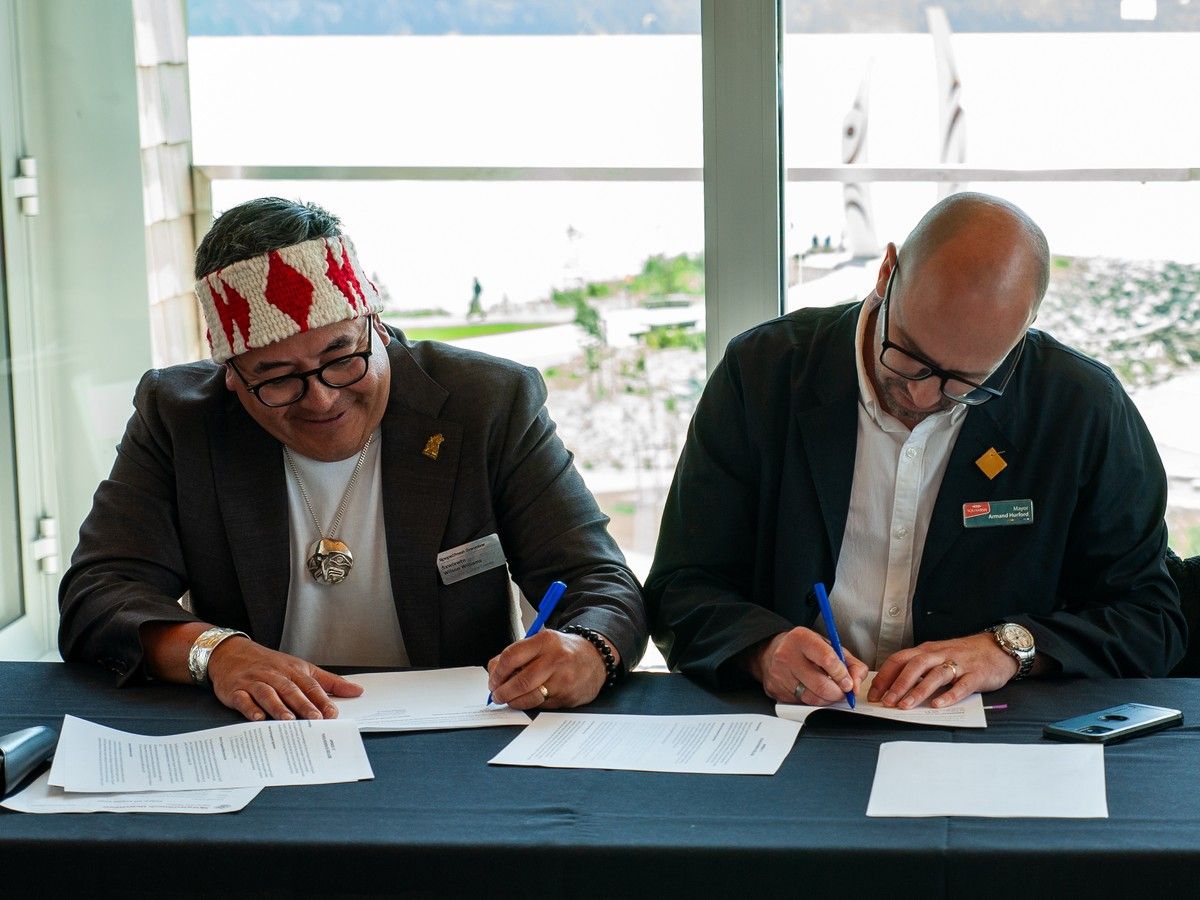
Against a backdrop of increased public anxiety and legal uncertainty over Aboriginal land title, the District of Squamish and the Squamish Nation have created a “land back” task force to explore the return or co-management of government-owned lands to the First Nation.
It is part of a years-long reconciliation effort of the district and the Squamish Nation meant to recognize and respond to the historical alienation of the Squamish people from their lands because of colonial policies.
But the creation of the task force, which may be a first in Canada, comes at a time when there has been a shift in mood surrounding reconciliation following a 2025 landmark B.C. Supreme Court decision that found the Cowichan Tribes held Aboriginal title to land in the City of Richmond, including privately held homes, farms and commercial lands. It was the first time a court had included private land as a remedy.
The District of Squamish approved terms of reference for the task force earlier this month and appointed three council members, including Mayor Armand Hurford. The Squamish Nation’s council has done the same.
“The legal landscape, the political landscape has been, I would say, in flux the whole time. If anything, it highlights the importance of the work,” Hurford said in an interview on Friday about the creation of the task force and the local government’s reconciliation efforts with the Squamish Nation.
Hurford said the feedback has been mixed, and acknowledged that many people are concerned about private land over which, he stressed, the district has no jurisdiction.
The district has been clear to state that the scope of the task force’s work does not involve privately owned property — just government-owned land — and residents with private holdings will not be affected.
At a council meeting earlier this month when the terms of reference was approved, councillors noted they were getting attention from across B.C. and Canada.
“Many eyes are on Squamish tonight with this decision,” said Coun. John French.
The terms of reference states the task force is meant to focus on restoring Squamish Nation governance, stewardship, and cultural connection to lands currently under public jurisdiction.
Representatives of the Squamish Nation were not available for an interview.
In an earlier statement, Sxwíxwtn Wilson Williams, chairperson of the Squamish Nation council, said the establishment of the task force represents a meaningful and collaborative step forward in inter-governmental relations.
“The Sḵwx̱wú7mesh People have lived on these lands for thousands of years, and our work alongside the District of Squamish to shape the future of public lands in this region will only deepen our shared commitment to responsible stewardship — for the benefit of all who call this place home,” said Williams.
The Squamish Nation has significant land holdings in the district already through its reserves. In 2011, the Nation purchased 4.67 square kilometres of provincial land in the Squamish area for $16.275 million. In 2025, the province agreed to a deal with the Nation for joint management and protection of 200 square kilometres in an area that stretches from Vancouver’s North Shore to north of Squamish.
Underscoring that there are increased tensions over land title rights and reconciliation with First Nations, B.C. Conservative MLA Harman Bhangu criticized the creation of the task force.
“They say it won’t touch private property today, but they are building the framework for control tomorrow,” said Bhangu, the MLA for Langley-Abbotsford.
“The home you worked overtime for, the backyard our kids play in, the future you are trying to build, all of it gets pulled into uncertainty,” he added.
The task force does not have the power to make decisions. That’s up to the elected district and Squamish Nation councils. The task force will remain in place until 2028, or until it meets its goals.
The task force is also meant to approve a plan to engage with district residents and the Sḵwx̱wú7mesh People.
What is not clear is how much land is on the table.
The terms of reference mentions an inventory of district-owned lands suitable for “land back opportunities,” but does not include specifics.
The terms note the parties will explore opportunities to identify sites of culture, economic or social significance for “potential repatriation,” recommend policy updates for district land “dispositions,” and support or advocate for Squamish Nation in Crown land dispositions.
The district covers a large area, nearly 105 square kilometres, or more than 25 times the size of Stanley Park. Much of the land is held by the province.
Hurford said the district does not have much surplus lands, including “a few acres” in a business park that is not currently scheduled for municipal purposes. He noted that most of its lands are used for things such as recreation, parks or a water treatment plant.
Hurford said disposition could include giving, leasing or selling land, and a policy framework might include something such as a first right of refusal when the district disposes of lands.
The terms of reference says that potential land back initiatives also include granting exclusive access to cultural sites for Sḵwx̱wú7mesh People, co-managing parks and protected areas, facilitating access to traditional harvesting sites, restoring original place names, and ensuring Squamish Nation input into district leases on significant sites.
At the council meeting, Coun. Jenna Stoner said she hears the concerns that are emerging, some of which feel like valid concerns because there is a lot of uncertainty, adding that the task force could help open opportunities for dialog, understanding, education and sharing.
“We are all going to be here together no matter what. We can either battle it out in court, or we can build strong working relationships and move forward together,” said Stoner, who was appointed to the task force.
Robin Junger, a former chief provincial treaty negotiator and former deputy minister of energy, said a question he has is if district lands are transferred to the Squamish Nation does district retain jurisdiction over them.
“What would be the status of the land? Would it still be subject to the district’s bylaws?” asked Junger, now a lawyer with McMillan LLP, which represents Montrose Properties, the largest commercial landholder affected in Richmond by the Cowichan decision.