 BURST
The first Jewish-Israeli Luai Ahmed met offered to make him Yemeni food. But Ahmed, raised in Yemen to regard Jews as enemies, suspected a trap.
“Behind my back, he’s going to go tell everybody in the university and the student house that there’s a Muslim terrorist in the student house,” he recalled thinking.
Instead, the stranger became his favourite person in their Swedish student residence.
“He just had a lot of Yemeni Jewish friends in Israel, and he wanted to get to know this Yemeni Muslim and see if we were the same,” Ahmed told a Toronto audience this week.
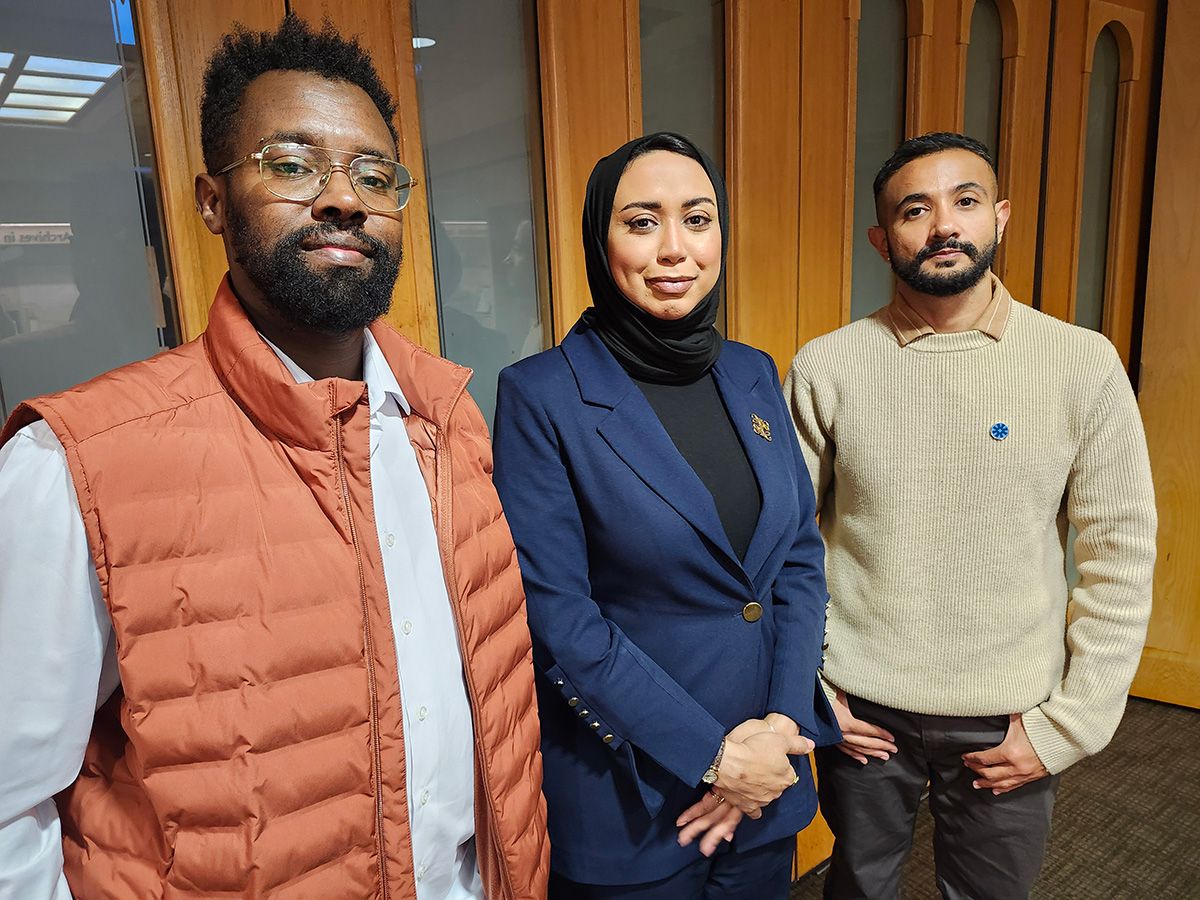
Ahmed joined Bahrain’s Fatema Al-Harbi and Arab-Israeli advocate Tamer Masudin at Voices for Peace in the Middle East, presented by Allied Voices for Israel, with NGO Sharaka. Their accounts illustrated how encounters with Jews and Israelis could challenge years of indoctrination.
“As a Yemeni Muslim who grew up in Yemen, my entire life, I never saw an Israeli or a Jew, or listened to them or heard their perspective,” Ahmed told the Post.
Today, he brings that missing perspective to more than 208,000 followers on X. Masudin has more than 180,000 Instagram followers, using his platform to challenge anti-Israel narratives.
For Ahmed, Jew-hatred permeated childhood: At his mosque, prayers for prosperity accompanied prayers for Jews’ destruction; school lessons supplied conspiracy theories.
“I absorbed every single bit of it because there was no counter argument,” he told the audience.
Life in Sweden brought friendships with Jews, including a Jewish newspaper editor who became a mentor. Then came October 7. Watching footage of Israelis being attacked, Ahmed imagined those friends among the victims, while people he loved in Yemen celebrated.
“We’re not going to be freeing Palestine by slaughtering these incredible people,” he recalled thinking.
He condemned the attacks publicly. When he announced a visit to Israel, his brother and best friend threatened to cut him off. Three years later, he said, they’ve still blocked his number.
Al-Harbi grew up amid different contradictions. Bahrain had a synagogue and a Jewish community of about 50, yet a teacher told her to hate Jews.
“My mom would tell me you’re not supposed to hate anyone that you don’t know just because of their religion or nationality,” she recalled at the Toronto talk.
After the Abraham Accords, she visited Israel. In Tel Aviv, a Jewish stranger on the street approached her and greeted her with enthusiasm about the landmark peace agreement. Invitations to many Shabbat dinners followed from an array of hosts. “Everyone welcomed me with open heart and open arms,” she said.
The welcome she received in Israel stood in contrast to the hostility she faced for speaking publicly about it.
“People said I’m a traitor. They said I don’t deserve my name because my name is the Prophet Muhammad daughter’s name,” Al-Harbi said onstage. “They told me I should take the hijab off, that I’m not a real Muslim. Everything you can imagine.”
She responded by leaving her job in the education sector to work full-time with Sharaka, which means “partnership” in Arabic, founded in 2020 with the purpose of cross-cultural engagement.
Al-Harbi described persuading a Muslim friend who had prayed for Israel’s and Jews’ destruction to attend dinner with an Israeli delegation in Bahrain. After sitting beside two Jews, the friend marvelled at their similarities. Al-Harbi said she stopped saying the prayer.
“I think it’s important to not give up,” Al-Harbi told the Post, urging outreach to moderate Muslims.
Masudin came to advocacy prompted by the Abraham Accords, inspiring people-to-people diplomacy. But October 7 pushed him into public advocacy, and with it came the haters.
“I got to hear all of it. From people accusing me of being a sellout for simply standing for my country, to calling me a Mossad agent,” he told the audience.
Ahmed, meanwhile, argued that defending Israel also requires candour about its extremists.
“The other side looks at us as lacking nuance and completely biased,” he told the Post. “Every society has extremism, and I do think we need to call out the extremism on the Israeli side as well.”
“For me, it’s not really bringing more people to support Israel,” he added. “It’s rather, making more people see the truth. When people understand Israel, they understand that Israelis are human beings. Palestinians are human beings.”
Alyssa Annis, Sharaka’s director of educational programs, said the Canadian visit aimed to offer hope to Jews facing rising hatred and introduce students to different points of view from various Middle East geographies.
“Our voices are able to teach a different lesson other than Jewish voices. They’re able to show people, ‘listen, we’re from the region, we grew up with anti-Israel rhetoric, and yet we went to Israel. We saw a different reality,’” she told the Post.
Al-Harbi acknowledged that changing minds through personal experience takes time.
“It’s not as fast as the bots, honestly,” she said onstage. “But I think the truth in our stories, in our experiences, will always win.”
Our website is the place for the latest breaking news, exclusive scoops, longreads and provocative commentary. Please bookmark nationalpost.com and sign up for our newsletters here.