 BURST
BURST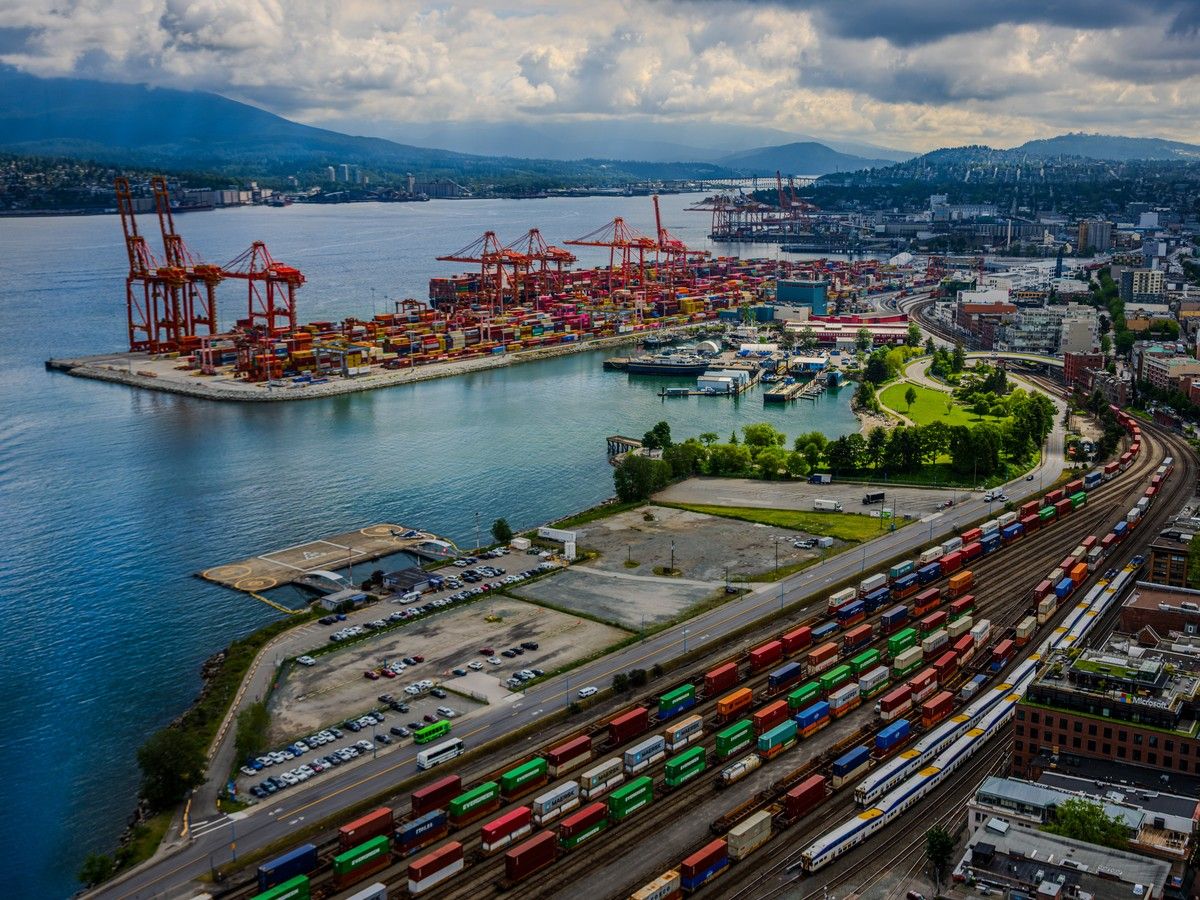
Canada’s best bet to increase non-U.S. exports is to focus on energy, metals and minerals, and agriculture, which have the potential to boost trade by $146 billion by 2035, according to a new report.
Getting there, however, will depend on making strategic investments in moving a surge in shipments of those bulk commodities.
“This is both private and government entities, but we need to place bets (on) what it is that we’re going to ship,” said Michael English, leader of the consulting firm PwC’s transportation and logistics advisory practice, the group that produced the report.
PwC started its analysis after the first wave of U.S. President Donald Trump’s protectionist trade policies hit Canada and Prime Minister Mark Carney signalled his ambitions to double the country’s non-U.S. exports.
The recent release of its results coincided with an escalation of trade tensions between the two countries and new rounds of tariffs and counter-tariffs.
In its report , PwC estimated that the shifts will be “more than a short-term disruption,” and English said investments in infrastructure to handle bulk goods and energy will have the quickest payoff in meeting Canada’s objectives.
Energy would be the largest part of the $146 billion increase in trade, according to PWC’s forecast, making it dependent on a scenario where the major liquefied natural gas expansion projects — particularly the large LNG Canada Phase 2 and Ksi Lisims LNG — go ahead.
PwC’s report tracks Canada’s potential for expanding trade with a baseline of some $214 billion worth of non-U.S. exports in 2025, with just under $30 billion coming from energy, related to the start of LNG Canada and increased oil exports from the Trans Mountain Pipeline.
If Canada follows the existing trend line for growth of non-U.S. exports, PwC’s forecasts it will hit $339 billion by 2035.
On a more ambitious path, PwC estimates such exports rising to some $485 billion by 2035, with $106 billion coming from energy shipments, if Canada reaches Ottawa’s policy goal of doubling exports over the next decade.
Much of the growth would flow through west coast ports, which have their own growth plans.
English said that as an adviser, “We would never recommend any business to rely on one geography or one customer.”
“The same logic applies for us as a country,” he added. “We need to diversify, but we need to understand what it is that we want to ship and where.”
Canada’s west coast ports have been ramping up efforts to meet Carney’s objectives. Last week, three of B.C.’s key port authorities — the Port of Vancouver, Port of Prince Rupert and Port of Nanaimo — issued their own report on how they are positioning themselves to support expansion.
Their economic impact report found that the three facilities, combined, carried some 200 million tonnes of cargo in 2025 worth some $409 billion. All three have their own expansion plans underway.
In July, the Vancouver Fraser Port Authority unveiled its updated gateway strategy, which Ottawa agreed to forward to Carney’s major projects office for possible fast-tracking.
The gateway strategy includes the ambitious $3.5 billion Roberts Bank Terminal 2 project to double Deltaport’s container capacity, dredging of Second Narrows on Burrard Inlet, and the redevelopment of its Fraser Wharves land in Richmond into new bulk and dry-goods facilities.
English said Roberts Bank Terminal 2 is a necessary expansion, but “what my clients are telling me is that ‘now is the time to start shoring up bulk capacity.'”
He added that the supply chains for grains and agricultural products are well-established. For other commodities, the infrastructure will require more investment to handle higher volumes, and perhaps the flexibility to handle new minerals.
English is confident that as long as Canadian companies strike new trade contracts, the necessary investment will flow into private infrastructure such as port terminals and railways.
Even if Canada succeeds, however, the shifts in its trading patterns might not look that dramatic in the context of total exports.
The report anticipates that cross-border trade will increase over the period because that will still be in the best interests of both countries.
PwC expects Canada’s total exports, including to the U.S., will rise from the baseline of some $378 billion in 2025 to $930 billion by 2035, if Canada hits the federal government’s policy goal.
However, looking at exports to the U.S. versus the rest of the world, “the ratio going to the U.S. diminishes, but not by much,” English said.
The important part, English added, will be making the investments needed to improve export infrastructure to the rest of the world, or “we will find ourselves more reliant on the U.S. than we are today.”