 BURST
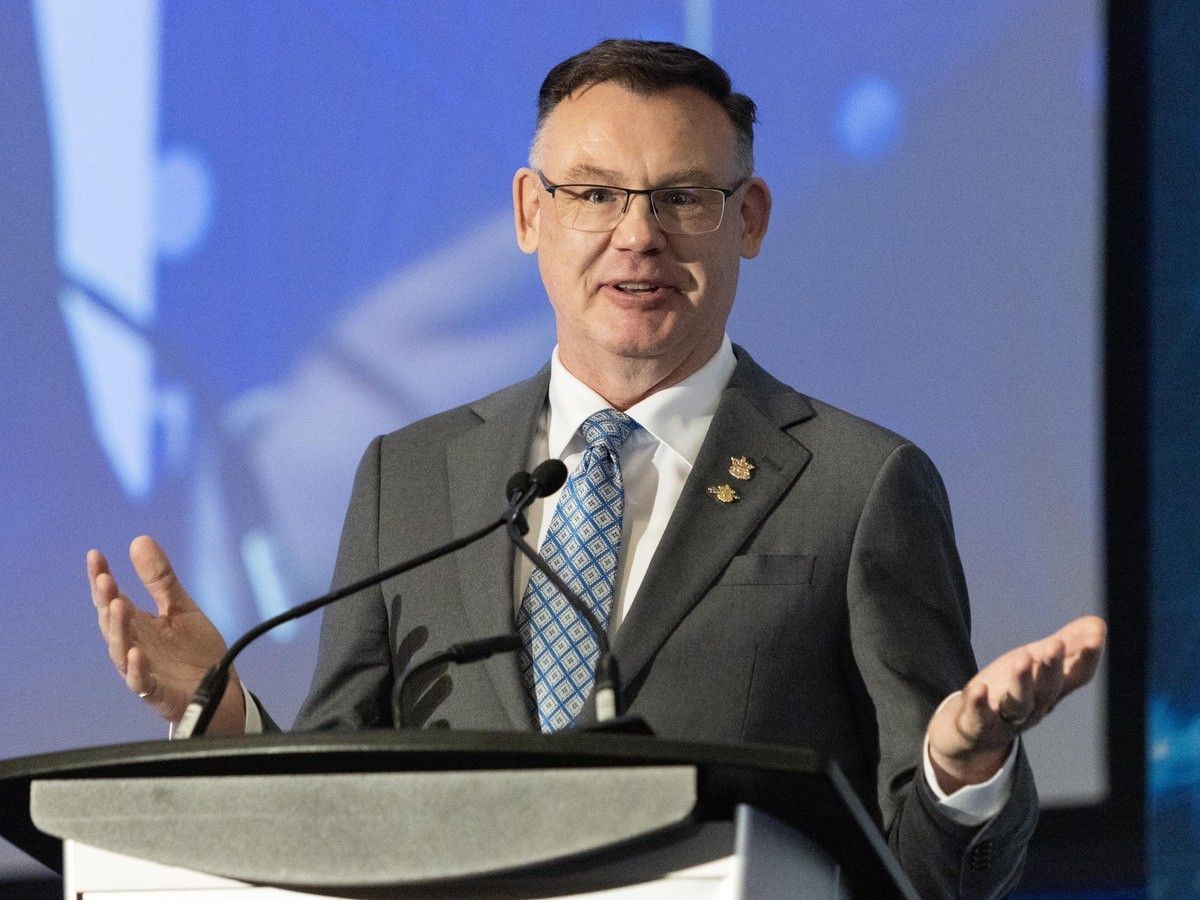
B.C.’s new Energy Minister Larry Neufeld cast himself as a Cabinet member in a hurry to act on the mandate given to him to expand the province’s natural gas industry, during one of his first appearances Thursday in front of a key business audience in downtown Vancouver.
“Yes, we have a very ambitious file, (but) I am very ambitious,” Neufeld said about the new job Premier Lorne Doerkson appointed him to a week ago.
Doerkson thrust Neufeld to the forefront of his government’s objective to “supercharge the economy,” with the intent to lean heavily on the resource sectors in the new minister’s portfolio, hoping to fuel government revenue through economic growth by doubling B.C.’s natural gas production by 2032 and tripling it by 2035.
The premier wants B.C. to be a choice producer of “low-emission” liquefied natural gas, a competitive and stable regulator able to permit new LNG projects “the fastest” in North America.
Neufeld, speaking to an audience at an Independent Contractors and Business Association summit, indicated he is up for the challenge.
He recalled that he started texting his chief of staff the next morning at 5 a.m. with a list of tasks he wanted to set out for the week ahead, and “we got them done.”
“I’m six days into it. I’ve had perhaps 12 hours of sleep in those six days. But you know what? I don’t care,” Neufeld said.
“This is now, this is here,” he added. “We all in this room know the window of opportunity that we’re facing, and many of us are aware of the true length of that opportunity.”
Neufeld finished his remarks to hearty applause from an audience that included many of the contractors and suppliers that will be in line to build the infrastructure, proposed LNG plants and new mines that the government is counting on to fund its ambitions. And the ICBA endorsed Doerkson’s campaign.
While attendees welcomed Neufeld’s message, they also reiterated that speed will be of the essence in the overhaul of regulations to act on its ambitions.
The minister introduced a summit session on B.C.’s energy potential, which was webcast live as part of The Vancouver Sun’s Conversations Live series.
“We do have these tailwinds right now,” said Tiffany Murray, director of external relations for the pipeline firm TC Energy, the company that built the Coastal GasLink pipeline which supplies the LNG Canada plant at Kitimat.
“There is, I think, broad public support for these projects, but we can’t take that for granted and assume that will just give us licence to move forward.”
Murray noted that the window to get things right in B.C. is narrow.
“Capital has choices,” Murray said. “We all know that it can go where there are … better returns and faster to market.”
She added that “it’s very encouraging” to see the new government’s attitude around reducing red tape and developing a regulatory process that works in parallel with projects that “can actually move at the speed that we need to in order to take advantage of the opportunity that’s in front of us.”
Panelist Barry Penner, a former environment minister under then-premier Christy Clark, recalled the “scope creep” that wormed its way into environmental assessments, and government officials using the process to get project applicants to fund additional research the ministry couldn’t afford.
Now in the private sector and chair of the Energy Futures Institute, Penner said, “That attitude needs to change, because it is what leads the delay and failures, proponents giving up.”
On the question of whether government can meet its objectives, Penner said, “We have to.”
“We have to find ways to do it. There’s a lot of goodwill. The public, by and large, right now does support action,” he added.
“That doesn’t mean that we throw caution to the wind. We have to be prudent, think ahead, maintain standards, but get moving and get things done.”