 BURST
BURST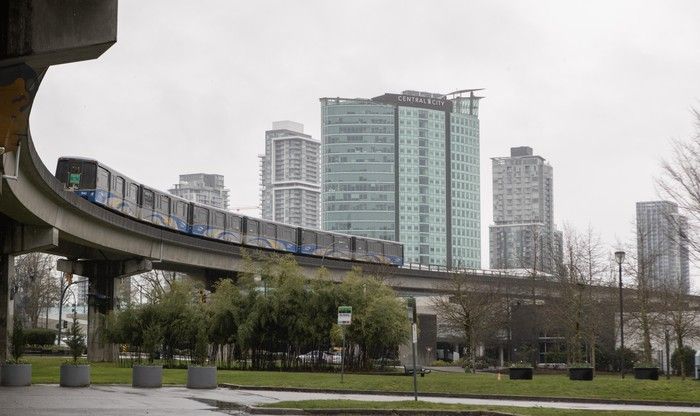
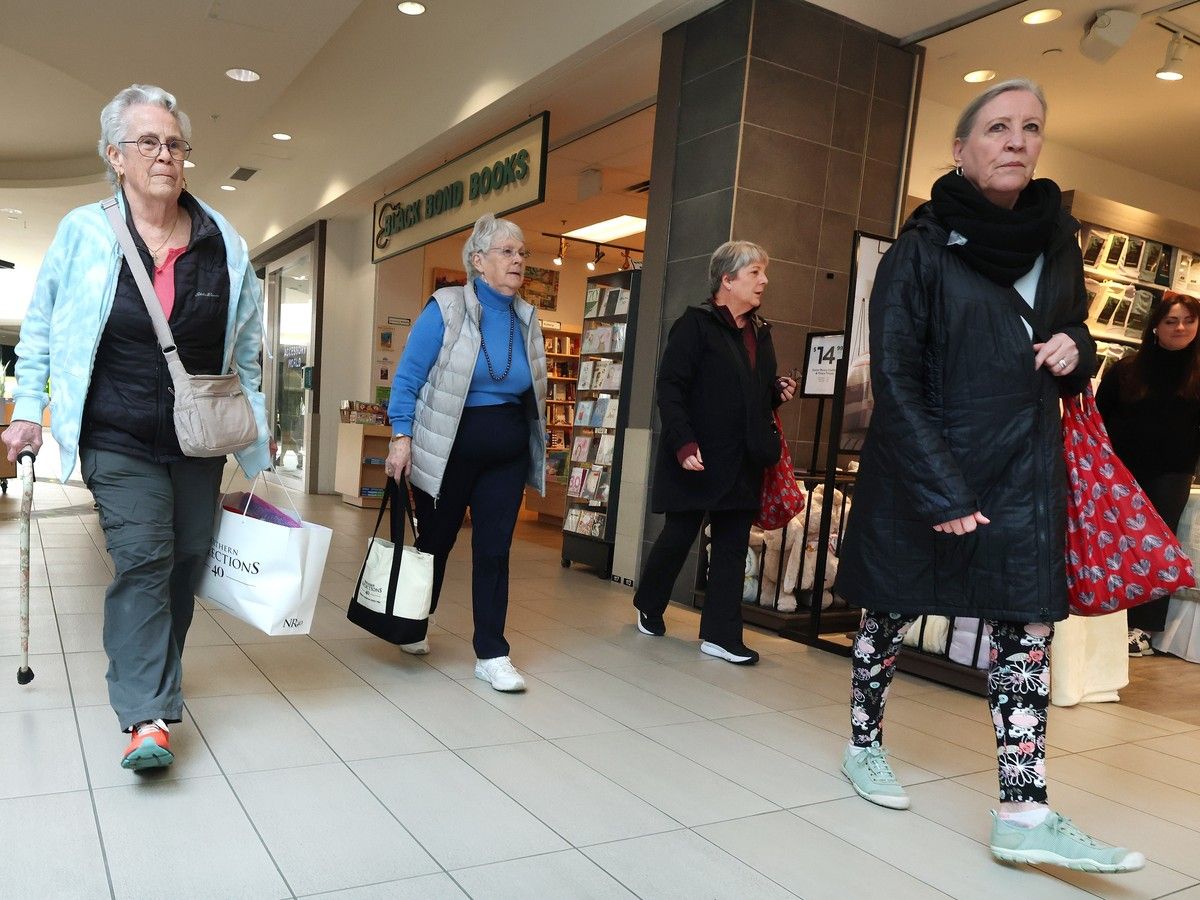
Rosalie Cataghal, a semi-retired hair stylist who lives and works in South Surrey, says she settled there because she likes the middle-class nature of the neighbourhood.
She cites homelessness and crime — the 2007 Surrey Six murders in Whalley left a lingering bad taste — as reasons she hardly ever ventures into the city’s north end.
A fan of T&T Supermarket, she doesn’t go to the stores in north Surrey’s Guildford or City Centre neighbourhoods. She’d rather drive to Langley.
A homeowner for over two decades, she helped her three adult children with down payments, and now they all live nearby.
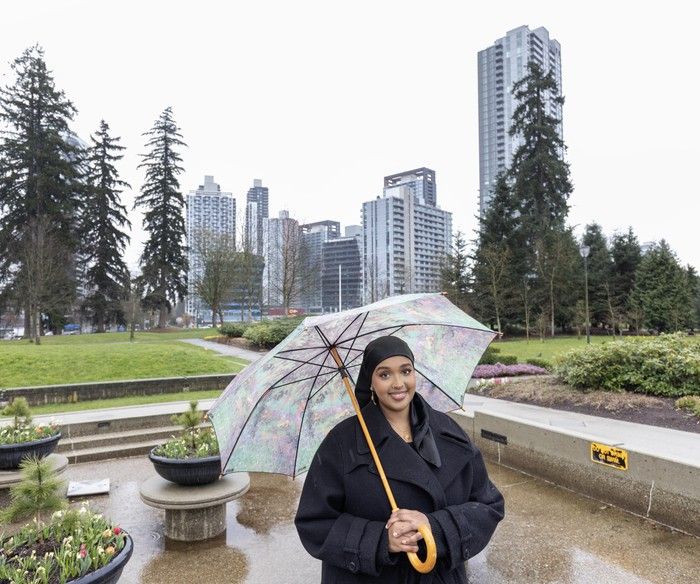
Latifah Mohamed, 26, who has lived in the north Surrey neighbourhood of Whalley her whole life and works at an optical clinic, says she plans to raise her newborn daughter there.
But the perception others have of north Surrey is never lost on her.
“People almost look down on you for it and you get stereotyped into all of it, like the crime, and especially with the high school I went to — Queen Elizabeth Secondary had the worst reputation,” she said.
Mohamed says if you ask someone from South Surrey where they live, they will always say, “South Surrey.”
“They will never just say, ‘Oh, I live in Surrey,’ because I think they don’t want that reputation of being with the rest of Surrey. If you ask me, I don’t say, ‘I live in north Surrey.’ I say, ‘I live in Surrey.’
“I try to show people the other side of it because Surrey has changed so much, it’s really developed. I honestly don’t think it’s that dangerous and I don’t think it deserves to have the reputation it does.”
The City of Surrey projects that the population will reach one million people by 2050, surpassing Vancouver as B.C.’s most-populous city. City Centre at the heart of north Surrey is home to an expanding skyline of new residential highrises.
But during this rapid growth, Surrey — which is Metro Vancouver’s largest city by land area at about 316 square kilometres — continues to wrestle with finding ways to bridge its north-south divide and create a more cohesive city.
South Surrey is the largest of the city’s town centres, bound by the ocean to the west, the city of White Rock and the American border to the south, the Township of Langley to the east, and 48 Avenue to the north. Eighty per cent of residents here own their own home and 96 per cent drive rather than use public transit. The average household income is about $132,400.
The remainder of Surrey to the east and north is less homogeneous. Cloverdale to the east and Fraser Heights, above the Fraser River, fall more in line with the south end in terms of higher incomes and a higher percentage of homeowners than renters, most recent census found.
Residents of City Centre in the north, on the other hand, consist of 55 per cent renters, 51 per cent immigrants and 32 per cent who take public transit to work. The average household income is $77,200. Nearby, Guildford has historically had the most rental units for low-income earners and refugees, while Newton has become a cultural hub for South Asian Canadians. Cloverdale has a small-town, historic vibe different from any other area of Surrey.
City planners are trying to develop the town centres in both the northern and southern parts of Surrey to make them attractive to people from all corners of the city. And they hope that expanded transit services will make it easier for residents to commute to all of the city’s different neighbourhoods.
‘Like two different planets’
In a recent YouTube video , a Fraser Valley real-estate agent, Amman Rawji, said that northern and southern Surrey are like two different planets.
“South Surrey behaves much more like White Rock: expensive, coastal, retired demographic,” he said. “North Surrey is young, transit-oriented and growing vertically.”
In an interview, Rawji said he works with clients in both ends of the city and the differences are unavoidable.
“North Surrey, you’re kind of dealing with a growing city, and the demographic is more toward people who are either first-time buyers or who need rapid transit and are working in downtown Vancouver or in Burnaby,” Rawji said.
“South Surrey is more people who are looking for that family lifestyle. They’re a higher echelon of income earners, want a little more peace and quiet, family neighbourhoods — that sort of thing. So it’s a very, very different demographic. Neither is bad.”
The differences have been highlighted for decades, the real-estate agent said, but perception may be starting to shift as the north end of Surrey undergoes a transformation.
“North Surrey has definitely now been more viewed as a place of growth and opportunity, while South Surrey — buyers they’re not just purchasing a home to live in, they’re really looking for quieter streets, larger homes, proximity to the ocean, and they’re looking for good schools and parks too, because of the families there,” Rawji said.
Rawji, a Langley resident, said he is drawn to South Surrey a couple times a month but typically avoids the north end of the city.
“It’s very young and busy in north Surrey, and I don’t feel like I fit in there really. We live in Walnut Grove, a very quiet community. We moved here for a purpose, because we wanted that chill lifestyle, so that’s why I think we like South Surrey better.”
Mohamed, the Whalley resident, said north Surrey has more transit accessibility, “so obviously it’s more of a hub that more people can have access to.”
South Surrey is quite a bit harder to reach by transit.
“So that is the biggest divide I’ve seen,” she said.
Mohamed said work often brought her to the south end of Surrey in the past, but these days she doesn’t venture south much anymore for personal reasons because she can get what she needs closer to where she lives.
Gordie Hogg, both a former mayor of White Rock and MLA for the area, has a long-range perspective on the differences between the northern and southern ends of the city.
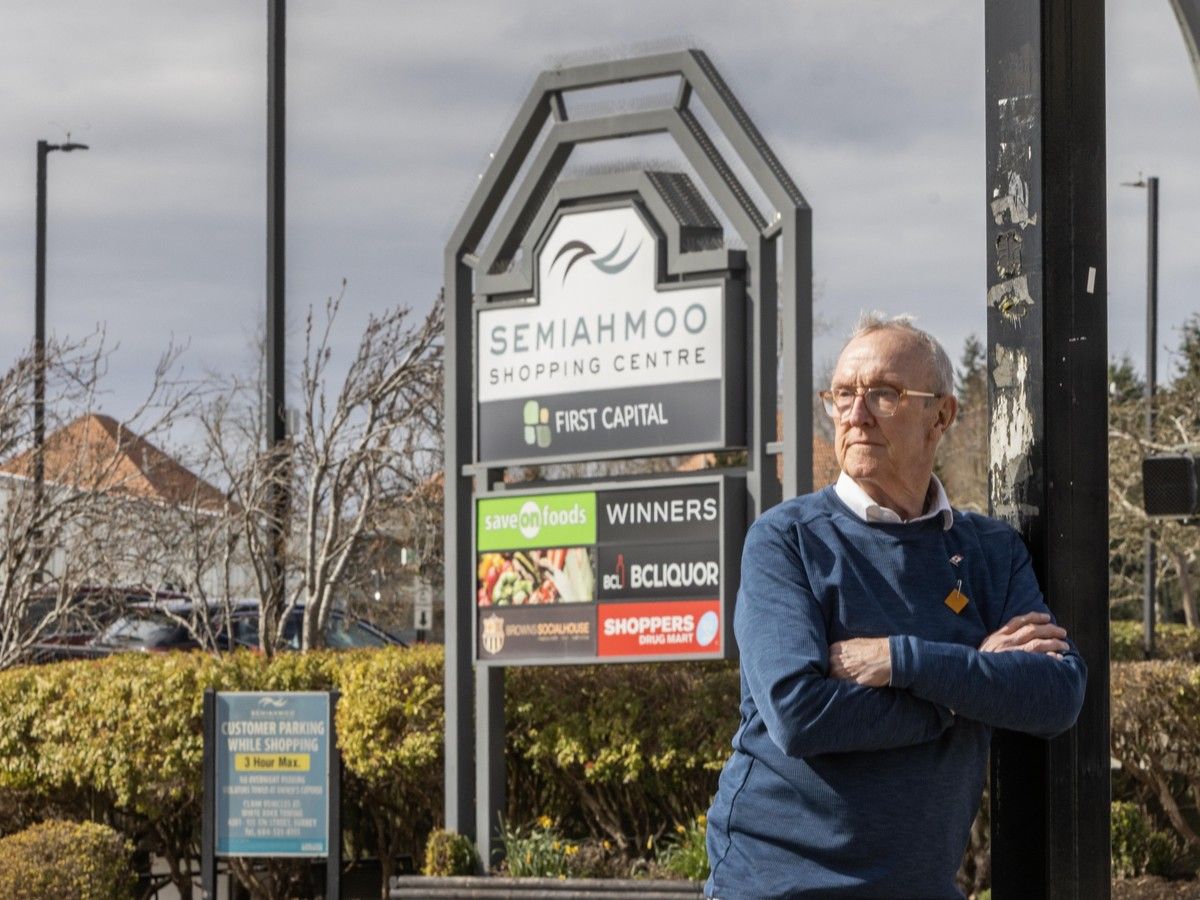
White Rock, where he still lives, used to be Ward 7 when it was still a part of Surrey.
Hogg said the expansion of White Rock and South Surrey largely began with the construction of the area’s first hospital, Peace Arch, in the mid-1950s. (The much larger Surrey Memorial opened a couple of years later.)
He said the crime problems that still plague Whalley and the surrounding area in north Surrey go back decades.
In his early work life, Hogg was a youth probation officer in Whalley and he said the vast majority of offenders came from the north end.
“I can’t remember any from South Surrey; we had a few in the Newton area. The predominance of offences carried out were in the north end.
“Like the Downtown Eastside … a lot of crime still goes on in that area.”
He said South Surrey has always been “seen as a wonderful place to live.”
Its significant growth in the past couple of decades has brought prosperity and rising property values.
One of the biggest differences between northern and southern Surrey, Hogg said, is the concentration of services for homeless people in the north end, with much fewer in south.
That does not mean that South Surrey does not have homeless people.
When a housing project for the unhoused and people with mental health and addiction issues was proposed on 152nd Street near 18th Avenue, neighbourhood pushback was loud.
“There was a large turnout in opposition to that taking place, which I thought was an interesting dynamic,” Hogg said.
“The majority of people were expressing their concern with having unhoused people there. Yet when you go across the street from there in the mall, a number of the unhoused live in the back part of the parking lot and spend nights sleeping there.”
The city, which had been in favour of the project, backed away.
“But I still think we have some accountability and responsibility in South Surrey to support those people who live here and provide support for people who are unhoused and are having difficulties and challenges facing things.”
A housing facility for lower-income people and people with intellectual disabilities is about to open not far from the proposed site of the rejected project — despite the fact it also faced opposition in its early stages.
“We don’t want to be an elitist community, we want to be one that’s engaged and positive and supportive of each other. I think that’s part of what democracy’s about,” said Hogg.

What can be done?
Surrey’s city council members live in different areas of the city.
Mayor Brenda Locke lives in Guildford. Coun. Doug Elford also lives in the north end of Surrey, in Newton. Pardeep Kooner lives in Cloverdale, while Linda Annis lives in South Surrey.
Locke was not made available for an interview for this story.
Annis said she goes to the north end of Surrey all the time for reasons outside of work.
“I’m a big shopper at Payal Business Centre,” she said, referring to the South Asian shopping plaza. “This past weekend I was at a bake shop in Newton. I go to Cloverdale all the time and Fleetwood regularly. I love Indian food, so I’m in Newton all the time for that.”
She does acknowledge, however, that most residents of Surrey, including Newton, Fraser Heights, Cloverdale and South Surrey, stick to their own areas most of the time.
“We tend to shop close to home, we would like to work close to home, our kids go to school close to home, so there needs to be a reason to go into other communities. And I think one of the things that we in Surrey need to promote more is what Surrey has to offer, and when you find out some of these treasures that we have, it’s very, very impressive,” Annis said.
The fact that many neighbourhoods in Surrey have their own identities is a strength, she said.
But connecting all of the various town centres in Surrey has been a challenge for the city for years. In the city’s official 2050 community plan — its blueprint for growth over the next few decades — the document states that each of the city’s eight communities will have a city centre or town centre with a concentration of housing, services, amenities and public facilities, and that they will be “connected to one another and the region by transit.”
Annis says the best way to connect the city’s disparate parts is to bring back the concept of light rail to Surrey, which was voted down in 2018 after then-mayor Doug McCallum campaigned and won on his promise to scrap light rail and move to the SkyTrain extension instead.
Annis, who is running mayor in the upcoming election, said, if she’s elected, she will push for light rail transit, even though she was part of the unanimous vote to cancel it in 2018.
“Right now, it’s easier and quicker to go to other communities than it is to commute around Surrey,” Annis said.
“I love SkyTrain, and I think it’s great, but it moves people through Surrey. It moves people from Langley into Surrey, and then into New Westminster, Vancouver and other points. LRT, or some other similar form of transit, moves people around Surrey, and that’s very important.”
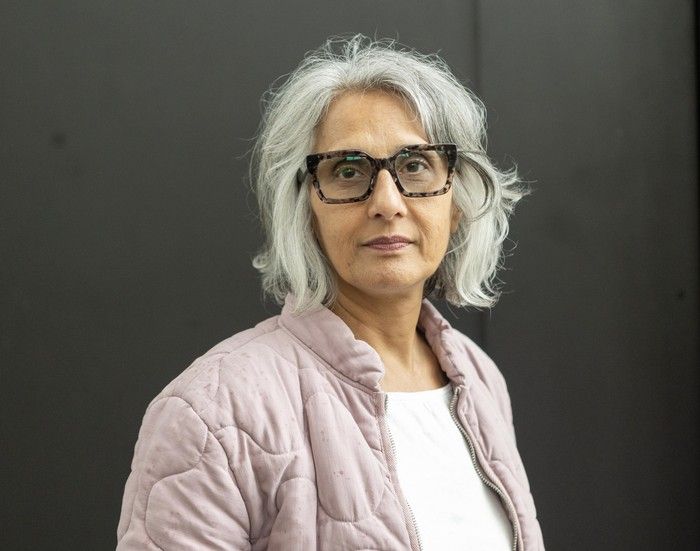
In her role as Surrey’s director of community planning and sustainability, city planner Preet Heer is mostly focused on planning for City Centre, but she co-ordinates with other planners across the city to ensure all demographics of the city are represented.
“We’re seeing a lot of growth in South Surrey, but certainly the highest growth still is happening in City Centre in terms of just pure unit numbers.”
Surrey is focused on building the core of the city’s central neighbourhood so that it can compete with downtown Vancouver, Heer said. The plans include a new medical school being built at Simon Fraser University, a 10,000-seat arena for sports and entertainment, and the SkyTrain extension.
“It’s very centrally located to all of the municipalities, it’s right in the geographic centre and where a lot of the growth is happening in Surrey as well,” Heer said.
Heer said the city hopes to work with TransLink on installation of a bus rapid transit network along King George Boulevard, from Surrey’s City Centre to the Semiahmoo Town Centre. The city would like to see that done in a similar time frame to the Surrey-to-Langley SkyTrain extension, which is scheduled to be completed in 2029.
“With any other big city, there’s different parts of the city that might be accommodating more of a certain type of population versus another, but families by far are a very large component of Surrey’s population. … But we also have to plan right across the spectrum, like seniors developments,” Heer said.
Suhana Gill, 20, who was born and raised in Surrey’s Whalley neighbourhood, sees the diversity of Surrey as something to be celebrated rather than viewing it as divisive.
“With Surrey in general, there’s always going to be a positive and negative outlook,” said Gill, a student at Kwantlen Polytechnic University.
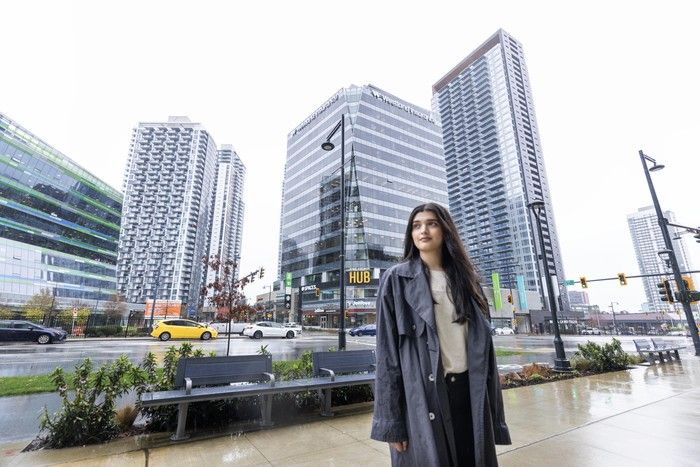
“There’s definitely differences in both sides. But I don’t see it as a divide, I see it as an opportunity. The goal should always be that every neighbourhood, whether its south or north, feels connected, equally supported and represented because at the end of the day, we’re all Surrey.”
Do you live in Surrey? What do you think can be done to help bridge the north-south divide? Send your thoughts to reporter Sobia Moman at smoman@postmedia.com