 BURST
BURST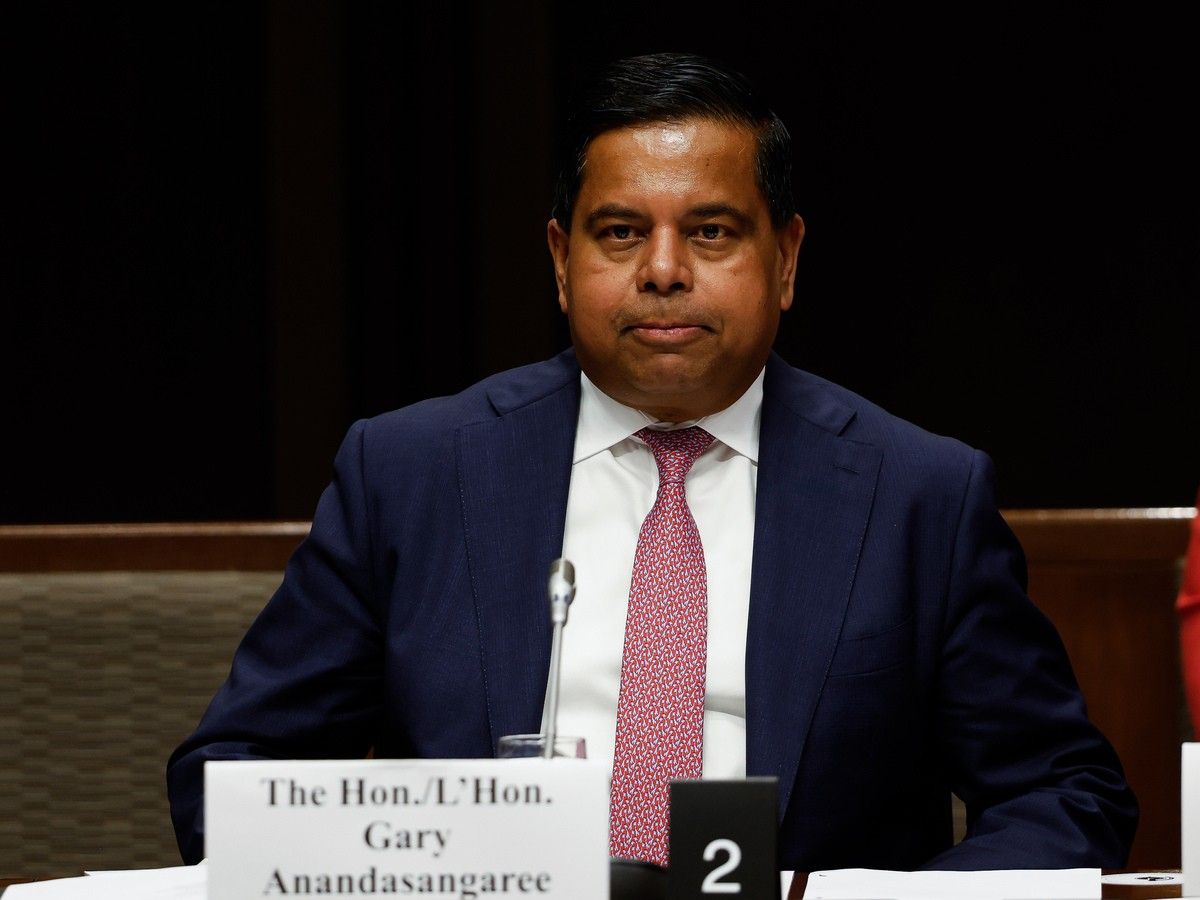
OTTAWA — Public Safety Minister Gary Anandasangaree is refusing to disclose a consultation report that guided the federal government’s rewrite of its contentious reform granting security agencies and police new powers to intercept communications.
Anandasagaree’s refusal to disclose the report baffles two people who participated in the government’s consultations, who question the government’s desire to be transparent as one of its most sensitive bills is set to be studied at a parliamentary committee starting Tuesday.
It also comes as the Liberal government is pushing Bill C-22, its second iteration of what is known as lawful access reform, after the failure of the first attempt due in part to a lack of public consultation.
“There is no legitimate reason to keep it secret. The only reason to delay its publication is to further avoid meaningful scrutiny of Bill C-22,” Tamir Israel of the Canadian Civil Liberties Association (CCLA) said in an interview.
In Bill C-2 tabled right after the election last spring, the Liberal government took its first stab at lawful access reform, which was criticized from all parts for being overly broad and invasive.
The ability to obtain Canadians’ private information and intercept communications, known as “lawful access,” is one of the most intrusive powers afforded to police and intelligence agencies. Creating such a regime for the digital age in Canada has been the subject of fierce debate for decades.
So, the government went back to the drawing board, bringing in former federal NDP MP and B.C. cabinet minister Murray Rankin to oversee private consultations with government, civil society, national security specialists and various advocacy groups over the summer and fall.
Earlier this winter, Rankin submitted his report and recommendations on how to proceed with lawful access reform to the government.
Anandasangaree lauded Rankin’s work as highly influential while he announced the government’s second attempt at lawful access reform via Bill C-22 last month.
The new legislation offers a more tailored set of warranted and unwarranted powers to police, who support the bill en masse. But civil liberty and privacy advocates as well as the Canadian Chamber of Commerce are still deeply concerned with the government’s latest proposal.
But despite promising more transparency with Canadians as to why lawful access reform is necessary, Anandasangaree’s office refused National Post’s repeated requests for a copy of Rankin’s unclassified report.
In a statement, the minister’s spokesperson Simon Lafortune said National Post would have to request it via access to information legislation to ensure the necessary redactions are applied.
In a brief interview Monday afternoon, the minister told National Post that because the report was provided by Rankin, a lawyer, to the minister to help him develop the bill, he considered it to be a privileged document.
He also argued that nothing in the document was “earth shattering”.
But if the document isn’t earth shattering, why not waive the privilege and disclose a document that has already been provided to some of those who participated in the consultations?
“I choose not to,” he responded.
Leah West, a national security law specialist who participated in Rankin’s consultation, said she and many other participants received a copy of the report when it was complete. She said she sees no reason why it shouldn’t be disclosed publicly.
“I do think that (Bill C-22) does reflect the recommendations and the stakeholder process. So I’m very puzzled as to why they wouldn’t share it,” she said.
If anything, West believes that the government need to put its money where its mouth is and show its homework with C-22 to convince Canadians that sensitive lawful access reform is necessary.
“I think the lesson from the first go around was the need for consultation, the need to be clear about the reasons behind the legislation and specific measures. And in general, since the press conference (announcing C-22), I haven’t seen those… lessons implemented.
For Israel, the government’s refusal to share Rankin’s report also raises questions about how forthcoming it will be with the Commons Public Safety Committee, which is set to start its study of Bill C-22 on Tuesday.
It was not immediately clear if members of the committee would get access to the report and its recommendations.
“Members of Parliament are being pushed to act without being given the basic information they need to do their job. It undermines the basic legislative function,” Israel said.
“This report is crucially important information for members of Parliament to have as they study this bill, and needs to be made publicly available quickly as the bill is already making its way through the legislative process.”
In Bill C-22, the government is proposing that police and the Canadian Security Intelligence Service (CSIS) only be able to approach telecommunications companies and ask them if, yes or no, an individual is a client before having to get a warrant for more information.
The bill also proposes new obligations to electronic service providers to organize and retain for one year certain types of client metadata — including location — in a way that makes it obtainable by law enforcement or CSIS with a warrant.
That excludes some information such as web-browsing history and social media history.
That means that if passed, the bill would compel electronic service providers to store and make information like device locations or cameras available to police or CSIS with the requisite warrant. That could be used to track a person’s live location in case they pose a threat to national security or are considered to be in danger, the government cited as examples.
National Post
cnardi@postmedia.com
Our website is the place for the latest breaking news, exclusive scoops, longreads and provocative commentary. Please bookmark nationalpost.com and sign up for our politics newsletter, First Reading, here.