 BURST
BURST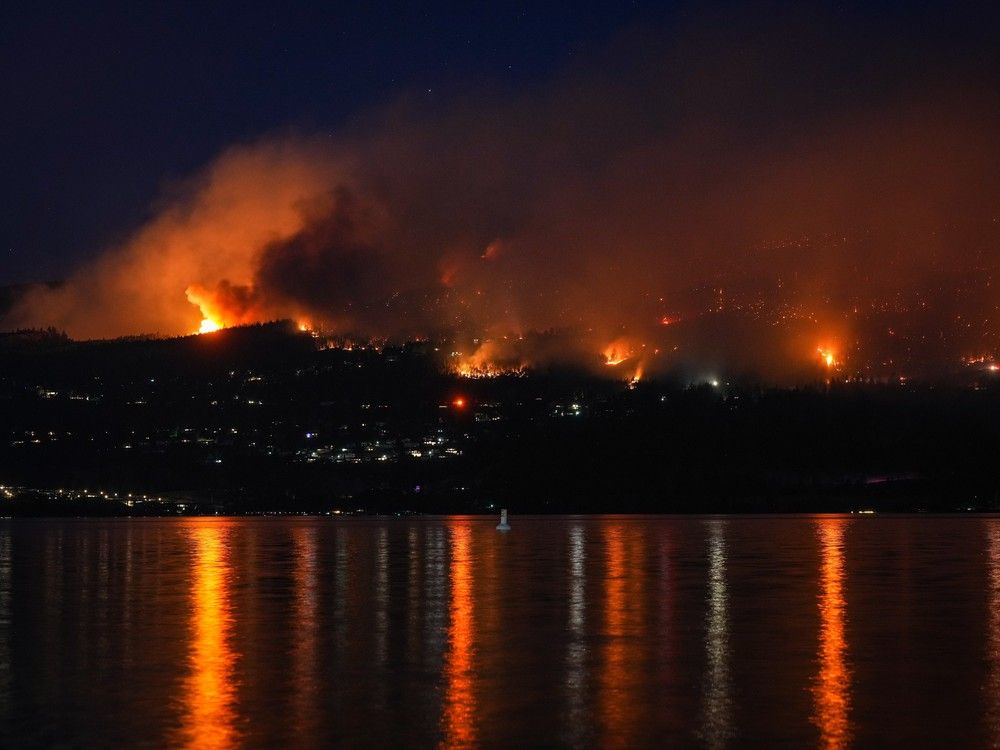
The costs of emergency response and repairs for floods and wildfires in the past decade are billions of dollars in B.C. and the rest of Canada.
But these staggering figures don’t include other ballooning costs such as uninsured losses to residential and commercial buildings, business interruption, damages to utilities and transportation, the social costs of carbon emissions linked to the disasters, and casualties.
The non-profit, Toronto-based Institute for Catastrophic Loss Reduction has reported, for the first time, figures that show these disaster costs have been rising significantly in the past four decades. The report also considered catastrophes from hail, wind and winter storms, sewer backups, lightning and earthquakes.
The losses total $9.2 billion a year on average between 1983 and 2024, equal to three per cent of construction spending in Canada, or the equivalent of two weeks of annual construction spending, according to the report.
If the growth rate continues, at 9.4 per cent a year, or doubling every eight years, disasters will eat up one month of construction spending a year by 2038, and two months by 2050, the report estimates.
“It’s unsustainable growth of these costs,” said Keith Porter, the Institute for Catastrophic Loss Reduction’s chief engineer and one of the authors of the report.
For B.C., insured and uninsured losses alone totalled $5.3 billion during the period. This trend, driven by an increase in climate-driven weather events, has caused home insurance to become more expensive. In the U.S., some insurers are dropping homeowners in disaster-prone areas.
More and more money is going to repair last year’s damage, noted Porter, an adjunct professor at University of Colorado Boulder who helped lead the U.S.-based study for the Federal Emergency Management Agency that found disaster mitigation avoids up to $13 in losses per $1 of cost.
“It’s like having more and more of your credit card bill just paying the interest, instead of paying down the balance,” added Porter.
Having a more comprehensive understanding of the full costs of these disasters is critical for policy-makers to make good decisions and spur changes to building codes to increase disaster resilience, he said.
The report notes the costs of these disasters are even larger than calculated, as the analysis didn’t include damages to crops and forests, health impacts, psychological injuries and the economic impact of redirecting spending to repairs.
Porter said not only should existing buildings be retrofitted to increase disaster resiliency, but building codes should also require that new buildings be constructed to resist natural disaster risks such as wildfires, floods, hail and quakes. He said fixing building codes is meant to ensure that 50 years from now there isn’t another 50 years of “bad” buildings not constructed to resist disasters.
Numerous experts and observers have been sounding the alarm about the need to increase natural disaster resilience , as climate change is forecast to bring increasing and more severe weather events.
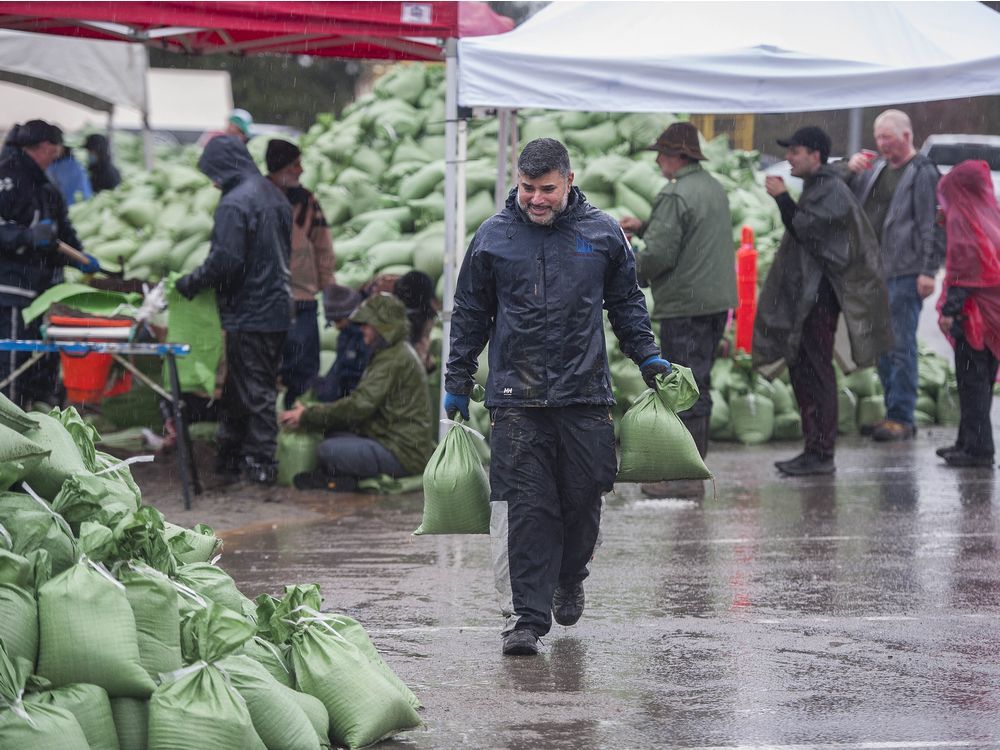
B.C. was hit in November 2021 by deadly rainstorms that caused billions of dollars in damage, destroying homes, roads, bridges, rail lines and pipelines. Nearly 20,000 people had to flee their homes and it took some residents years before they could return to their houses.
In 2024, rainstorms caused a series of floods , debris flows and mudslides that hit communities in the Lower Mainland and on Vancouver Island. Four people were killed during the heavy rainfall, including a woman whose house was swept away by a debris flow in Coquitlam.
Hundreds of homes have also been destroyed in several record-breaking wildfire seasons in the past decade. Fires destroyed the town of Lytton in the B.C. Interior in 2021 and burned more than 300 structures in the Kelowna area in 2023.
Yet, against the advice in its own reviews of catastrophic fire seasons stretching back two decades, the B.C. government hasn’t mandated the construction of buildings using fire-resistant materials and landscaping in wildfire hazard zones. That is unlike its counterparts across the border, where California, Oregon, Colorado and Washington state have mandated fire-resistant building and landscaping.
Porter said if Canada doesn’t take more action to create climate-resilient buildings it will find itself in a similar position to the U.S., where companies are declining to insure buildings because of the risks from natural disasters. California is experiencing an insurance crisis with several companies pulling out and several of the largest home-insurers pausing or limiting new business.
“This is a warning for us not to keep doing what we’ve been doing for the past several decades. Because very soon, we will no longer be able to afford that.”