BURST
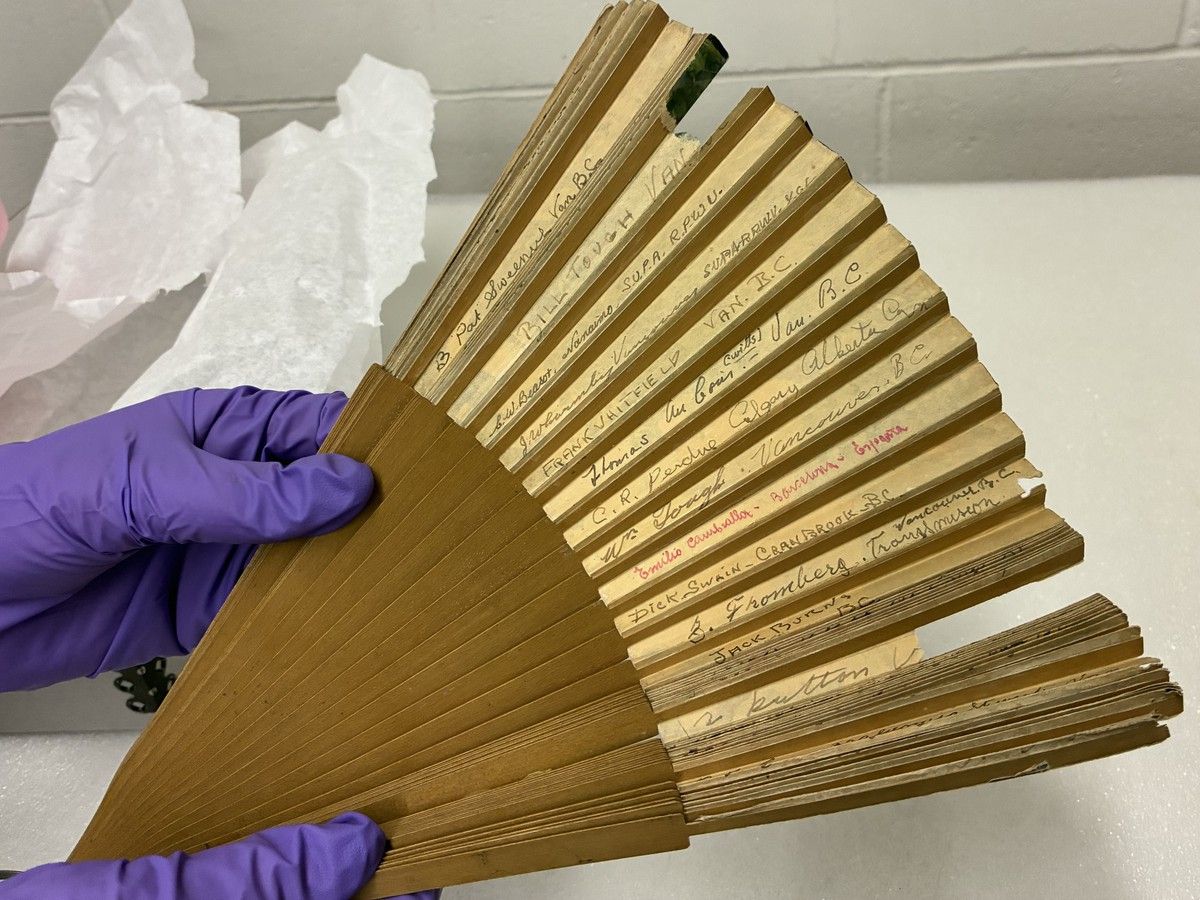
The Museum of Vancouver recently received a rare and poignant artifact: a fan dating to the Spanish Civil War in 1937.
The back of the folding fan is signed by 35 Canadians who volunteered to fight fascism in Spain, on the cusp on the Second World War. Most were from B.C., and 13 of them died in the war.
Vancouver lawyer David Yorke edited a memoir written by one of the men who signed the fan. And he’d never seen or heard of anything like it.
“It just brought all the stories of these guys flooding back to me,” said Yorke. “There are some amazing individual stories buried in the names of those on the fan.”
The names are signed on the reverse of the fan’s paper leaves, between its folding wooden ribs. They’re very small, but clearly legible. Some appear to be signatures, others appear to be written by the same hand.
After their names, they identify where they’re from: “Bill Tough, Van.; E.W. Beasot, Nanaimo; Dick Swain, Cranbrook.”
An estimated 1,200 to 1,800 Canadians volunteered to fight in the Spanish Civil War, which began in 1936 after Spanish Fascists led by General Francisco Franco launched a rebellion against the Spanish republic. About 400 Canadians were killed.
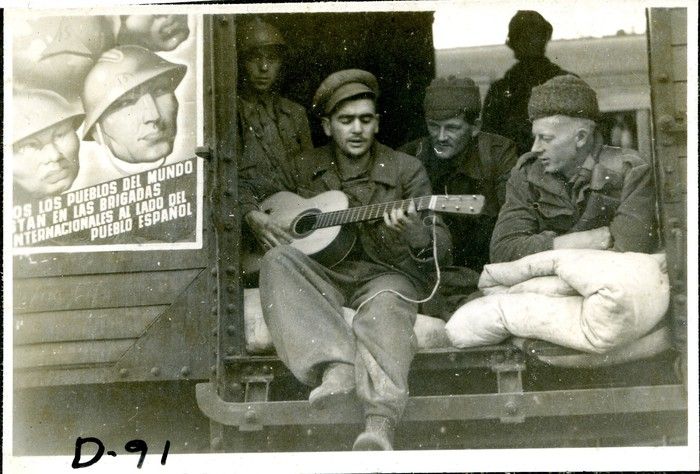
So many people from other countries volunteered to fight for the republic they were formed into military units called the International Brigades.
Canada’s unit was called the Mackenzie Papineau Battalion , or Mac Paps, which was named after William Lyon Mackenzie and Louis-Joseph Papineau, who led rebellions in Upper and Lower Canada in 1837-38.

Yorke was touched to find Ivor (Tiny) Anderson’s name on the fan. Born in Denmark, Anderson emigrated to Canada in 1926 and worked as a logger and miner until the Great Depression.
He was tall and strong, and was an active participant in many left-wing demonstrations during the 1930s, including the On To Ottawa trek , when unemployed men left relief camps and rode freight trains across the country to protest wages and conditions. (They made it to Regina.)
He died at the Battle of Elbo in 1938.
“It’s just a heartbreaking story,” said Yorke.
“It’s the very last engagement (of the Mac Paps) in the war. The Republican forces are really in retreat, but Madrid is being threatened, and so to take pressure off Madrid, the International Brigades do this incredibly daring thing.
“They cross the Ebro River by boats and pontoon rafts, with very little arms and ammunition, and they mount a counteroffensive.”
Under heavy artillery fire, Anderson was hit by a shell.
“Both of his legs were blasted off,” said Yorke.
“The story is he took stock of the situation, and said, ‘I’m going to be a cripple the rest of my life, and I don’t want to do that. We’re in the middle of a situation where people are going to have to try and take care of me.’ So he asked for a rifle and took his own life.”
Anderson was a friend of Ron Liversage, whose memoir was edited by Yorke and was published in 2013 as Mac-Pap, Memoir of a Canadian in the Spanish Civil War (New Star Books). Liversage’s name is also on the fan.
Yorke thinks the fan probably comes from the International Brigades headquarters in Albacete, Spain. It’s a woman’s fan, but someone decided to make a memento of the volunteers, and brought it back to Canada. Since this one turned up, Yorke has found four more signed fans in North America and Europe.

The name of the Mac Pap who originally kept the fan is lost. It was passed on to a woman named Mary Erickson on the Sunshine Coast, who had volunteered with the Friends of the Mackenzie-Papineau Battalion, which raised funds in Canada. Her grandchildren donated it to the Museum of Vancouver.
The Mac Paps went to Spain in defiance of the Canadian government, which Yorke said brought in a Foreign Enlistment Act in 1937 so that Canadians couldn’t leave the country to volunteer to fight in Spain. But they went anyway.
Like many countries of the time, Yorke said, the Canadian government’s policy was appeasement toward Fascist governments in Germany and Italy. In fact, Canadian Prime Minister Mackenzie King had a private meeting with Adolf Hitler in Berlin in 1937, the same year the Mac Paps arrived in Spain.