 BURST
BURST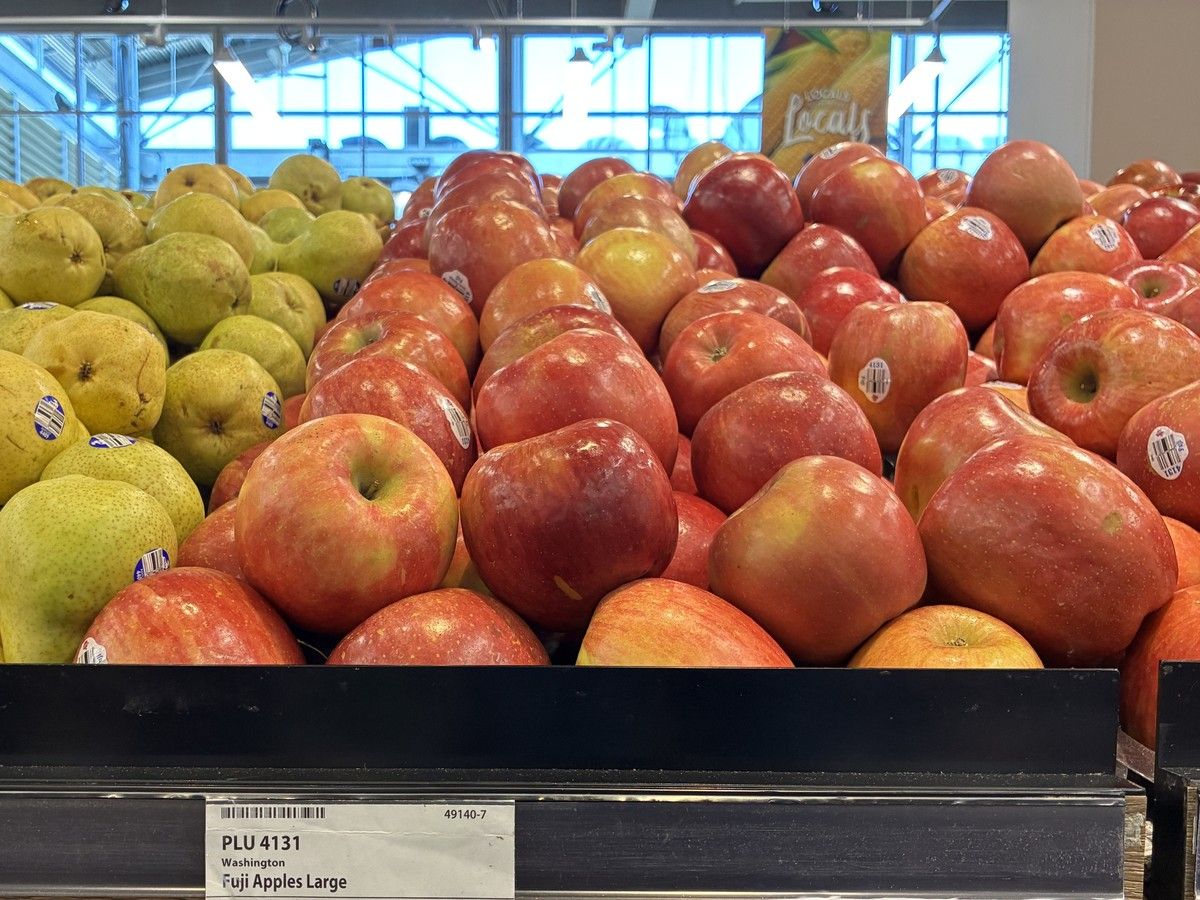
You’re in the produce aisle, you want to buy Canadian, and every apple in the bin is from Washington state. In a province famous for its apples, where are the local apples?
Part of the answer is just the calendar. B.C.‘s apple harvest is only beginning: last year’s crop sold out months ago, and this year’s crop is still a couple of weeks away from store shelves.
The deeper problem is that B.C.‘s apple industry has been shrinking for two decades, squeezed by Washington state’s scale, the loss of the co-op that once packed its fruit, and years of punishing weather. Some growers are pulling their apple trees for good.
With the Canada-U.S. trade war pushing shoppers to buy Canadian, people are combing produce aisles for local options and finding even B.C.‘s signature fruit hard to get homegrown. Apples aren’t hit by the counter-tariffs, but growers say buying local only helps if the supply is there.
One problem with supply is the size.
Sam DiMaria, who has farmed near Kelowna since 1976, estimates the Okanagan now grows about 2½ million boxes of apples a year, a fraction of two decades ago, while Washington state grows on the order of 170 million.
“Washington (state), because of their size and their proximity, they set the price,” he said.
Canadian retailers benchmark against the cheaper fruit they can bring from across the border.

Grocers point to the same gap. Loblaw, which runs No Frills and Real Canadian Superstore, said about 60 per cent of the apples it sources for its B.C. stores over the year are grown in the province, the rest are imported when local supply runs short. Some varieties customers ask for, such as Cosmic Crisp, Envy and Jazz, aren’t available from B.C. suppliers at all, the company said. That has pushed growers out of apples and into cherries and wine grapes. Sweet-cherry acreage in the region roughly doubled between 2011 and 2021.
“Money flows where money grows,” DiMaria said.
The ones that remain need scale to survive: it now takes at least 20 hectares to make apple-growing a full-time living, while a grower on four hectares needs a second job to get by, said Deep Brar, president of the B.C. Fruit Growers’ Association
Then, in July 2024, the B.C. Tree Fruits Cooperative collapsed , weeks before harvest time. The 88-year-old co-op had packed, stored and sold fruit for about half of the Okanagan’s growers.
“The co-op was always there,” Brar said. “You knew they’d take the fruit, grade it, ship what they could and you got a payment in November.”
Now growers deal with a dozen or more private packers who don’t have to take their fruit.
“There’s not the transparency we used to have,” he said.
The new system can be maddening. When Brar, who is a farmer, sells to Loblaw, he can’t drive his apples to the nearest store — he has to ship them to the chain’s distribution centre in Richmond, and some apples then come back to the Interior.
He’s been told it’s about inventory tracking and quality control.
“I understand that,” he said, “but at a time of crisis, that’s not a good enough reason.”
The co-op’s main facility has since been bought by longtime supplier Algoma Orchards, according to Loblaw, which said it’s sourcing from them this year.
Brar, who was evacuated from Summerland for 12 days due to wildfires, counts six years of blows: COVID-19, a heat dome, freezes, an overcrop that crushed prices, now drought and smoke. The money doesn’t add up.
“They’re selling our apples for $4.99 a pound, and I’m getting 30 cents,” he said.
Off his own property, he figures he would get about $2.
B.C. growers can’t match Washington state’s costs, he said, partly because the land here is worth many times more.
For shoppers set on local apples, both growers had the same advice: check the sticker. Every apple carries a label saying where it’s from, Washington State or B.C., even when the brand logos look nearly identical.
Brar said he’s caught Washington state apples displayed as local.
“These are from Washington. I can see the sticker,” he recalled telling one store.
Anyone who spots it should tell the produce manager, he said.
For DiMaria, it’s bigger than fruit.
“For God’s sakes, buy local,” he said. “The very existence of this country will be determined by how self-sustaining we can become.”
His own crop looks good this year, smoke and water restrictions aside. As growers like to say, there’s always next year.