 BURST
BURST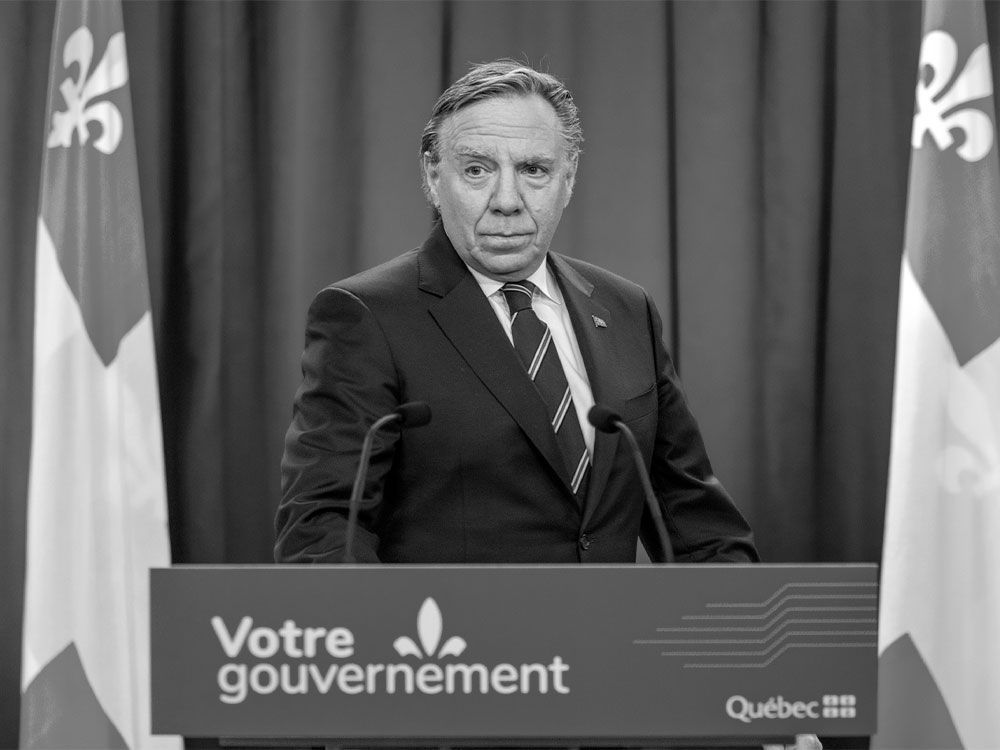
QUEBEC — In the end, the prospect of the looming train wreck became too much to bear.
Premier François Legault finally put an end Wednesday to months of speculation about his future, announcing his resignation as premier and leader of the Coalition Avenir Québec, a party he founded 14 years ago as an alternative to the Liberals and Parti Québécois.
Legault made the announcement at the provincial legislature in the late morning, saying that “being the premier of Quebec was the greatest honour of my life.”
His decision came as a surprise because he has insisted for several years — even as the waters rose around him — that he wanted to stay on the job and fight to get himself back in the good books of voters.
Quebec’s 32nd premier, Legault, 68, will have governed Quebec for more than seven years, starting Oct. 18, 2018. He was re-elected in 2022, becoming the first premier since Robert Bourassa to earn back-to-back majority governments.
But his dream was to solidify his place in the history books by winning a third mandate in a row, becoming the first leader since Maurice Duplessis to pull that off. Duplessis won four mandates between 1944 and 1959.
Yet it was not to be, with Legault’s troubles piling up and his political situation worsening month to month over the last two years. As is often the case in governments that age badly and face difficult circumstances, it was a death by a thousand cuts.
The list of events that haunted the government in the latter part of its mandate included continued problems in the health-care system, a shortage of teachers, the failing Northvolt venture, the SAAQclic fiasco and a record high deficit that sparked a first credit rating downgrade in 30 years.
Legault’s early accomplishments
The negatives overshadowed some of the things Legault considered his accomplishments, which came mostly early in his first mandate.
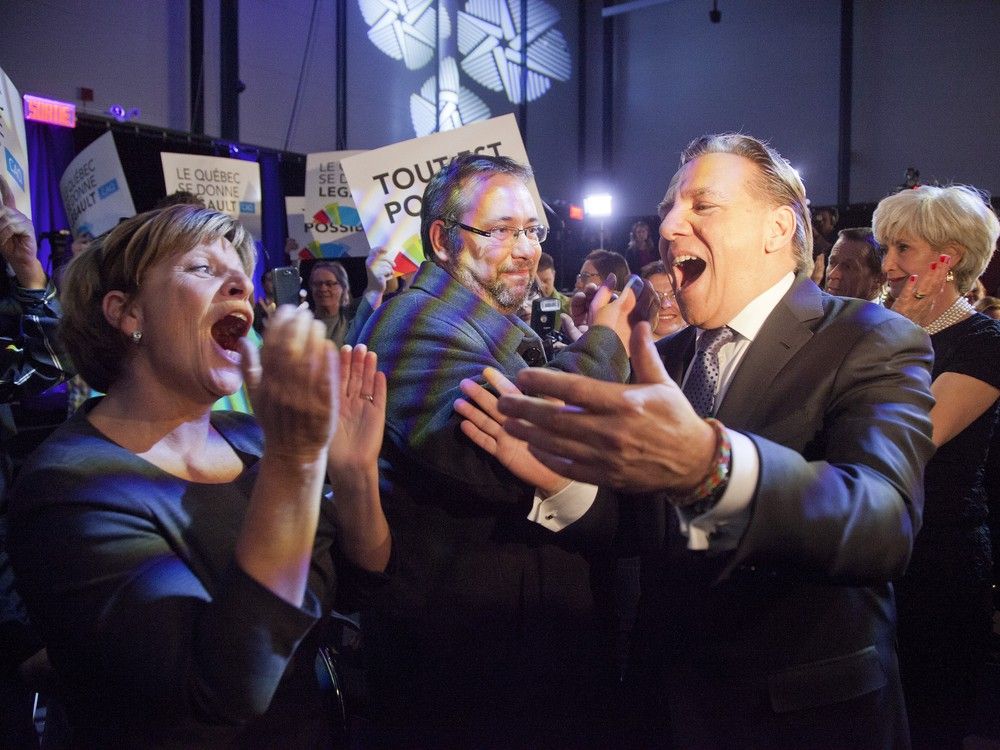
Legault tried to settle the age-old question of secularism vs. religion in Quebec by adopting Bill 21 in June 2019. Among other things, the legislation barred public servants in positions of power from wearing religious symbols on the job.
His second key piece of legislation was Bill 96 to toughen up the Charter of the French Language. It was adopted in May 2022.
While polls showed the majority of Quebecers supported both laws, they did not go over well with minorities and resulted in an estrangement from the Legault government. Both laws are being challenged in the courts, as is Legault’s Bill 40, abolishing school boards and replacing them with service centres.
Fatherly tone in a crisis
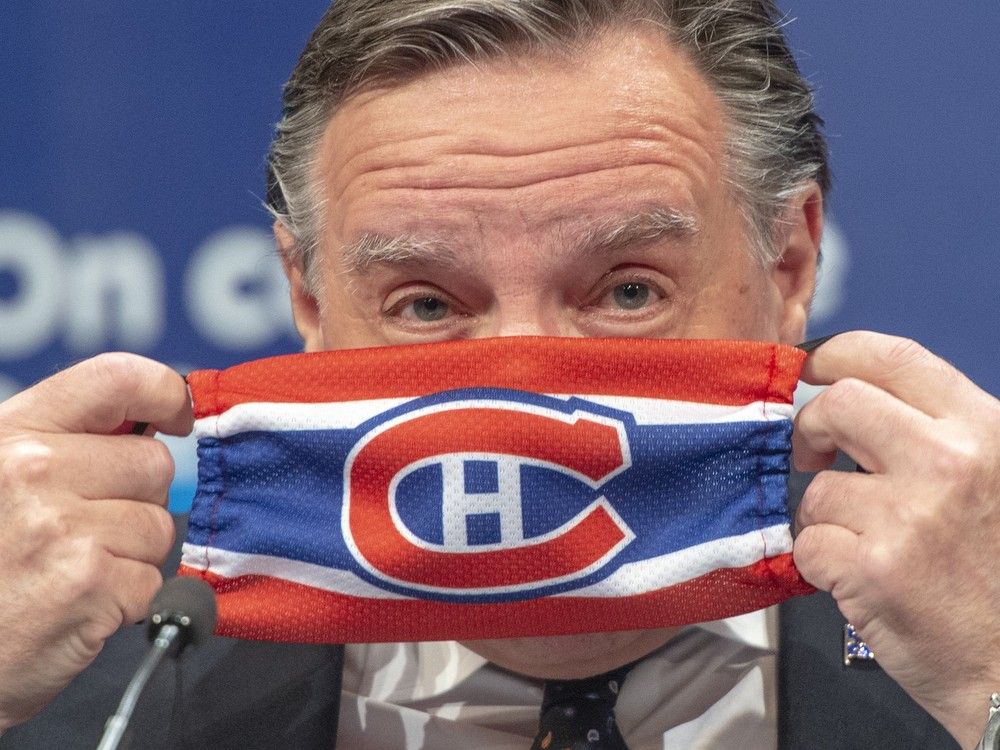
Legault’s strongest performance in office was during a crisis of epic proportions: the COVID-19 pandemic. Worried Quebecers tuned in to Legault’s daily news conferences in droves to hear his reassuring voice. His poll numbers were never higher.
Most accepted the severe restrictions on their personal freedoms that the government imposed to curb the pandemic. Legault’s fatherly tone in a crisis rang true.
For a former PQ cabinet minister, he also played a surprisingly active role in the Canadian federation, even taking a turn as chairperson of the Council of the Federation in 2020. He became a close friend and ally of Ontario Premier Doug Ford.
While other premiers disagreed with much of Legault’s identity politics agenda, they did appreciate Legault’s interest in the economy. That was particularly clear during the battle against U.S. President Donald Trump’s tariffs on Canadian and Quebec exports.
While his relationship with former prime minister Justin Trudeau was coolish and strictly business, Legault immediately hit it off with the new federal leader, Mark Carney, saying the two “were on the same wavelength,” on many issues.
But the government tripped up on bread-and-butter governance issues and gradually public confidence eroded.
When did it start to unravel?

There is some debate among observers over exactly when things started to unravel.
Some point to September 2024, when star cabinet minister Pierre Fitzgibbon, the man who helped bring the Northvolt battery project to life, resigned . The premier took the loss of his economic point man hard.
Others, however, say the trigger was more likely when the CAQ lost the October 2023 byelection to the PQ in the Quebec City riding of Jean-Talon. The vote was a clear expression of dissatisfaction in the government’s decision to break a 2018 election promise to build a third auto link from Quebec City to south shore Lévis to ease congestion.
The panic was obvious, with Legault calling a news conference to announce again the possible project. He was widely ridiculed for yet another flip-flop.
It was downhill from then on. Starting in December of that year, the CAQ started trailing the rival PQ in voter intentions as the anger expressed in Jean-Talon seemed to spread across Quebec.
The government went on to lose two more byelections, one in Terrebonne to replace Fitzgibbon and another in the central Quebec riding of Arthabaska to replace Eric Lefebvre. Both were lost to the PQ, which successfully cashed in on voter discontent.
On stage in Victoriaville to concede defeat in Arthabaska, Legault used the same line he used after the loss in Jean-Talon.
‘Quebecers are disappointed’
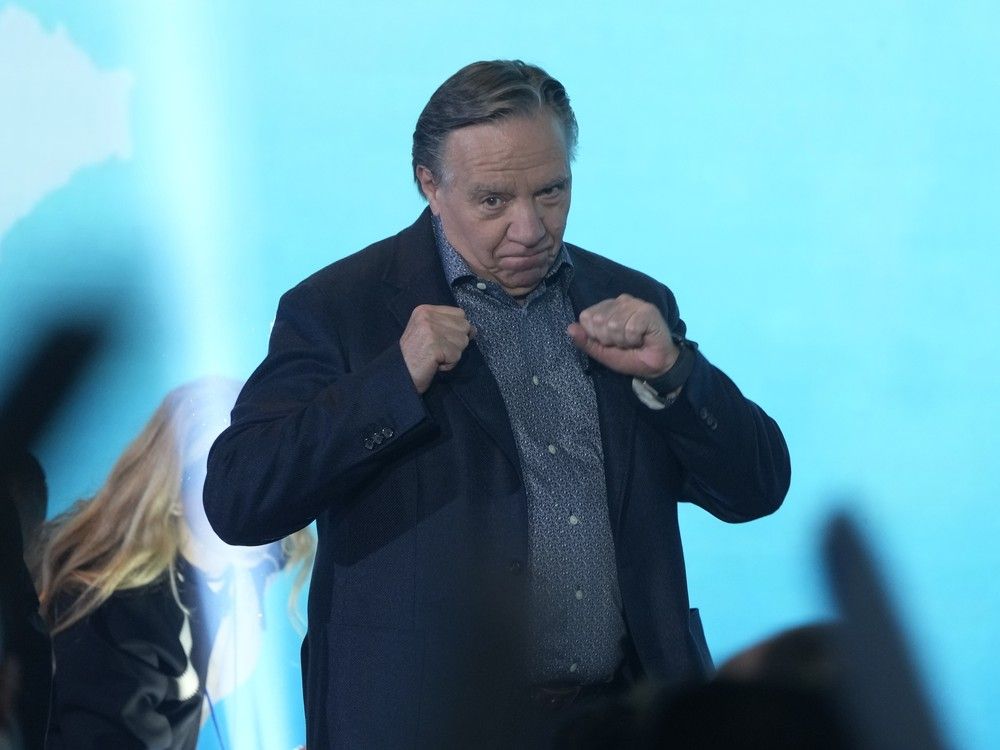
“We can’t put our head in the sand,” he said at the time. “The people of Arthabaska were the spokespeople for all Quebecers. They sent us a clear, direct message. They are disappointed. Quebecers are disappointed in our government.”
Legault made a pitch for change, launching a kind of soul-searching operation to see what policies the government could change before the looming election. He described it as a realignment. He made more public appearances, dropping into restaurants and malls to hear the concerns of regular people.
On Sept. 10, Legault shuffled his cabinet , a move generally seen as a last-ditch effort to revitalize a government on the outs.
Legault kept his key players in the same jobs: Eric Girard in Finance, Christian Dubé in health, Christine Fréchette in the economic portfolio, Jean-François Roberge on language and secularism, Simon Jolin-Barrette as justice minister.
Education Minister Bernard Drainville went from education to environment minister, Sonia LeBel moved from Treasury Board to higher education. And Legault’s deputy-premier Geneviève Guilbault, who found herself mired in the SAAQclic controversy, was shuffled into the much lower-profile job of municipal affairs.
But it was the fallout from the shuffle that took Legault by surprise. Legault had to kick Abitibi-Est MNA Pierre Dufour out of the CAQ caucus after he threatened to quit because there was no minister named to represent his region.
A few days later, dropped from cabinet, Rimouski MNA Maité Blanchette Vézina quit the CAQ caucus in a blaze of criticism of Legault saying she no longer had confidence in his leadership.
On Sept. 30, after proroguing parliament to buy some time, Legault delivered the second element in his survival arsenal: a fresh inaugural address . He outlined an ambitious plan to do many of the things the CAQ had promised in 2018 but had yet to deliver.
There would be a bill forcing unions to be more transparent, the civil service would undergo a shock treatment to reduce its size and there would be a law imposing a new wage agreement on Quebec’s doctors.
That last promise became the controversial Bill 2, which would further damage his brand with accusations of a drift to authoritarianism. Adopted using the rules of closure in the middle of the night Oct. 24, the law was immediately denounced by both medical specialists and family doctors who warned doctors would leave Quebec in droves.
Again there was fallout, this time of a personal nature. Legault’s long-time friend and minister of social services, Lionel Carmant, who was with Legault when he founded the CAQ, resigned from cabinet Oct. 29, saying the new law had caused friction in his home.
Both Carmant’s wife and daughter are doctors.
There were signs of panic in the ranks as well. On Nov. 3, after discovering the CAQ MNA for the riding of Laporte, Isabelle Poulet, was flirting with the Liberals in a bid to switch parties because she was unhappy with Bill 2, Legault kicked her out of caucus as well.
As the winter sitting of the legislature adjourned in Dec. 12, there were a total of five former CAQ MNAs sitting as independents in the red room.
But the departure which seemed to indicate the end was closer for Legault than he let on was that of Dubé who resigned from the CAQ cabinet Dec. 18 to sit as an independent. He left in a blaze of criticism of the government which had struck a deal with Quebec’s doctors by gutting much of Bill 2, legislation Dubé steered into law himself as health minister.
But the government’s slide was already underway.
In spring 2025, Legault’s CAQ had slipped into third place in public opinion polls, behind the leading PQ and even the moribund Liberals. The Qc125 electoral projection site forecast that the party would be wiped off the map in the 2026 election.
Worse, satisfaction with the government plunged. Another poll by Léger, revealed 65 per cent of Quebecers wanted another party in power in Quebec City.
Analysts, one after another, were urging Legault to use the summer to consider a “walk in the grass.” It was a reference to former prime minister Pierre Trudeau’s famous 1984 solitary walk in the snow, where he decided to retire from politics.
At the time, Legault ignored the comments but eventually decided he could do no more, further proof that nothing is really ever certain or forever for political leaders.